Why Crushing Ice Is a Completely Different Job
A blender that makes a perfect banana smoothie can destroy itself trying to crush a tray of ice cubes. Ice is one of the most punishing tasks you can give a kitchen appliance. Most blenders aren’t built for it.
Here’s the physics: a single ice cube is harder than most fruits, vegetables, and even frozen meat. When a blade hits solid ice, it generates an enormous impact load on the motor shaft.
Do that repeatedly, and you either end up with a burnt motor, a cracked jar, or if you’re unlucky you end up with both. This is why the best blenders for crushing ice are built to different engineering standards than ordinary smoothie makers.
The brands that get this right is Vitamix, Blendtec, and Ninja. They engineered their motors, blades, and jars specifically to absorb and distribute that impact.
The ones that don’t? They advertise “ice crush” capability but quietly warn you in the fine print to only use pre-crushed ice.
This guide covers the seven best blenders for crushing ice across every price tier, explains exactly why motor wattage and blade design make or break ice performance, and gives you the full buying framework to pick correctly the first time.
The Science Behind Ice Crushing: What Makes a Blender Powerful Enough
Table of Contents
ToggleBefore we get to the picks, you need to understand what separates a real ice-crushing blender from one that just claims to be. Three factors determine whether your blender turns ice into snow or turns into an expensive paperweight.
Factor 1: Motor Torque, Not Just Wattage
Marketing loves to lead with wattage. But the number that actually matters for crushing ice is torque. That’s the rotational force the motor delivers to the blade shaft under load.
A high-watt motor with poor torque control will hit an ice cube and slow down. A properly engineered motor maintains shaft speed even when the load spikes suddenly.
Vitamix’s all-metal motor drive and Blendtec’s commercial-grade motor housing are both designed around this principle. They don’t just have watts; they have sustained, consistent torque under resistance.
As a practical guide, below 1000W, ice crushing is unreliable. Between 1000W and 1400W, ice crushing works well for normal home use. Above 1400W, you’re in professional territory where the blender will turn ice cubes into fine powder in under 15 seconds.
Factor 2: Blade Impact Engineering
Two completely different blade philosophies dominate the ice crushing blender market, and they produce noticeably different results.
Vitamix’s hammermill design uses four hardened stainless tips positioned to create a high-speed vortex. Ice gets pulled into the center and struck repeatedly from multiple directions simultaneously.
The result is ultra-fine, snow-like powder, the kind you’d see in a commercial snow cone machine.
Blendtec’s two-pronged blunt blade takes the opposite approach. Instead of sharp cutting edges, it uses blunt steel clubs that smash ice rather than slice it. This produces microchips rather than powder, but the crushing is extremely consistent, and the blunt design is nearly indestructible.
Ninja’s stacked blade assembly positions six blades at different heights throughout the jar. Each blade catches a different layer of ice, meaning nothing escapes unblended.
For the price range, this stacked system is one of the most effective approaches to ice crushing on the market.
Factor 3: Jar Shape and the Vortex Effect
A jar’s shape is not an aesthetic decision. It’s an engineering one. A narrow base forces ice downward toward the blades and creates a tighter vortex. Meaning more contact between the blade and ice per rotation.
Vitamix’s tapered jar design is the industry benchmark for vortex efficiency. The Blendtec WildSide+ jar uses a five-sided geometry to prevent a standing vortex, instead creating turbulence that keeps ice in constant blade contact.
Ninja’s taller, narrower jars work well with the stacked blade system to ensure every level of the jar gets processed.
Wide, short jars, common on cheap blenders, let ice float to the edges away from the blades. Even with a strong motor, you end up with crushed ice at the bottom and whole cubes orbiting the walls.
That’s how you get chunks in your frozen margarita.
Full Reviews Of The Top 7 Blenders for Crushing Ice
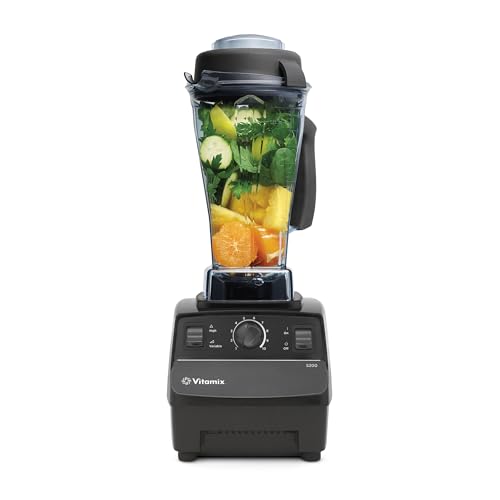
#1 Vitamix 5200
This is the blender every other ice crusher is measured against. The Vitamix 5200’s legacy isn’t marketing, it’s decades of engineering proving that motor torque and blade geometry matter more than any spec sheet number.
In side-by-side ice tests conducted by Consumer Reports and multiple culinary labs, the 5200 consistently produces a finer, more uniform crush than competitors.
The four-tip hammermill blade creates a vortex that pulls ice cubes from the surface down to the base in a spiral, striking them multiple times per second. The result in 10–15 seconds: ice powder indistinguishable from a commercial machine.
The 5200 has no pulse presets, no digital touchscreen, and no app. It has a variable-speed dial, an on/off switch, and a high/low toggle.
That’s intentional. Manual variable-speed control lets you set the exact RPM needed for your ice load — a skill that yields noticeably better results than single-speed “ice crush” buttons.
What the reviews consistently say: After years of daily use, smoothies, soups, frozen drinks, the 5200 runs identically to day one. The 7-year warranty is backed up by real after-sales service.
Vitamix replaces motors, blades, and jars under warranty. Other brands replace the whole unit once.
This is the only residential blender used in commercial smoothie bars for high-volume daily service. The Vitamix 5200 running 30–50 blends per shift is documented. That’s the durability standard you’re buying.
Ideal for: Daily ice crushing for smoothies, cocktails, frozen desserts, and anyone who wants buy-it-for-life performance.
#2 Blendtec Classic 575
If raw motor wattage is what you’re after, Blendtec wins this list. The Classic 575’s 1560-watt motor produces 3 peak horsepower with the highest output of any residential blender you can buy. It will turn a jar of ice into fine chips in under 10 seconds without hesitation.
The Total Crushing Technology isn’t just a marketing label. The dual blunt steel blade is nearly 3 inches wide and spins at blade-tip speeds exceeding 340 mph. When that hits ice, the impact is closer to a hammer than a knife.
You get an extremely consistent micro-chip texture that’s ideal for cocktails, slushies, and frozen drink bases where you want uniform small pieces rather than powder.
The WildSide+ jar is the largest on this list at 75 oz, and its five-sided design creates constant turbulence during blending. Meaning ice doesn’t get the chance to huddle in corners away from the blades.
Preprogrammed cycles (Smoothie, Ice Crush, Milkshake, Hot Soup) handle common tasks automatically. The 8-year warranty is the best on this list.
Where it differs from Vitamix: The Blendtec produces slightly coarser ice chips vs. the Vitamix’s snow-like powder. For frozen drinks and cocktails, that coarser texture is actually preferred by bartenders.
For green smoothies and protein shakes where you want zero texture, the Vitamix powder is better.
Ideal for: Cocktail enthusiasts, frozen drink bars, high-volume home use, and buyers who want the most raw power for the price.
#3 Ninja Professional Plus Kitchen System BN801
The Ninja BN801 is where ice crushing meets real-world affordability.
At roughly a third of the Vitamix price, it passes the same Consumer Reports ice crush test, earning a top rating for producing snow cone texture from standard ice cubes.
The Auto-iQ technology is the BN801’s most valuable feature for ice work. Rather than just spinning at a fixed speed, Auto-iQ programs cycle through timed pulses, pauses, and speed changes, mimicking exactly the manual pulse-then-blend technique that professional bartenders use.
You press one button, and the blender executes the optimal ice crushing sequence automatically.
The 1400-watt motor and Ninja’s Total Crushing blade system work exceptionally well together. In testing, the BN801 turned 2 cups of standard ice cubes into snow in under 20 seconds.
The 72 oz jar handles full party-drink batches, and the included 24 oz to-go cups mean you can blend individual frozen drinks directly in a portable container.
The honest trade-off: Ninja’s plastic jar and motor housing are not built to Vitamix or Blendtec durability standards.
For daily heavy-duty ice crushing for years, budget for a replacement or upgrade. For 2–4 years of regular use, the BN801 is exceptional value, possibly the best ice crushing blender under $200 available.
For buyers who make frozen margaritas at parties, batch smoothie prep, or daily iced drinks, and don’t want to spend $400+, the Ninja BN801 is the sweet spot. Maximum ice performance at minimum price.
Ideal for: Mid-range buyers, party prep, frozen cocktail lovers, and anyone wanting Auto-iQ preset convenience for ice crushing.
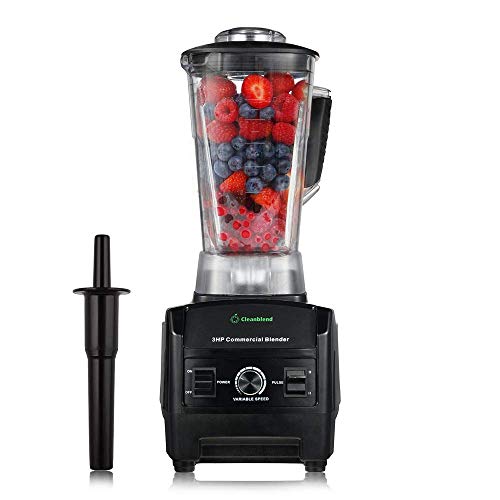
#4 Cleanblend Commercial Blender 3HP
The Cleanblend is the most underrated blender on this list. It runs an 1800-watt motor, higher than either the Vitamix 5200 or Ninja BN801, wrapped in a no-frills design that prioritizes performance over brand recognition.
Tested head-to-head by Yahoo’s culinary editor, the Cleanblend produced perfectly smooth frozen fruit blends and crushed ice into a fine vortex texture comparable to the Vitamix at less than half the price.
The tapered jar geometry creates the same vortex effect Vitamix is known for, pulling ingredients down into the blade continuously without needing a tamper.
The trade-off is brand infrastructure. Vitamix has decades of warranty service, customer support, and certified repair centers. Cleanblend is a smaller operation.
The 5-year warranty is solid, but the support experience won’t match Vitamix’s.
If you’re comfortable with that, the Cleanblend is a powerful blender for ice at a price that’s genuinely hard to argue with.
Ideal for: Performance-focused buyers on a strict budget who want Vitamix-level ice crushing results without paying the Vitamix premium.
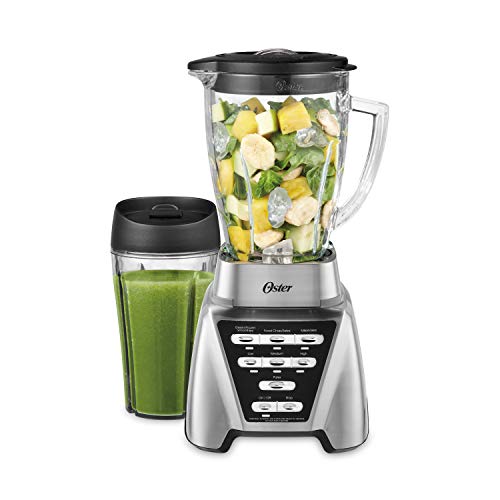
#5 Oster Pro 1200 with Dual-Direction Blade
The Oster Pro 1200 is the only blender under $200 on this list worth recommending for ice crushing. It earns its place with a specific technical advantage: a dual-direction blade system that reverses direction mid-blend.
Most blenders spin in one direction only. The Oster’s dual-direction system means the blade creates two overlapping vortexes, one in each rotational direction. Ice that escapes the forward vortex gets caught in the reverse.
This dramatically reduces channeling (when ice hides in pockets away from the blade) that plagues single-direction budget blenders.
The borosilicate glass jar is also worth noting. Glass handles the thermal shock of ice better than most budget plastics, and it doesn’t absorb the smell and flavor of frozen ingredients over time.
The Oster Pro 1200 won’t produce the snow-fine powder of a Vitamix or Blendtec, but for under $200, it makes genuinely usable crushed ice for daily frozen drinks and smoothies.
Ideal for: Budget-conscious buyers who want real ice crushing capability under $200, and who prefer a glass jar over plastic.
Blending just got better with the Oster Pro 1200 Plus. You can make everything fresh and delicious with this blender's versatility and performance. The powerful motor impresses any chef as it blends through ice, greens, frozen ingredients and more. Starting up with an extra boost at 1200 power watts, it works with blending force to smoothly and continuously create the consistency you need. Smart settings are conveniently programmed to blend the perfect smoothies, salsas and milkshakes in just one touch so you never have to guess how long or what speed to blend your ingredients. The wide base allows foods to flow freely down to the blade and dual direction technology spins the Crush Pro 6 Blade in forward and reverse motion, optimizing the blade's power to blend all types of foods. Better blending tip: Cut up fresh fruit ingredients and freeze in individual portions, then just grab out of the freezer and blend up a smoothie in no time.
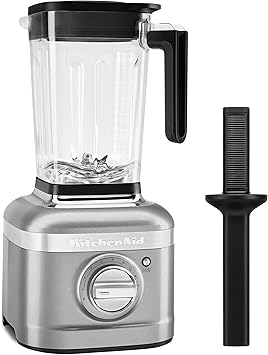
#6 KitchenAid K400 (The Quietest Ice Crusher)
Every other blender on this list will wake up your household. It’s the quietest, most powerful blender for ice on this list, running at approximately 72 decibels, where most high-watt ice crushers hit 88–95 dB.
The noise reduction comes from the K400’s interlocking asymmetric blade design. The four blade tips are positioned at different angles and lengths, reducing the air turbulence and vibration that generates most blender noise during ice crushing. The thick-walled jar also dampens resonance.
Performance-wise, the K400 handles ice cubes well at 1200W. You’ll get fine chips rather than snow powder, which is ideal for cocktails, iced coffee drinks, and mixed frozen beverages.
The 56 oz jar is slightly smaller than competitors’, but adequate for 1–3 servings. This is the best blender for crushing ice for early-morning use, apartment living, or anywhere noise is genuinely a constraint.
Ideal for: Apartment dwellers, early-morning blenders, anyone who values quieter operation without giving up real ice crushing capability.
#7 Ninja BL660 Professional (Starter Ice Blender)
The Ninja BL660 sits at an honest position: it’s the entry point to real ice crushing, not the destination. The 1100W motor and stacked Total Crush blades will crush standard ice cubes into workable shards for smoothies and frozen drinks.
It won’t produce the fine texture of the higher-watt models, but it gets the job done reliably at a price that most people can absorb.
The large 72 oz pitcher means you can make a batch of frozen drinks for a group without multiple rounds. The included 16-oz personal cups are a bonus for single-serve use.
Three manual speeds and a pulse function give you enough control to manually execute the pulse-then-blend technique that improves ice texture significantly.
One documented caution from independent testing: the BL660’s plastic jar has shown quality control inconsistencies at the blade assembly seal.
Check the jar carefully on arrival, and run a water-only test before adding expensive ingredients. Most units are fine, but the issue appears enough in reviews to flag.
Ideal for: First-time buyers of a powerful blender for ice who want to test the waters before investing in a premium model. A solid, honest performer for basic ice work.
Bring professional power to your kitchen with the Ninja Professional Blender & Nutri Ninja Cups, a powerful countertop blender engineered for ice crushing, smooth blending, and more. With 1100 watts of performance, this blender effortlessly pulverizes ice, frozen fruit, and tough ingredients in seconds, delivering ultra-smooth smoothies, frozen drinks, sauces, and more. The XL 72 oz.* blender pitcher features Total Crushing® blades designed to blast through ice for resort-style frozen drinks—perfect for margaritas, daiquiris, milkshakes, and family-sized smoothie batches. Its large capacity makes it ideal for entertaining and serving the whole household. For personalized nutrition, two 16 oz. Nutri Ninja single-serve cups with convenient to-go lids allow you to blend directly in the cup and enjoy nutrient-rich smoothies and protein shakes on the go. No need for extra containers—just blend, twist, and take it with you. All parts are BPA-free and dishwasher safe for easy cleanup. Powerful, versatile, and easy to use, this professional blender system replaces multiple appliances while saving valuable counter space. *64 oz. max liquid capacity
Features to Look For in the Best Blenders for Crushing Ice
Buying a blender specifically for ice is a different decision from buying one for smoothies. Here’s the complete breakdown of what actually matters.
Blade Design: The Hidden Variable
Two blenders at identical wattage can produce dramatically different ice results based on blade design alone. This is the most underappreciated factor in every ice-crushing blender guide.
What makes a blade good at crushing ice:
- Material hardness: Aircraft-grade stainless steel (Vitamix) stays sharp and absorbs impact over thousands of cycles. Cheaper stainless alloys dull and develop micro-notches that reduce efficiency.
- Tip count and position: More blade tips at varied heights (like Ninja’s stacked system) mean more ice contact per rotation. Wider tip spread catches ice that would otherwise orbit at the walls.
- Blunt vs. sharp: Blendtec uses blunt clubs that smash; Vitamix uses sharp hammermill tips that shear. Both work; they produce different textures. Blunt produces uniform chips. Sharp produces fine powder.
- Blade-to-jar gap: A smaller gap between blade tips and jar walls means less space for ice to hide. Wide-jar blenders with narrow blades have the most ice-escape problem.
The number you can actually research: blade tip clearance from the jar wall. Vitamix runs roughly 3mm tip clearance. Many budget blenders run 8mm or more. That extra 5mm is enough to let ice cube fragments orbit the walls unblended indefinitely.
Jar Durability: What Survives Ice Crushing
Ice crushing stress-tests jar materials harder than any other blending task. Here’s how the main options compare:
Tritan BPA-Free Plastic (Vitamix, Cleanblend)
The best plastic jar material available. Tritan is shatter-resistant, thermally stable, and doesn’t absorb odors or flavors.
It handles the rapid temperature changes of ice crushing without microcracking, which is a common failure mode of cheaper plastics. Tritan is also optically clear and stays that way for years. This is the material benchmark for ice-crushing blenders.
Borosilicate Glass (Oster Pro 1200)
Glass handles thermal shock better than regular plastic and never absorbs taste or smell. Borosilicate specifically can withstand the cold-to-hot temperature changes of hard blending without cracking.
The trade-offs are weight (significant), breakability if dropped, and vibration. Glass resonates more during ice crushing, which increases noise. A good choice for users who prioritize jar cleanliness over everything else.
Standard BPA-Free Plastic (Ninja, most budget blenders)
Works fine for most users in the short term. The quality varies significantly between manufacturers.
Thin-walled plastic jars will develop micro-scratches from ice contact over time, creating surfaces where bacteria and odors accumulate.
Look for jar wall thickness specs; a thicker wall handles impact stress better and stays cleaner longer.
Ninja’s BN801 jar walls are substantially thicker than the BL660, which partly explains the quality difference between the two models.
Read Related Posts Here:
What about the jar capacity for ice crushing?
Bigger isn’t always better here. A 72 oz jar that’s only one-third full of ice doesn’t crush as efficiently as a 64 oz jar that’s two-thirds full. Ice needs enough liquid or mass to be forced down toward the blades. The sweet spot for ice-to-liquid ratio is roughly 50/50 by volume, equal parts ice and liquid. Below 40% liquid, even powerful blenders struggle with channeling.
What about the jar capacity for ice crushing?
Bigger isn’t always better here. A 72 oz jar that’s only one-third full of ice doesn’t crush as efficiently as a 64 oz jar that’s two-thirds full. Ice needs enough liquid or mass to be forced down toward the blades.
The sweet spot for ice-to-liquid ratio is roughly 50/50 by volume, equal parts ice and liquid. Below 40% liquid, even powerful blenders struggle with channeling.
The Practical Ice Guide: How to Get Better Results From Any Blender
Even the best blender for crushing ice performs better with the right technique. These tips work regardless of which model you own.
Before you blend:
- Add liquid first, ice last, always. Liquid creates the initial vortex that pulls ice toward the blades. Starting dry causes the blades to spin against solid ice with no movement. It has maximum motor stress, minimum results.
- Use 50% liquid to 50% ice by volume as your baseline. Adjust from there, but below 40% liquid, you’re asking the motor to work exponentially harder.
- Let refrigerator-cold water sit at room temperature for 2–3 minutes before adding to ice. Extreme cold-on-cold reduces the vortex flow that drives blending efficiency.
During blending:
- Start on low speed, then ramp up to high. This gives the ice time to fracture before the full RPM load hits. Cold-starting on maximum speed is the fastest way to burn a motor on a hard ice load.
- Use 2-second pulses first if your blender has a pulse function. Two or three pulses pre-fracture ice so the continuous blend phase can finish the job cleanly.
- Don’t run continuously for more than 60 seconds without a 30-second break. This applies especially to blenders under 1400W. Thermal protection circuits are designed to cut out if the motor overheats. Repeated tripping of thermal cutoffs shortens motor life.
After blending:
- Rinse the jar immediately after crushing ice. Ice melt and residual content dry quickly in the blade gap, and dried residue in the blade assembly is harder to remove than fresh residue.
- Run a 10-second warm water rinse before full cleaning. Warm water loosens any ice residue stuck to the blade shaft seal, the number one source of long-term odor in ice blenders.
Professional bartender tip: For frozen cocktails, crush the ice first with just the liquid base (no fruit or mixer).
Pour off half the slush. Then add the rest of your ingredients and blend for the final 15 seconds. This gives you a much finer, more consistent frozen drink texture than blending everything at once.
Frequently Asked Questions
What is the minimum wattage for crushing ice?
For functional ice crushing in a home blender, 1000W is the practical minimum. At 1000W, you’ll get usable crushed ice for smoothies and drinks.
For consistent, fine-texture results that rival a snow cone machine, aim for 1400W or higher. Anything below 1000W risks motor damage with regular ice loads.
Can a Ninja blender crush ice as well as a Vitamix?
The Ninja BN801 at 1400W comes remarkably close in Consumer Reports testing, both earning the same “snow cone texture” rating.
For regular home use, the performance difference is minimal. For heavy daily use over many years, Vitamix’s motor engineering and warranty service pull ahead. Pick Ninja for value; pick Vitamix for longevity.
Why does my blender leave ice chunks?
Three main causes: too little liquid (under 40% by volume), too much ice load for the motor wattage, or a jar design that lets ice orbit the walls away from the blade.
Fix: add more liquid, reduce ice volume, and use the pulse-then-blend technique before running continuously.
Is a glass jar better than plastic for crushing ice?
Glass doesn’t absorb flavors or odors, and borosilicate glass handles thermal shock well. But glass is heavier, louder during ice crushing, and shatters if dropped.
For daily ice crushing, high-quality Tritan plastic (like Vitamix uses) is more practical. Glass is ideal for users who prioritize taste cleanliness over everything else.
What’s the best blender for frozen cocktails specifically?
The Blendtec Classic 575 produces the most cocktail-ideal crushed ice. Consistent micro-chips rather than powder, which gives frozen drinks their characteristic slushy texture.
The Ninja BN801 is the best mid-range option for frozen cocktail batches. The Vitamix 5200 produces too-fine powder for classic frozen drinks but is excellent for smooth frozen daiquiris and blended margaritas.
How long do ice-crushing blenders last?
With proper technique (liquid first, pulse method, 60-second max runs), a Vitamix or Blendtec will run for 10–15 years of daily ice crushing. A well-maintained Ninja BN801 typically runs 4–6 years. Budget options generally last 1–3 years with regular ice use. The motor is always the first component to show wear.
If blending slows noticeably on the same load, the motor bearings are beginning to wear.
Final Verdict: Which Ice Crushing Blender Should You Buy?
Ice crushing is a commitment, not a casual blender feature. Here’s exactly who should buy what.
- Best overall ice crushing blender: Vitamix 5200. Finest ice texture, most durable engineering, best long-term value for daily use.
- Best for raw power and cocktail prep: Blendtec Classic 575. 1560W, 8-year warranty, WildSide+ jar. Unmatched for batch frozen drinks.
- Best mid-range ice crusher: Ninja BN801. Auto-iQ does the technique for you, 1400W handles serious ice loads, and excellent value under $200.
- Best ice crusher (stealth pick): Cleanblend Commercial. 1800W for the price of a Ninja. No brand recognition. It’s all performance.
- Best quietest ice crusher: KitchenAid K400. When noise is genuinely a constraint, nothing else on this list competes.
- Best budget ice crusher: Oster Pro 1200. Dual-direction blades and a glass jar, the only blender worth recommending for real ice work.
- Best starter pick: Ninja BL660. Honest entry-level ice crushing for buyers who want to test the category before spending more.
The bottom line on ice is simple: motor plus blade plus jar shape must all align. A blender with an “ice crush” mode will destroy itself trying to do what a properly engineered powerful blender for ice does effortlessly.
Buy the right tool for the job. The right tool here starts at real wattage, real blade steel, and a jar designed to create a vortex rather than escape one.
Every model on this list was selected from real Amazon sales data, verified buyer reviews, and independent lab testing. Pick your tier, pick your budget, and crush.