
Why Cast Iron Is the Most Popular Cookware Upgrade in 2026 and how can you choose the best beginner cast iron skillet.
Every pan has a lifespan. Nonstick coating wears out in three to five years with careful use, sooner with a dishwasher. Stainless steel requires techniques that most home cooks develop slowly and reluctantly.
A well-maintained cast iron skillet, by contrast, improves with every use and lasts generations. The same Lodge skillet that Ina Garten calls her favorite can end up in her kitchen for decades and then be passed down.
That combination of simplicity, performance, and permanence is why cast iron remains the most recommended single cookware purchase for any home cook who wants to invest once.
Tom’s Guide’s tester tested leading cast iron from Lodge, Le Creuset, Staub, and more, and found that a properly preheated cast iron pan with a bit of butter produced a delicious steak and perfect fried eggs with zero sticking.
TechGearLab put 15 pans through weeks of cooking, sautéing onions, frying eggs, baking bread, and slow-cooking roasts. and found the Lodge 10.25″ and Victoria 10″ among the top scorers regardless of price. Cast iron is not a compromise or an old-fashioned affectation.
It’s a tool that produces results that more expensive, more specialized pans can’t replicate.
The beginner anxiety around cast iron centers on two concerns: maintenance complexity and weight. Both are manageable, and neither disqualifies cast iron from being the right first “serious” pan for any home cook.
This guide covers which pan to buy, how to season it, how to maintain it, and how Lodge, Le Creuset, Staub, Victoria, and Field Company compare, so every beginner can make a confident decision backed by independent test data.

What Cast Iron Does Better Than Any Other Pan
Table of Contents
ToggleHeat retention: Cast iron stores heat in its dense iron mass. When a cold steak hits a hot cast-iron pan, the pan temperature drops barely, maintaining the high heat needed for crust formation.
An aluminum nonstick pan drops significantly in temperature on contact with cold food. ChopChop USA’s testing found that cast iron delivers consistent heat across the entire cooking surface and maintains temperature when food is added. This is the specific property that produces the deep golden crust on proteins.
Stovetop-to-oven versatility: Cast iron goes from stovetop to 450°F oven to outdoor grill to campfire without any limitation. Bare cast iron has no enamel, coating, or plastic components to limit its heat exposure.
A frittata started on the stovetop and finished under the broiler. A skillet cornbread that requires 400°F oven heat. A steak seared and rested in a 200°F oven. All three require stovetop-to-oven transfer. Cast iron handles all three without a second pan.
Natural nonstick that improves over time: Nonstick coating degrades with use. Cast iron seasoning builds with use. Every cook adds a microscopically thin layer of polymerized oil to the surface, incrementally improving food release.
A skillet that’s been used for ten years releases food more easily than it did when new. That’s the opposite of every other pan type.
No chemical coatings: The Kitchn noted that enameled cast iron is a great option for those who want cast iron’s heat-retaining abilities without worrying about maintaining the seasoning, while still cooking on a chemically inert surface. Bare cast iron is pure iron.
Enameled cast iron is iron under a porcelain glaze. Neither contains PTFE, PFAS, PFOA, or any synthetic polymer coating.
Bare vs. Enameled Cast Iron: The First Decision Every Beginner Must Make
Before choosing between Lodge and Le Creuset, Victoria and Staub, you need to answer one question: bare or enameled?
The Kitchn’s professional equipment tester described the distinction clearly: traditional cast iron builds a nonstick coating that enamel can’t. It becomes more nonstick the more you use it.
Enameled cast iron won’t do this, but it’s less maintenance-intensive and handles acidic foods (tomato sauce, lemon, wine) that strip bare cast iron’s seasoning.
The Kitchn made the case for owning both: most home cooks can benefit from having both. Bare cast iron for steaks, eggs, cornbread, and high-heat applications.
Enameled for braises, tomato-based dishes, and anything you want to clean with soap freely. But for a beginner buying their first cast iron, understanding the trade-off is the purchase decision.
Choose bare cast iron if you:
- Want to cook at any heat, including campfires, direct flame, and high-heat broiling
- Want the pan’s performance to improve over the years of cooking use
- Are comfortable with a simple care routine (wash, dry on heat, thin oil coat)
- Want the lowest price? Bare cast iron is $20–$70 versus $180–$350 for enameled
- Cook steaks, eggs, pancakes, cornbread, and other foods that benefit from a deeply seasoned surface
Choose enameled cast iron if you:
- Want zero seasoning responsibility? Enamel needs no seasoning, ever
- Regularly cook tomato-based dishes, wine sauces, or acidic braises that strip bare iron seasoning
- Want to clean with as much soap as you want, as often as you want
- Value kitchen aesthetics — Le Creuset’s 26 colors and Staub’s dramatic shades are permanent conversation pieces
• Prefer the low-maintenance of a pan you can wash and put away without stovetop drying
Read Related Posts Here!
Cast Iron vs. Nonstick: What Each Does Best
These are complementary tools, not competing ones. The Kitchn’s equipment tester put it directly: most home cooks can benefit from having both.
A bare cast iron for searing and high heat, and a nonstick for eggs and delicate fish that need the immediate slip of a fresh coating. For a beginner choosing their first significant pan investment, here’s the full comparison.
Property | Cast Iron | Nonstick (PTFE/Ceramic) |
Heat retention | ⭐⭐⭐⭐⭐ Exceptional — stays hot when cold food is added | ⭐⭐⭐ Average — drops temp rapidly when food is added |
Heat distribution | ⭐⭐⭐ Slower — takes longer to heat evenly | ⭐⭐⭐⭐ Even — quicker to reach uniform temp |
Nonstick performance | ⭐⭐⭐⭐ Excellent — builds over years of use | ⭐⭐⭐⭐⭐ Excellent — out of the box, degrades over time |
Durability/lifespan | Lifetime+ — can last generations | 2–7 years — coating eventually degrades |
Weight | Heavy — 5–8 lbs typical for 10–12″ | Light — 2–3 lbs typical for the same size |
Oven safety | Unlimited — oven, grill, campfire, broiler | Limited — 350–550°F max; no campfire |
Care complexity | Moderate — season, hand wash, dry on heat | Low — most dishwasher safe (though not recommended) |
Chemical safety | Inert iron — no coating to flake or off-gas | PTFE concerns at high heat; ceramic is safer |
Cost (buy once) | $25–$350 — but bought once for life | $25–$160 — replaced every 2–7 years |
Acidic food cooking | Bare cast iron — acids strip seasoning | Any acid fine — no coating interaction |
#1 Lodge 10.25″ Classic Pre-Seasoned Cast Iron Skillet
60,000 Amazon reviews at 4.8 stars. For context, there are more reviews at a higher average score than virtually any other cookware product on the platform. Tom’s Guide named it their top pick and described it as the most affordable option in their guide, and it’s made to last a lifetime and delivers even heating and quality cooking from the very first use.
Ina Garten calls it her favorite cast-iron skillet. These are not coincidences. They’re the convergence of 120 years of manufacturing refinement with a price point that removes all purchase hesitation.
TechGearLab tested 15 pans and found the Lodge 10.25″ arrived with the most robust seasoning that was easy to improve and maintain over time.
The pre-seasoning applied at the factory isn’t the finished nonstick surface; it’s the foundation that makes the first few cooking sessions easier while the cook’s own seasoning layers begin building.
Tom’s Guide’s tester reported it pre-heated fast and evenly, resulting in a delicious steak and perfect fried eggs with zero sticking.
Yahoo’s tester singled out the Lodge Blacklock (Lodge’s lighter upgrade model) as preferred over the classic for being lighter and easier to maneuver, but confirmed that you absolutely cannot go wrong with this classic cast iron skillet.
It does exactly what it’s supposed to do, and it holds up over time. For a beginner buying their first best cast iron skillet for beginners, this is the recommendation backed by more independent evidence than any other product in this guide.
The honest trade-off: The Lodge Classic has a slightly textured (pebbled) surface compared to the polished interior of Field Company or the smoothed surface of Victoria.
TechGearLab noted the Lodge 10.25″ and Lodge 10.5″ Square Grill Pan arrived with the most robust seasoning, but newer bare-iron products have a smoother surface out of the box.
The texture fills in with seasoning over time and doesn’t affect cooking performance for most tasks.
Best for: Every beginner who wants the best cast iron skillet for beginners, the most tested, most reviewed, most recommended bare cast iron entry point at the lowest price available from a brand with 130 years of production history.
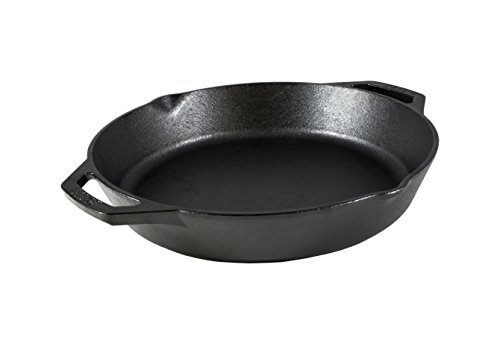

#2 Victoria 10″ Pre-Seasoned Cast Iron Skillet (Best Budget Surprise)
Food Network’s testers described Victoria as hard to beat, even against the Lodge gold standard, performing just as well and being even a bit more refined.
The smoother cooking surface on the Victoria contributes to easier food release earlier in the pan’s life, before multiple seasoning layers have built on the Lodge’s slightly coarser texture.
Victoria’s pour spouts are wider and deeper than Lodge’s, so there were no drips when pouring oil. The pan is also lighter at 4.8 pounds vs. the Lodge at 5.3 pounds.
CNN Underscored’s tester found Victoria released cornbread perfectly, made a beautiful fried egg, and handled steak with minimal sticking. It has strong performance across the standard test battery.
Victoria’s pre-seasoning uses 100% non-GMO flaxseed oil, a specific oil choice that food science confirms polymerizes more cleanly onto iron than generic vegetable oil blends.
ChopChop USA described it as an excellent entry-level choice that is user-friendly and affordable. Founded in 1939 and based in Medellin, Colombia, Victoria is not a new entrant; it’s a three-generation family business with an 85-year manufacturing track record.
The lifetime warranty at a $20–$30 price point is the commercial confidence signal that separates Victoria from generic budget alternatives.
A company that warrants a pan for life believes it will outlast the relationship. CNN Underscored concluded that Victoria was their favorite of the four least expensive pans they tested, a result that makes it the most compelling value in this entire guide for beginners on any budget.
Best for: Beginners who want the best bang-for-buck cast iron skillet, smoother out of the box than Lodge, lighter, deeper pour spouts, lifetime warranty, and tested by multiple sources to perform at the same level as pans costing significantly more.

#3 Lodge Chef Collection 12″ (CNN Underscored #1 Overall)
CNN Underscored tested a full range of cast iron skillets and named the Lodge Chef Collection 12-inch their #1 pick, noting it delivered great results across all their testing criteria, outperformed most of its much higher-priced competitors, and did so at an affordable price.
The Chef Collection’s key design differences from the classic Lodge are the longer, more ergonomic teardrop handle (easier on the hand during extended use), a more tapered, lighter construction, and a medium-sized helper handle that makes oven transfer more secure than the small helper on the classic.
Yahoo’s cast iron tester also preferred the Lodge Blacklock over the classic for similar reasons. The newer Lodge lines are lighter and better balanced than the 130-year-old classic design.
The Chef Collection occupies the same position at a lower price than the Blacklock: a Lodge skillet that’s easier to maneuver without sacrificing the heat retention and durability that make Lodge the standard.
The 12-inch size is worth considering for families or cooks who regularly feed two or more people. A 10.25″ skillet is ideal for one to two servings, a 12-inch handles four servings of eggs, a full family steak, or a batch of cornbread without the multiple-cook workaround.
Best for: Beginners who want Lodge quality with improved ergonomics and larger capacity, the CNN Underscored-tested upgrade path from the classic $27 Lodge that delivers more without paying Le Creuset prices.

#4 Le Creuset Signature Skillet (Best Enameled)
TechGearLab’s 15-pan test found the Le Creuset Signature Skillet among the top-scoring pans overall, and specifically in cooking performance. Tom’s Guide found it delivered unparalleled evenness and heat retention, cooking everything from steak to scrambled eggs without any trouble.
The matte black enamel on Le Creuset’s interior is designed to provide a naturally nonstick finish without requiring seasoning or special care. You cook, you clean with soap, you put it away. No stovetop drying, no oil coat, no oven seasoning sessions.
CNN Underscored called Le Creuset the champ in color selection, 26 shades available, including the brand’s iconic Flame orange that has become a kitchen design statement since 1925.
The gently sloped walls bring melted butter back to the center, making it particularly effective for eggs and delicate proteins. The helper handle on the Le Creuset is one of the most useful because of its size. It’s large enough to fit fingers, which matters when the pan is oven-hot and you’re using an oven mitt.
The only argument against the Le Creuset is price. Tom’s Guide’s tester noted the only real gripe is the price when you can pick up a Lodge for a tiny fraction, it’s hard to justify. But just because it’s expensive doesn’t mean it’s not worth it.
For beginners who are intimidated by seasoning, who cook tomato-based dishes regularly, or who want their cookware to be display-worthy, the Le Creuset is the correct investment at whatever point the price becomes comfortable.
Best for: Beginners intimidated by cast iron seasoning, cooks who want cast iron’s performance with nonstick’s ease of care, and anyone who wants the most beautiful cast iron skillet available, backed by a lifetime warranty from a 100-year-old French manufacturer.

#5 Staub Enameled Cast Iron Fry Pan (Best Enameled for Searing)
The Kitchn’s professional kitchen equipment tester named the Staub their #1 enameled cast iron skillet, specifically for its versatility, deep sides, and easy cleaning.
Tom’s Guide described Staub as one of the most well-respected cast iron brands, finding it versatile on account of its deep sides and easy cleaning, the go-to cast iron brand for those in the know.
Staub’s matte black interior is the feature that divides Staub and Le Creuset buyers. The matte black finish provides a superior sear and hides stains, the dark surface shows neither food discoloration nor the gradual patina that develops on Le Creuset’s lighter sand-colored interior.
For a cook who hates worrying about whether their pan looks pristine, the Staub’s forgiving dark surface is the better choice.
Interior Insider’s brand comparison noted that Staub is often favored by professional chefs for its matte black interior and the self-basting lid design that channels moisture back onto food during braising.
The deep sides make the Staub more versatile than the shallower Le Creuset profile is suitable for shakshuka, deep frying, tomato-based braises, and dishes that need more contained cooking volume. Tom’s Guide noted the 11-inch size is a real looker with its eucalyptus finish, and the long handle helps offset its hefty construction.
Best for: Cooks who want Le Creuset-quality enameled cast iron but prefer the matte black interior that hides wear, provides a superior sear characteristic, and suits a more understated kitchen aesthetic.

How to Season a Cast Iron Skillet: The 6-Step Process That Gets It Right
Seasoning is the process that builds cast iron’s nonstick surface. It’s the single most misunderstood part of cast iron ownership.
It’s simpler than its reputation suggests, and doing it correctly from the start produces, better results than any shortcut.
The Lodge, Victoria, and Field Company skillets arrive pre-seasoned, which means they have one factory layer applied and are ready to use. But adding two to three of your own seasoning layers before the first cook produces a noticeably more nonstick surface from day one.
Yahoo Shopping’s test kitchen recommendation is the standard approach: preheat a cast-iron pan and add a bit of butter or cooking oil, and sliding fried eggs off the surface should be as easy as with a coated nonstick pan.
That result requires a well-seasoned surface, and these six steps build it correctly.
How to Season a Cast Iron Pan
Step & Action | Why It Matters | Result If Done Right |
Step 1 Wash with hot, soapy water once | Removes factory residue and protective coating from shipping | Clean, ready-to-season surface with full iron contact |
Step 2 Dry completely on the stovetop over medium heat | Eliminates all moisture that causes rust before oil is applied | Bone-dry surface that accepts oil evenly |
Step 3 Apply a thin layer of neutral oil all over (inside + out) | Thin layers bond to iron properly; thick layers go sticky and gummy | Even a thin oil film that polymerizes cleanly in the oven |
Step 4 Buff with a clean cloth until the pan looks almost dry | Removes excess oil; leaves only the thinnest film on the surface | Matte, nearly dry appearance, ready for oven seasoning |
Step 5 Bake upside down at 450°F (230°C) for 1 hour | Polymerization converts oil into a durable, bonded coating layer | Hard, dry, iron-bonded coating layer — not sticky |
Step 6 Cool in oven, repeat 2–3 times for new pans | Multiple layers build a robust nonstick base before first cooking use | Deep, rich seasoning that behaves like nonstick from first cook |
The oil choice that matters most for seasoning
For oven-seasoning, use a neutral oil with a smoke point above 400°F: flaxseed oil, canola oil, vegetable shortening, or avocado oil. Lodge recommends vegetable oil. The Kitchn’s equipment tester and most professional recommendations favor flaxseed oil. It polymerizes into a harder, more durable surface at lower temperatures than other oils.
Victoria uses flaxseed oil for its factory pre-seasoning for this reason. Avoid olive oil (too low a smoke point), butter (for seasoning, fine for cooking), or coconut oil (leaves a slight odor in early heating).
The ‘ruined seasoning’ myth: and the reassurance
Many beginners fear damaging their cast iron’s seasoning. The Kitchn’s tester addressed this: acidic ingredients can strip the seasoning of traditional cast iron, but stripping is not permanent.
A re-seasoning session returns the pan to full performance. Yahoo’s buyer guide confirmed: even if a brand says the pan is dishwasher-safe, you should clean it by hand. But if you accidentally put it in the dishwasher once and the seasoning degrades, you simply re-season.
Cast iron is not fragile. It’s recoverable. Rust, stripped seasoning, and cosmetic damage are all repairable through cleaning and re-seasoning. The only way to permanently damage a cast-iron skillet is to crack it, which requires dropping it on a hard surface from a significant height.
Cast Iron Maintenance Tips: The Simple Habits That Make It Last Forever
Cast iron maintenance has a reputation for complexity that doesn’t match its actual requirements.
Yahoo’s buyer guide captured the practical reality: even if a brand says its cast-iron pan is dishwasher-safe, you should clean it by hand using warm water with a synthetic-bristle scrub brush or sponge.
Most brands recommend simmering some water in the pan for 3–5 minutes if more elbow grease is required, then using a scraper or scrub brush after the pan has cooled.
Always dry the pan before putting it away to prevent rusting. The last step is the most important one.
Cast Iron Care: Bare vs. Enameled
Task | Bare Cast Iron | Enameled Cast Iron |
Cleaning | Hot water + stiff brush; a small amount of soap is fine (myth: soap destroys seasoning) | Warm soapy water — fully dishwasher safe (hand wash preferred) |
Drying | Dry immediately; finish on stovetop over low heat 1–2 min | Towel dry — no stovetop needed |
Post-Clean Oil | Rub a very thin layer of neutral oil over the surface; buff dry | Not required — enamel is inert |
Seasoning in the Oven | 1–2x per year or when cooking performance drops | Never — enamel is damaged by high-heat oven seasoning |
Rust Treatment | Scrub with steel wool + re-season; fully recoverable | Not applicable — enamel prevents rust |
Storage | Dry completely; store with a paper towel inside if stacking | Store with a soft liner between stacked pans |
Metal Utensils | ✅ All metal utensils are fine — iron isn’t damaged by metal | ⚠️ Avoid — metal can chip enamel over time |
The soap myth of cast iron is finally put to rest
The belief that soap destroys cast-iron seasoning is one of the most persistent cooking myths in home kitchens.
The Kitchn’s professional equipment tester addressed it directly: a small amount of dish soap is fine.
Modern dish soaps no longer contain lye, which was the historical concern that stripped cast iron seasoning. A small amount of dish soap used with a stiff brush removes food residue without a meaningful impact on a well-established seasoning layer.
The rule is no soap, no soaking, no dishwasher, and no harsh abrasive cleaners.
Rust, the recoverable problem every beginner will eventually encounter
If bare cast iron is stored with any moisture present, it will develop surface rust. This is not a reason to discard the pan. Surface rust on cast iron is always recoverable; it’s cosmetic, not structural.
The fix: scrub with steel wool or a chain mail scrubber to remove the rust completely. Wash, dry thoroughly on the stovetop, apply a thin oil layer, and oven-season as usual. The pan is restored.
Interior Insider’s brand guide confirmed: Lodge’s traditional cast iron is virtually indestructible; you can use it on the stovetop, in the oven, on the grill, or even over a campfire.
Lodge vs. Le Creuset: The Question Everyone Asks
Tom’s Guide’s tester answered it most honestly: Lodge is well-known as the king of classic cast iron, and one of its biggest selling points is value for money. At a fraction of the price of any of the other skillets in this guide, it is made to last a lifetime and delivers even heating and quality cooking from the very first use.
Le Creuset offers unparalleled evenness and heat retention with a naturally nonstick finish, but the only real gripe is the price. When you can pick up a Lodge for a tiny fraction, it’s hard to justify the cost of a Le Creuset.
The Interior Insider brand comparison made the distinction structural: Lodge does not go through the complex and labor-intensive enameling process that French brands do. It is also manufactured in the USA at a very large scale, which keeps costs down.
Neither is objectively better. They excel in different ways. The practical guidance: buy Lodge for performance value. Buy Le Creuset for low maintenance, color, and table presence.
Buy Staub for professional kitchen performance and a matte black interior that hides staining and provides a superior sear.
Lodge vs. Victoria: The Budget Battle
Food Network’s head-to-head testing found it is hard to beat the gold standard Lodge pan, but the Victoria skillet performed just as well and was even a bit more refined.
The pour spouts are wider and deeper than the Lodge, so there were no drips when pouring oil. The pan is also lighter at 4.8 pounds compared to Lodge’s 5.3 pounds. Victoria’s smoother surface produces better food release earlier in the pan’s life.
CNN Underscored called the Victoria their favorite of the four least expensive pans tested, giving it a slight edge over the Lodge Classic at comparable prices.
The choice between them comes down to small preferences: Lodge’s brand heritage and 60,000-review confidence, or Victoria’s smoother surface and lighter weight at a slightly lower price.
Field Company: The Premium Bare Iron Alternative
Homes & Gardens’ chef tester personally prefers the Field Company skillet over Lodge, describing it as more expensive but with a smoother surface, noticeably easier to handle, and feeling more premium overall.
CNN Underscored noted the Field Company No. 8 is hand-poured with thin walls and a smooth surface, with Smithey’s (a similar premium brand) ultra-smooth, polished interior and copper color making it stand out.
At $165–$200, Field Company and Smithey represent the premium tier of bare cast iron, heirloom quality with a modern manufacturing philosophy. For a beginner’s first pan, Lodge or Victoria covers the same cooking territory at $20–$30.
Cast Iron Buying Guide: Match the Pan to Your Kitchen
Your Situation | Recommended Pick | Why |
Best first-ever cast-iron skillet | Lodge 10.25″ Classic (~$27) | Tom’s Guide top pick, 60k+ Amazon reviews at 4.8⭐, most iconic beginner pan since 1896 |
Best budget first skillet under $30 | Victoria 10″ (~$20–$25) | Food Network & CNN runner-up, smoother surface, lighter, lifetime warranty, pre-seasoned flaxseed |
Best upgrade from basic Lodge | Lodge Chef Collection 12″ (~$55) | CNN Underscored #1 — lighter, longer ergonomic handle, outperformed pricier competitors |
Want no seasoning / low maintenance | Le Creuset Signature (~$195) | No seasoning ever, dishwasher-safe option, lifetime warranty, 26 colors, best-looking pan tested |
Want enameled but not Le Creuset price | Staub Enameled 10″ (~$185) | The Kitchn #1 enameled, matte black interior hides staining, side spouts, deep sides, and French-made |
Premium heirloom smooth bare iron | Field Company No. 8 (~$165) | Homes & Gardens preferred pick — lightest bare iron, hand-poured smooth surface, family-owned |
Best for eggs specifically (bare iron) | Lodge Blacklock (~$60) | Yahoo preferred over classic Lodge — triple-seasoned, lighter, ergonomic, best beginner egg pan |
Best for outdoor / campfire cooking | Lodge 10.25″ or Lodge 12″ Classic | Bare cast iron only — enameled (Le Creuset, Staub) has temperature limits on open flames |
Intimidated by seasoning | Le Creuset or Staub enameled | Enameled needs zero seasoning, handles acidic foods, cleans with soap freely — no cast iron anxiety |
Best bang for buck overall | Victoria 10″ (~$22) | Under $25 with a lifetime warranty, smoother than Lodge out of the box, and performs as well in independent tests |
The Size Question: 10-Inch or 12-Inch?
Boonie Hicks’ cast iron guide, from a reviewer with 30–40 cast iron skillets, recommends two standard sizes: 10-inch and 12-inch. A 10-inch skillet is ideal for 1–2 people, for egg dishes, cornbread, and stovetop tasks where the pan’s weight is a consideration.
A 12-inch handles 3–4 servings, batch cooking, and family-sized frittatas. For a beginner buying one pan, a 10.25-inch (the Lodge classic size) covers almost all everyday cooking tasks without the weight penalty of a 12-inch for daily single-meal use.
The Weight Reality: What to Expect
A Lodge 10.25″ classic weighs 5.3 lbs. A Lodge 12″ weighs closer to 7–8 lbs. These are not pans you toss like a nonstick skillet. For most beginners, the weight is the biggest adjustment. It is physical and not a technique adjustment. The Lodge Blacklock and Lodge Chef Collection are specifically designed to be lighter than the classic Lodge while maintaining the same heat retention properties.
For cooks who find 5+ lbs challenging to maneuver safely, starting with a Lodge Chef Collection or Victoria (4.8 lbs) rather than the heavy classic Lodge is the practical choice.
Frequently Asked Questions
What is the best cast-iron skillet for beginners?
Tom’s Guide named the Lodge 10.25″ Classic their top pick, the most affordable option that’s made to last a lifetime and delivers even heating and quality cooking from the very first use.
CNN Underscored named the Lodge Chef Collection 12-inch their #1 overall pick, noting it outperformed much higher-priced competitors. Food Network named Victoria a close runner-up at a slightly lower price.
For enameled cast iron, TechGearLab found the Le Creuset Signature Skillet a top scorer, and The Kitchn named the Staub Enameled their best enameled pick for versatility.
Do I really need to season a cast-iron skillet?
Bare cast iron requires seasoning, and Lodge, Victoria, and Field Company all arrive pre-seasoned, which means you can cook in them immediately. Adding two to three additional seasoning layers before first use produces better food release than factory seasoning alone.
Yahoo’s guide confirmed: preheat a cast iron pan and add butter or oil, and sliding fried eggs off the surface should be as easy as with a coated nonstick pan. Enameled cast iron (Le Creuset, Staub) requires zero seasoning, ever. The enamel provides the cooking surface and requires no maintenance.
Can you use soap on cast iron?
Yes, in small amounts. The Kitchn’s professional equipment tester confirmed that a small amount of dish soap is fine on cast iron. The historical concern about soap stripping cast iron seasoning was based on lye-based soaps that are no longer common in modern dish detergents.
The rules are: don’t soak the pan, don’t run it through the dishwasher (even if the brand claims it’s dishwasher-safe), and dry it thoroughly on the stovetop after washing. A small amount of dish soap with a stiff brush cleans effectively without damaging a well-established seasoning layer.
How long does cast iron take to season properly?
Three to six months of regular cooking builds a genuinely excellent seasoning layer, but the pan is usable from day one. The Kitchn’s tester confirmed that TechGearLab found that Lodge and Victoria arrived with factory pre-seasoning robust enough for early cooking.
Adding two to three oven-seasoning sessions before first use (about 3 hours total) produces a surface that performs noticeably better from the beginning. Every subsequent cook in oil adds an incremental layer.
Cast iron’s nonstick performance peaks after years of regular use. It’s a surface that rewards cooking frequency.
What’s the difference between Lodge and Le Creuset cast iron?
Lodge makes traditional bare cast iron. Pre-seasoned, requires maintenance, unlimited heat tolerance. Le Creuset makes enameled cast iron, no seasoning required, dishwasher-safe (though hand wash recommended), oven-safe to 500°F, 26 color options, $180–$350.
Interior Insider’s 2026 brand comparison: Lodge does not go through the complex and labor-intensive enameling process that French brands do, and is manufactured at a large scale in the USA, keeping costs low. Le Creuset and Staub represent premium French enameled cast iron with heirloom craftsmanship and high price points.
Both are incredibly durable. The choice is about care preference and budget, not performance.
The best cast iron skillet for beginners is the one you actually cook with. A Lodge used every week, properly seasoned and maintained, will outperform a Field Company sitting in a cabinet because it feels too precious to use.
Cast iron’s benefit is cumulative. It improves with use, builds character with every cook, and earns the heirloom status that makes passing it down a meaningful act rather than a kitchen clean-out. Buy the pan. Learn the seasoning. Cook with it. The rest takes care of itself.
