...

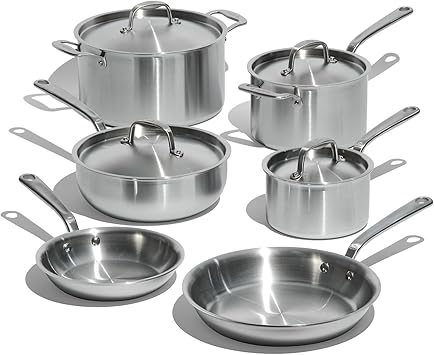
Best Stainless Steel Cookware Sets

4.2K

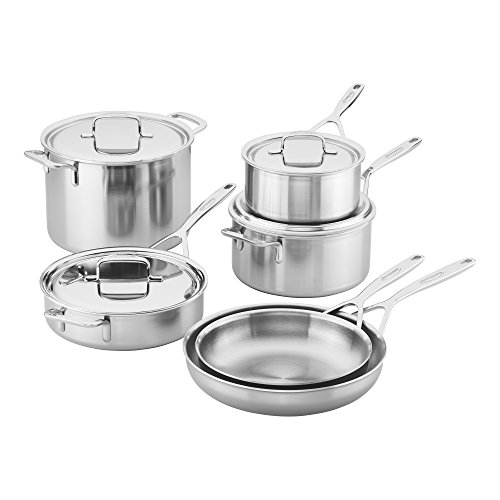
The Best Stainless Steel Cookware Sets Professional Chefs Reach For, And Why It Should Be Yours Too

Taste of Home’s culinary assistant Mark Neufang tested 10 five-ply stainless steel frying pans and cooked 30 meals across the range. His conclusion, delivered without qualification: I like stainless steel for all its qualities. 

Personally, it’s my day-to-day cooking go-to. The same sentiment echoes across every professional kitchen context: All-Clad stainless has been found at culinary schools, in restaurant prep kitchens, and on the line at professional operations for half a century.

Mark’s culinary school stocked its kitchens with All-Clad stainless steel cookware, and it held up remarkably well in high-use kitchens, including industrial dishwashers.

Stainless steel cookware does things no other pan material can replicate. It builds fond the browned, flavorful layer of caramelized proteins that adheres to the pan during searing and becomes the foundation of a pan sauce when deglazed with wine, stock, or water. 

Nonstick pans prevent fond formation by design. Cast iron builds it, but the weight and care requirements limit daily kitchen utility. Stainless steel builds fond reliably, cleans easily, handles any heat source without limitation, and lasts for decades with no coating to degrade. 

One All-Clad reviewer noted: after ten years of daily use, my D3 pans still perform exactly like they did when new. That consistency, unchanged performance over a decade, is what makes a stainless steel cookware set a lifetime kitchen investment rather than a purchase cycle.

The challenge is navigating the terminology. Tri-ply versus 5-ply. Fully clad versus disk bottom. 18/10 versus 18/0 stainless. NanoBond versus standard bonding. InductoSeal versus standard induction bases. 

This guide decodes every specification, explains what actually matters for real home cooking, and ranks the best stainless steel cookware sets by performance category, from the budget Cuisinart Multiclad Pro around $140 to the titanium-bonded Hestan NanoBond around $1,100, using Consumer Reports lab testing, Food Network chef evaluations, and The Kitchn’s hands-on 30-day skillet comparisons.

Why Chefs Prefer Stainless Steel Cookware: The Technical Advantages

Chef Karen Akunowicz, cited in Taste of Home’s HexClad vs. All-Clad comparison, made the construction case directly: when it comes to clad cookware, layering different metals maximizes performance. 

The combination of stainless steel’s non-reactive cooking surface with aluminum’s superior heat conductivity is what clad construction achieves, and what makes stainless steel the default choice in professional cooking environments where performance reliability is not negotiable.

CNN Underscored’s cookware tester cited culinary expert Austin’s assessment: stainless steel is the most durable, versatile, and safest all-around option. Clad stainless steel, with an aluminum core sandwiched by nonreactive materials, was described as heat responsive, nonreactive, and offering excellent heat distribution. 

These aren’t marketing claims. They’re the properties that explain why stainless steel has displaced copper in professional kitchens as the standard-issue cooking surface.

Why Stainless Steel Outperforms Nonstick

Advantage & What It Enables

Nonstick Can’t Do This

Example Dish

Fond Development

Browned bits stick to the pan during searing — then dissolve into a sauce via deglazing

Nonstick prevents fond formation — food releases immediately

Pan sauces, wine reductions, chicken piccata, steak au poivre

Unlimited Heat

No coating limits — 800°F oven, broiler, campfire, induction — any surface, any temp

PTFE fumes at 500°F+; ceramic coatings degrade under high heat

High-heat searing, oven braising, broiler finishing, skillet baking

No Chemical Coating

18/10 stainless is fully inert — no PFAS, PTFE, PFOA, or synthetic polymers

PTFE chemistry concerns: ceramic still contains silica sol-gel

Acidic sauces, tomato-based dishes, long simmers, and pickled foods

Non-Reactive Surface

Cooks acidic foods without metallic taste or coating interaction

Bare iron reacts with acid; aluminum can leach into acidic foods

Tomato sauce, lemon butter, wine-braised dishes, vinegar reductions

Lifetime Durability

No coating to scratch, chip, or degrade — performance constant over decades

Coating degrades; replacement every 2–7 years

Every dish — the same skillet works identically in year 15 as in year 1

Full Dishwasher Safety

Fully clad 18/10 sets tolerate repeated dishwasher cycles without degradation

Nonstick coating degraded 2–3x faster by dishwasher use

Daily kitchen cleanup — no special care required for cooking surface

Browning on Proteins

Stainless steel sears meat with Maillard reaction browning, unmatched by coated pans

Nonstick releases food too easily — prevents crust development

Steak, chicken thighs, pork chops, salmon skin, scallops

The Fond Formation Advantage: What Stainless Does That Nothing Else Can

Fond is the collection of caramelized, browned proteins and sugars that stick to the pan’s surface during high-heat cooking. It’s the Maillard reaction captured in concentrated form. 

The flavors that develop when amino acids and reducing sugars undergo chemical transformation at temperatures above 285°F. 

In a stainless steel pan, fond sticks to the surface and stays there. When liquid, wine, stock, or water is added and the heat is maintained, the fond dissolves into the liquid and creates a pan sauce with concentrated flavor that no pre-made sauce can replicate.

This process simply doesn’t work in a nonstick pan. A nonstick pan’s coating prevents food from bonding to the surface, which is its primary purpose. 

But the same property that prevents scrambled eggs from sticking also prevents the fond formation that makes pan sauces possible. 

Taste of Home confirmed this: time and time again, testing shows that All-Clad browns perfectly evenly and keeps stews and sauces at a perfect simmer.

What that means is you won’t have to vigilantly rearrange, stir, and adjust the heat during cooking. The fondness is consistent because the pan’s heat distribution is consistent.

Quick Overview of The 10 Best Stainless Steel Cookware Sets in 2026

Tested by Consumer Reports, Taste of Home (30-meal evaluation), Food Network chef testing, CNN Underscored, The Kitchn, and Organic Authority. All sets listed are 18/10 stainless steel with fully clad construction unless noted. Prices reflect typical retail as of March 2026.

Note on piece count inflation: Consumer Reports’ market analyst Kelly Moomey confirmed what every buyer should know: in boxed sets, manufacturers count a lid as a piece. 

A 12-piece set does not contain 12 cooking vessels. Even utensils and a cookbook may be counted as pieces. Always count the actual cooking pieces (pans, pots, sauté pans, stockpots) rather than the total stated piece count when comparing sets.

#1 Premium: All-Clad D3 Everyday Stainless Steel Cookware Set

All-Clad has been producing stainless steel cookware in Canonsburg, Pennsylvania, since 1971. Founded by a metallurgist who applied his extensive materials knowledge to cooking. 

That origin story isn’t marketing: the industry-leading tri-ply bonding with consistent thickness throughout, exceptional heat evenness with no detectable hot spots, and a proven track record of sturdy cookware that produces a 5/5 construction score in Organic Authority’s 2026 evaluation are the result of 50 years of metallurgical refinement applied specifically to cookware.

The Kitchn’s four-skillet comparison found the D3 Everyday to be the best D3 iteration yet. The 2024 update to the D3 line introduced two significant improvements: drip-free pouring rims and a more comfortable, contoured handle. 

On the rims: the flared edge prevents liquid from running down the outside of the pan when pouring, a practical cooking detail that anyone who has wiped cream sauce off the outside of a hot pan will immediately appreciate. 

On the handle: the contoured design is much more comfortable to hold, especially when the skillet is full of heavy food. The earlier D3 handles were thinner and less ergonomic; the Everyday line corrects this.

Organic Authority’s reviewer, who studied at a culinary school that stocked its kitchens with All-Clad, confirmed what institutional use tells you: All-Clad holds up remarkably well in high-use kitchens, including industrial dishwashers. 

The home cook who buys the D3 Everyday is buying the same construction that restaurants and culinary schools choose when equipment durability is measured in years of daily professional use, not months of occasional weekend cooking.

The honest context on price: At $500–$800 for a full set, All-Clad is a significant investment. The Tramontina tri-ply set at $200 performs at a comparable level for everyday cooking tasks. 

The premium you pay for All-Clad is brand warranty confidence, USA manufacturing, the updated ergonomic handle, and the specific searing control that comes from All-Clad’s precise tri-ply thickness calibration. For serious cooks who will use this set daily for a decade, the math favors All-Clad.

Best for: Home cooks who want the best stainless steel cookware set that professional chefs and culinary schools use, with a lifetime warranty and the 2024 ergonomic handle improvements that The Kitchn praised as a significant upgrade over previous D3 generations.

#2 Premium: Made In 5-Ply Stainless Steel Cookware Set

Made In entered the direct-to-consumer cookware market with a clear mission: provide professional-quality cooking performance without the retail markup that inflates premium cookware prices. 

Organic Authority’s evaluation confirmed the result: Made In performed almost as well as All-Clad but costs slightly less. Their 5-ply construction, which typically appears in sets costing $700 or more at retail, is available for around $600 because Made In eliminates the distributor and retailer margin layer from their pricing.

The 5-ply construction (stainless steel + aluminum + stainless steel + aluminum + stainless steel, fully clad through the sides) produces the even heat distribution that makes Made In a favorite among culinary professionals who need consistent results across every piece in a set. 

The ergonomic handles and balanced weight make long cooking sessions comfortable, a specification that matters more in a restaurant context but translates to less hand fatigue during a three-hour Sunday dinner prep session.

Organic Authority’s evaluation criteria included heat distribution, durability, and handle design. Made In achieved 5/5 scores in construction and heat distribution. 

The culinary school endorsement that appears across chef-recommended cookware guides reflects a construction quality that survives the volume abuse of teaching kitchen use, where pans are filled, emptied, and transferred dozens of times per day across years of student classes.

Best for: Serious home cooks and culinary professionals who want 5-ply performance, the construction tier that All-Clad D5 occupies at a price lower than the All-Clad equivalent, from a brand that has earned chef-kitchen credibility through direct performance rather than retail heritage.

#3 Value — Tramontina Tri-Ply Clad 12-Piece Set

CNN Underscored’s cookware tester described the Tramontina 12-Piece Tri-Ply Clad, around $400 (the full retail they tested), as: you truly feel like you’re using a pricey cookware set, even though you aren’t. 

At the typical $180–$250 street price, the value proposition is even stronger. The pots and pans are oven-safe up to 500°F, work on induction cooktops, and come with a lifetime warranty, three specifications that eliminate every functional limitation that budget cookware typically imposes.

CNN Underscored noted the only weakness as a practical one: the set takes a little over two minutes to heat up to 200°F, which just means you’ll have to wait a little longer to toss your eggs in for breakfast. 

That’s the complete failure list for a cookware set around $200. The 12-piece configuration of two frying pans, sauce pans, a sauté pan, a stockpot, and lids covers every standard home kitchen cooking task without requiring supplemental pieces. 

At 14,000+ Amazon reviews at 4.7 stars, the Tramontina has a verified long-term user base to confirm its performance across diverse cooking environments.

Best for: Home cooks who want the best overall value stainless steel cookware set — CNN Underscored tested, lifetime warranty, 12 pieces, induction-ready, and $300–$500 less than comparable All-Clad configurations.

#4 Mid-Range — OXO Good Grips Mira Tri-Ply Stainless Set

Consumer Reports’ comprehensive cookware evaluation found the OXO Tri-Ply Stainless Mira Series excelled in tests for cooking evenness, speed of heating, and evenly simmering tomato sauce. 

Four eggs cooked consecutively with oil slid out easily. The handle stress test, which measures structural integrity under load, showed excellent performance.

Across four distinct test categories, the OXO Mira produced excellent or top scores in all four, with the same multi-category dominance that CR found in the All-Clad D5 at a $300 and more lower price point.

OXO’s reputation as a kitchen gadget brand undersells the Mira Series’ cookware engineering credentials. The flared rims on the Mira prevent drip-on-pour, the same functional improvement that The Kitchn praised in the All-Clad D3 Everyday update. 

The large, sturdy handles stay cool to the touch in CR’s 8-minute handle temperature test. For a buyer looking for CR’s top-tested performance at a price below All-Clad, the OXO Mira is the answer.

Best for: Home cooks who trust Consumer Reports’ lab testing methodology and want a CR top-tested stainless steel set at a price that undercuts the All-Clad equivalent by several hundred dollars.

Best Budget Stainless Steel Cookware Sets: Real Performance 

The budget stainless steel cookware set market in 2026 is dramatically better than it was five years ago. Tri-ply, fully clad construction, previously a premium specification, is now available for around $220 in the Cuisinart and Tramontina tiers. 

The honest performance ceiling at this price: you get the same cooking surface chemistry and the same construction architecture as premium sets, with slightly lighter gauge construction that affects heat retention marginally, and handle ergonomics that are more functional than refined.

Best Stainless Steel Cookware Sets Comparison

Model & Specs

Amazon Rating

Best Feature & Limitation

Cuisinart Multiclad Pro 12-pc

~$140 · 3-ply · 12 pc

Induction: ✅ Yes

Amazon Rating: ⭐ 4.7

Reviews: 20,000+

Best feature: Most reviewed stainless set on Amazon — proven long-term

Limitation: Handles can get warm on high heat

Tramontina Tri-Ply 12-pc

~$200 · 3-ply · 12 pc

Induction: ✅ Yes

Amazon Rating: ⭐ 4.7

Reviews: 14,000+

Best feature: CNN Underscored: best overall value, outperforms premium sets

Limitation: Glass lids — some prefer metal

Amazon Basics 15-pc (S/S)

~$80 · Disk · 15 pc

Induction: ✅ Yes

Amazon Rating: ⭐ 4.4

Reviews: 15,000+

Best feature: Lowest entry cost — fine for boiling and light sautéing

Limitation: Disk bottom only — no full side cladding

Calphalon Premier 10-pc

~$220 · 3-ply · 10 pc

Induction: ✅ Yes

Amazon Rating: ⭐ 4.6

Reviews: 8,000+

Best feature: Long handles + measuring marks inside pots — practical detail

Limitation: Higher price for the budget tier

T-fal Tri-Ply 12-pc

~$130 · 3-ply · 12 pc

Induction: ✅ Yes

Amazon Rating: ⭐ 4.5

Reviews: 6,000+

Best feature: Affordable tri-ply with Thermo-Spot temperature indicator

Limitation: Lighter construction than Cuisinart

Crate & Barrel Evencook 10-pc

~$300 · 3-ply · 10 pc

Induction: ✅ Yes

Amazon Rating: ⭐ 4.5

Reviews: 2,000+

Best feature: CR: aced evenness, simmer, speed — best bang-for-CR-testing

Limitation: Higher price than Cuisinart/Tramontina

#1 Budget: Cuisinart Multiclad Pro 12-Piece Stainless Steel Set

20,000 Amazon reviews at 4.7 stars is the proof point that separates the Cuisinart Multiclad Pro from other budget stainless steel sets. That review volume is larger than any other stainless cookware set on this list, representing years of verified cooking use across vastly different kitchen environments, skill levels, and cooking styles. 

The consistent 4.7 rating across 20,000 evaluations is a more reliable performance signal than any single test-kitchen evaluation.

The Multiclad Pro’s construction credentials match what the review data suggests: full tri-ply cladding through the sides (not a disk-bottom budget compromise), 18/10 stainless interior, aluminum core, and induction-compatible base, the same architectural specifications as sets costing three times as much. 

Cuisinart’s culinary school standard note applies: the same brand chosen for teaching kitchen equipment is producing budget-tier consumer cookware on the same material platform.

The practical performance note from hands-on testers: the Multiclad Pro’s handles can get warm on high heat, a common finding in lighter-gauge tri-ply sets where the handle’s thermal mass is lower than premium equivalents. 

The solution is standard: use an oven mitt or kitchen towel on the handle after extended high-heat cooking. Around $180 for a 12-piece set, this is the smallest trade-off in this guide.

Best for: Every beginner who wants the best budget stainless steel cookware set. 20,000 reviews validate what no single test-kitchen review can: this pan performs consistently across years of real cooking use at the most accessible price in the tri-ply fully-clad category.

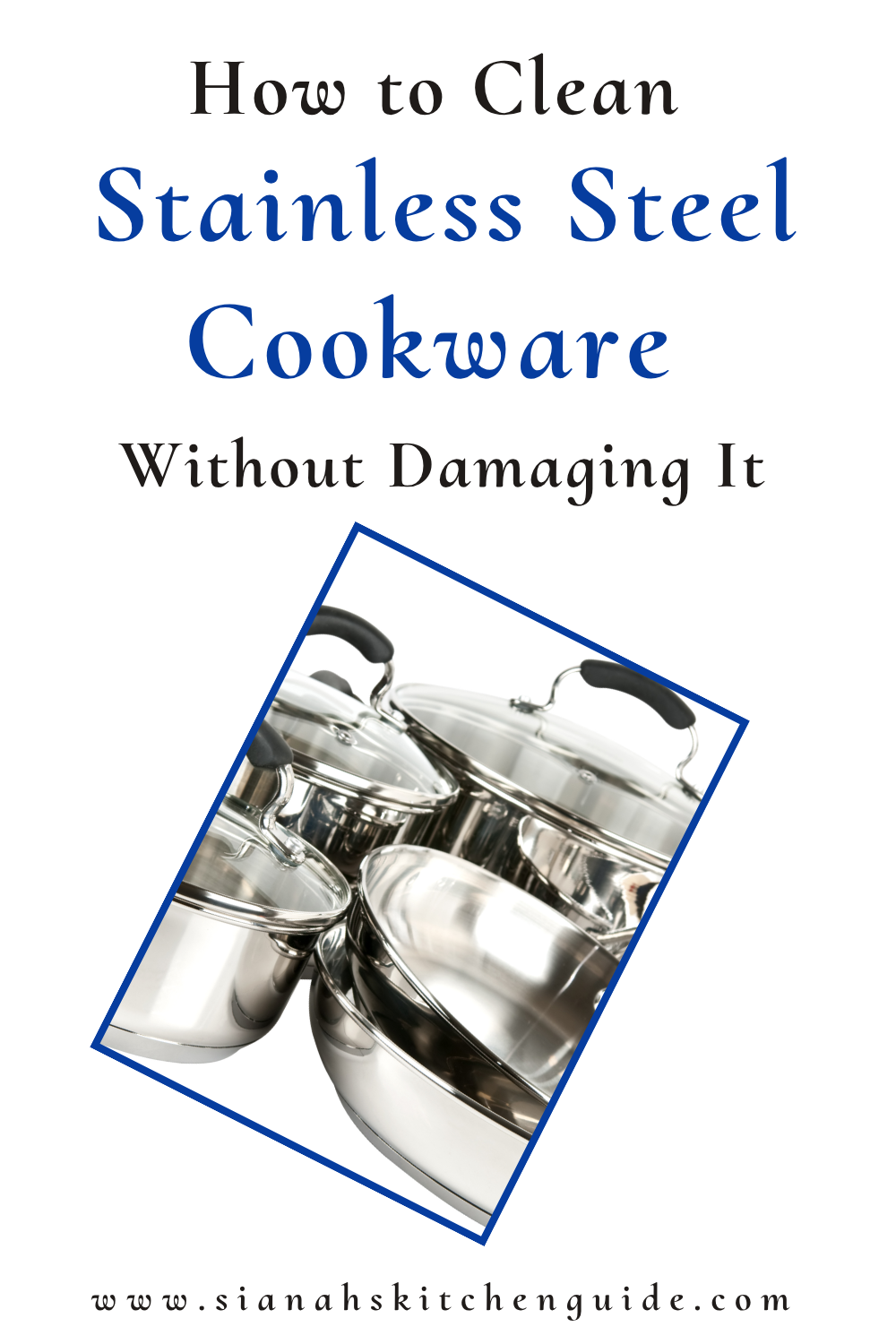
Stainless Steel Cookware Maintenance: Bar Keepers Friend and the Five Rules

Stainless steel maintenance is fundamentally simpler than cast iron and more forgiving than nonstick. There’s no coating to degrade, no seasoning to build, and no chemical sensitivity to respect. 

The maintenance challenge is cosmetic: stainless steel shows heat discoloration, water spots, and oil residue more visibly than any other pan material. The good news is that Bar Keepers Friend, a $3–$5 oxalic-acid cleaning powder available at any grocery store, removes all of these issues completely and quickly.

Consumer Reports noted that stainless steel can be more difficult to clean than nonstick cookware sets, the honest trade-off against the lifetime durability advantage. The difficulty is real but manageable with the right technique.

Hestan’s own guidance for their premium NanoBond set: scrub with Bar Keepers Friend Powder Cleanser and a soft scrubber. The same tool that cleans a $3 skillet from a garage sale works on $1,400 titanium-bonded NanoBond cookware. Bar Keepers Friend is the universal maintenance product for all stainless steel cookware at every price point. 

The Bar Keepers Friend technique that keeps stainless steel looking like new

Apply a small amount of Bar Keepers Friend powder or liquid to a damp cloth or soft sponge. Rub in the direction of the brushed steel grain, never against it, and never in circular motions. 

The grain direction is visible on brushed-finish pans; on mirror-polished interiors, any direction is acceptable. Rinse thoroughly. BKF contains oxalic acid that can cause discoloration if left on the surface. Dry immediately. Done correctly, this takes under a minute and restores the pan’s original appearance regardless of how long the discoloration has been present.

The deglazing technique that makes cleaning easier after searing

After searing a protein, while the pan is still hot, add a liquid, water, stock, or wine, and use a wooden spoon to scrape up the fond. This deglazing step serves double duty: it creates the base for a pan sauce and simultaneously releases everything stuck to the pan’s surface. 

A deglazed pan requires no soaking and minimal scrubbing. A pan that cools with dried fond requires both. Deglazing as standard post-sear practice makes stainless steel maintenance as simple as nonstick cleanup.

What Never To Use 0n Your  Stainless Steel Cookware

Bleach-based cleaners, chlorine pits stainless steel through a chemical reaction with the chromium oxide layer that provides corrosion resistance. Once pitted, stainless steel loses its corrosion-resistance property in that spot permanently. 

Steel wool creates micro-scratches across the entire cooking surface that food proteins bond to, making every subsequent cook stick more than the last. Never use either product on any stainless steel cookware, regardless of price tier.

Stainless Steel Cookware Buying Guide: Match the Set to How You Cook

Your Situation

Best Pick

Why

Best tested overall premium set

All-Clad D3 Everyday 

The Kitchn: best D3 yet — drip rims, contoured handles, 3-ply, lifetime warranty, fully clad

Best 5-ply performance at any price

All-Clad D5 Brushed 

CR excellent across all categories — slower browning for more control, outstanding evenness

Best chef-recommended at a lower price

Made In 5-Ply 10-pcs

5-ply at less than All-Clad D5 price; used in culinary schools; ergonomic handles

Best overall value (tested)

Tramontina Tri-Ply 12-pc 

CNN Underscored tested — outperformed sets costing 3x more, 12-piece, lifetime warranty

Best budget for beginners

Cuisinart Multiclad Pro 12-pc 

20k+ reviews at 4.7⭐, tri-ply, induction-ready, dishwasher-safe — most validated budget set

Best CR-aced mid-range

OXO Mira Tri-Ply

CR: aced evenness, speed, simmer, handle test — all four categories, flared rims

Best for induction cooktops

Demeyere Industry5 

InductoSeal base maximizes magnetic contact; Belgian engineering; standard in European pro kitchens

Most durable set available

Hestan NanoBond 

Titanium-bonded surface — virtually indestructible; Organic Authority: resistant to salt damage and scratches

Best 5-ply under $500

Misen 5-Ply 10-pc 

Direct-to-consumer cuts retail markup — 5-ply construction typically found in $700+ sets

Just starting stainless cooking

Cuisinart Multiclad Pro or Tramontina

Both tri-ply, both proven by testing, both under $220 — either provides the full learning curve

The Three Questions That Determine the Right Set

1. How seriously do you cook?

Beginner to intermediate home cook (weeknight dinners, occasional entertaining): the Cuisinart Multiclad Pro, around $140, or the Tramontina Tri-Ply at $200 covers every technique you’ll use. Both are tri-ply, fully clad, induction-compatible, and dishwasher-safe. 

The performance ceiling you’ll encounter as a casual cook is your technique, not the pan. Serious home cook or aspiring chef (regular entertaining, technique development, high-heat cooking): the Made In 5-Ply at $550 or All-Clad D3 Everyday at $600 provides the pan performance that rewards advanced technique.

2. Do you cook on induction?

Every set on this list is induction-compatible, fully clad 18/10 stainless with a magnetic base layer that is inherently induction-ready. The Demeyere Industry’s InductoSeal base takes induction optimization further, maximizing the magnetic contact surface area for improved efficiency on induction cooktops. 

If induction performance is a priority, Demeyere’s Belgian engineering specifically addresses the induction optimization that standard fully clad construction handles adequately, but doesn’t prioritize.

3. What’s your maintenance tolerance?

If you want near-nonstick ease with zero coating degradation: proper stainless steel technique, adequate preheat before adding food, the Leidenfrost test (water bead and skitter), medium-high heat rather than maximum, produces food release comparable to a well-seasoned cast iron surface. 

The technique is learnable in one session and produces results that justify the slightly higher cleaning effort compared to nonstick.

If you want guaranteed easy cleaning above all else, the Cuisinart and Tramontina budget sets are dishwasher-safe and tolerate casual care better than premium sets that show wear more visibly.

Frequently Asked Questions

What is the best stainless steel cookware set in 2026?

Organic Authority’s 2026 evaluation named the All-Clad D3 the gold standard in American-made stainless steel cookware. The Kitchn’s month-long D3 Everyday skillet comparison confirmed it as the best D3 yet, with an improved handle, drip rims, and exceptional performance. 

For 5-ply performance at a lower price, Made In and Misen both offer compelling alternatives. For the best overall value tested by an independent source, CNN Underscored praised the Tramontina Tri-Ply at under $250 for outperforming sets costing 3x more.

Why do chefs prefer stainless steel over nonstick?

Taste of Home’s culinary assistant described the professional preference directly: stainless steel is the day-to-day cooking go-to because of all its qualities. The core advantage is fond development: stainless steel builds the browned, flavorful layer of caramelized proteins during searing that dissolves into a pan sauce when deglazed. 

Nonstick pans prevent this by design. Additionally, stainless steel has no heat limitations (800°F oven-safe versus 350–550°F for nonstick), no coating to chip or degrade, and is fully non-reactive with acidic ingredients. CNN Underscored confirmed: stainless steel is the most durable, versatile, and safest all-around option.

What’s the difference between tri-ply and 5-ply stainless steel?

Food Network’s chef tester explained the construction: tri-ply has an aluminum core sandwiched between two layers of stainless steel, three layers total. 

Five-ply adds two additional layers of aluminum or stainless steel. The practical difference, confirmed by The Kitchn’s All-Clad comparison: 5-ply distributes heat more slowly and evenly, giving more control over browning at high heat. 

Tri-ply heats faster, which means faster browning with slightly less precision on very high heat. Both produce excellent cooking results; the choice is a cooking style preference. 

Fully clad (layers extend through the sides) is essential regardless of ply count; disk-bottom construction only heats the base evenly.

How do I get food not to stick to stainless steel?

The technique is the Leidenfrost effect: preheat the pan over medium-high heat for 2–3 minutes. Add a few drops of water. If they bead up and skitter across the surface rather than simmering and evaporating, the pan is at the right temperature. 

Add your oil (it should shimmer immediately), let it heat for 30 seconds, then add your food. At the correct temperature, the protein surface that contacts the stainless steel denatures and releases naturally as searing progresses. 

A commonly noted tip: if the food doesn’t release when you try to flip it, it’s not ready yet; properly cooked food releases itself. Wait 30 seconds and try again.

Is Bar Keepers Friend safe for stainless steel cookware?

Yes, Bar Keepers Friend is the recommended cleaning product for stainless steel across every source in this guide, including Hestan’s own care instructions for their $1,000+ NanoBond sets. Bar Keepers Friend uses oxalic acid, a mild acid that dissolves calcium deposits and iron oxide (rust staining) without scratching the stainless surface. 

Apply with a soft cloth or sponge, rub in the direction of the brushed grain, and rinse thoroughly. The only precaution: don’t leave it on the surface for extended periods; rinse within a few minutes of application. 

The best stainless steel cookware sets earn their investment across decades, not years. There’s no coating to replace, no seasoning to rebuild, no chemical limitation on heat or cleaning. 

The same pan that sears your first steak in year one builds the fond for your best pan sauce in year ten. That accumulating confidence in the technique, in the tool, is what makes stainless steel the cookware that serious home cooks stop replacing and start inheriting.

Join Our Email List

Subscribe to get our latest content by email.

    We won't send you spam. Unsubscribe at any time.

    Read Related Posts Here:

    The best food processors for home cooks are not the most expensive, the most powerful, or the most feature-rich. They’re the ones that match how you actually cook, fit the space you actually have, and get used on Tuesday night when you’re tired and just want to make dinner fast. Any of the eight models in this guide will do that. The buying guide table above narrows it to your specific situation in under a minute.

    Leave a Reply

    Your email address will not be published. Required fields are marked *

    Like
    Close
    Sianah’s Kitchen Guide © Copyright 2026. All rights reserved.
    Close
    Seraphinite AcceleratorOptimized by Seraphinite Accelerator
    Turns on site high speed to be attractive for people and search engines.