You’ve switched to organic produce. You read ingredient labels. You filter your water. Then one night, while scraping a stuck egg off an old nonstick pan, you wonder if your cookware is quietly undoing all that effort.
It’s a fair question, and the internet doesn’t make it easy. One article says ceramic is perfect, another says it’s a marketing trick, and a third tells you to throw everything away and buy cast iron.
You don’t need fear. You need facts about what each material is made of and how to use it safely.
This guide explains the best cookware type for health based on what manufacturers and government agencies say, so you can make calm, confident choices for your family’s kitchen.
Table of Contents
ToggleShort Answer
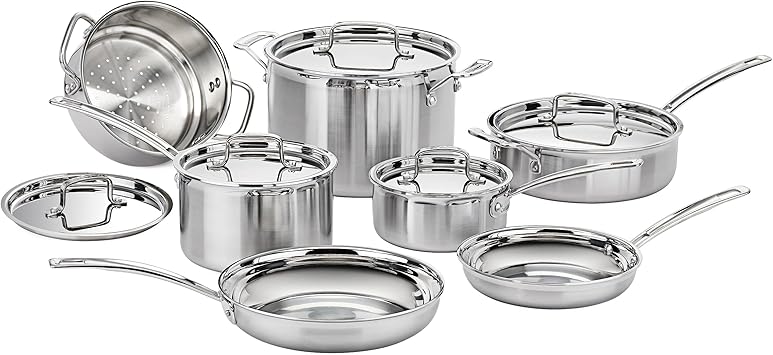
Uncoated stainless steel and cast iron are the simplest healthy choices, because there’s no coating to wear off. Ceramic nonstick sold as PFAS-free is a good option if you want easy release. The FDA says studies show negligible PFAS migration from traditional nonstick, but many families still prefer to skip it.
How Each Material Compares
The healthiest cookware for you depends on what you cook most.
| Material | Health advantage | What to know |
| Stainless steel | No coating | Food can stick while you learn |
| Cast iron | No synthetic coating | Lodge doesn’t recommend acidic foods in seasoned pieces |
| Enameled cast iron | No seasoning, handles acids | Avoid chipping the enamel |
| Ceramic nonstick | Sold as PFAS-free | Coating wears with high heat |
| Traditional nonstick | Very easy release | Contains PTFE, a type of PFAS |