
Countertop Oven vs Convection Oven: What’s the Difference?

The countertop oven vs convection oven comparison confuses a lot of people because the two aren’t always competing appliances.

In fact, sometimes they’re the same thing.

That’s where the confusion starts.

You begin researching countertop ovens and suddenly every product description mentions convection cooking.

Then you start looking at convection ovens and realize many of them are countertop ovens.

At that point, it’s easy to wonder whether you’ve accidentally been comparing apples to apples all along.

The truth is that “countertop oven” describes where the appliance sits, while “convection oven” describes how it cooks.

Understanding that simple distinction can save you a lot of frustration and help you choose the right appliance for your kitchen.

In this guide, I’ll explain the difference between countertop oven and convection oven models, clear up the confusion, and help you determine which option best fits your cooking style.

Short Answer

A countertop oven is an appliance category.

A convection oven is a cooking technology.

Many modern countertop ovens are actually countertop convection ovens because they use fans to circulate hot air around food.

The real comparison is usually between a traditional countertop oven and a countertop convection oven, or between a countertop oven and a full-size convection oven.

For most households, a countertop convection oven offers the best balance of versatility, efficiency, and cooking performance.

Quick Comparison

What Is a Countertop Oven?

A countertop oven is simply an oven designed to sit on your kitchen counter.

It can include features such as:

    • Baking
    • Roasting
    • Toasting
    • Broiling
    • Reheating
    • Air frying
    • Dehydrating

Some countertop ovens use conventional heating elements only.

Others include convection fans.

That’s why not every countertop oven is automatically a convection oven.

What Is a Convection Oven?

A convection oven uses a fan to circulate hot air throughout the cooking chamber.

The moving air helps:

    • Improve heat distribution
    • Reduce hot spots
    • Cook food more evenly
    • Increase browning
    • Reduce cooking times

Convection technology can be found in:

    • Full-size kitchen ovens
    • Wall ovens
    • Commercial ovens
    • Countertop ovens

In other words, convection describes the cooking method, not the size of the appliance.

Why People Get Confused

Imagine someone says:

“I’m thinking about buying a convection oven.”

That statement doesn’t tell you much.

They could mean:

    • A full-size kitchen range
    • A wall oven
    • A countertop oven with convection
    • A toaster oven with convection

Now imagine someone says:

“I’m thinking about buying a countertop oven.”

That also doesn’t tell you everything.

It may be:

    • Conventional
    • Convection
    • Air fryer equipped
    • Smart-enabled

The terms overlap constantly, which is why so many shoppers find them confusing.

The Real Comparison: Conventional vs Convection

Most people are actually trying to compare:

Conventional Countertop Oven

Uses heating elements only.

Heat remains relatively stationary inside the oven.

Advantages:

    • Simpler operation
    • Often lower cost
    • Suitable for basic cooking

Disadvantages:

    • More hot spots
    • Slower cooking
    • Less even browning

Countertop Convection Oven

Uses heating elements plus a fan.

Advantages:

    • More even cooking
    • Faster cooking times
    • Better browning
    • Improved roasting
    • Better baking consistency

Disadvantages:

    • Slightly higher price
    • Learning curve for some recipes

For most cooks, convection is usually the more versatile option.

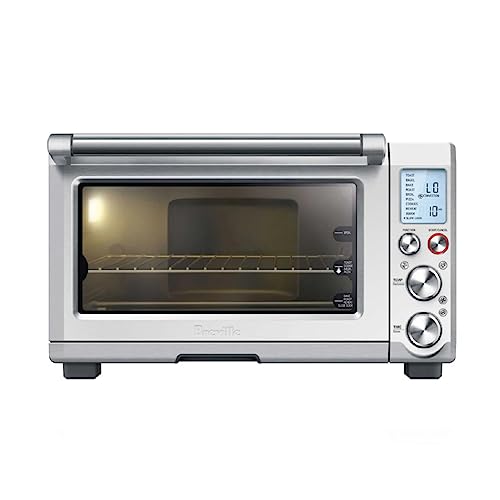
Convection You Can Control: Breville Smart Oven Pro BOV845BSS

Here convection is a setting rather than a separate machine. The listing says the convection setting reduces cook time by up to 30%, and the oven offers 10 cooking functions for everything from toast to roasting.

Click the link now to see the Breville Smart Oven Pro BOV845BSS on Amazon

We earn a commission if you make a purchase, at no additional cost to you.
11/05/2026 11:33 am GMT

Convection With Room to Spare: Cuisinart Chef’s Convection Toaster Oven TOB-260N1NAS

This 1800-watt convection toaster oven offers 15 cooking functions and fits a 13-inch pizza, a 9-by-13 baking pan, and a full-size chicken. The nonstick interior is a welcome detail when you cook messy foods.

Click the link now to see the Cuisinart Chef’s Convection Toaster Oven TOB-260N1NAS on Amazon

We earn a commission if you make a purchase, at no additional cost to you.
11/05/2026 10:57 am GMT

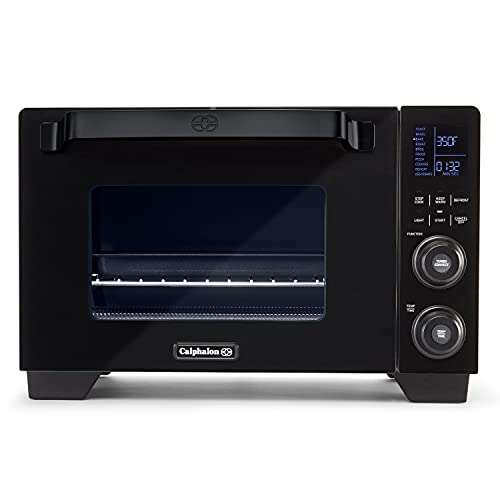
Turbo Convection, Cool-Touch Design: Calphalon Performance Cool Touch Toaster Oven

This large toaster oven pairs turbo convection with a cool-touch design, which makes it a comfortable choice if you cook around kids or tight counter space.

Click the link now to see the Calphalon Performance Cool Touch Toaster Oven on Amazon

We earn a commission if you make a purchase, at no additional cost to you.
11/05/2026 12:09 pm GMT

Which Is Better for Baking?

If baking matters to you, convection often has the advantage.

A quality countertop convection oven can provide:

    • Better heat circulation
    • More even baking
    • Improved browning
    • More consistent results

This becomes especially noticeable when baking:

    • Cookies
    • Muffins
    • Pastries
    • Bread
    • Cakes

That doesn’t mean conventional ovens can’t bake well.

They absolutely can.

Convection simply tends to make the process more consistent.

Which Is Better for Roasting?

Roasting is where convection really shines.

The circulating air helps create:

    • Better browning
    • Crispier skin
    • More even cooking
    • Faster cooking times

For foods such as:

    • Chicken
    • Turkey breast
    • Vegetables
    • Potatoes

convection is often the preferred method.

Which Is Better for Reheating Leftovers?

Convection usually produces better results because it helps restore texture.

Foods such as:

    • Pizza
    • Fried chicken
    • Pastries
    • Roasted vegetables

often benefit from the circulating hot air.

The result is food that tastes closer to freshly cooked.

Which Is More Energy Efficient?

Convection ovens are often more efficient because they cook food faster.

Shorter cooking times can reduce energy consumption.

Many countertop convection ovens also use less electricity than a traditional full-size oven for everyday meals.

That’s one reason they’ve become so popular.

Which Is Better for Families?

For families, capacity matters more than the presence of convection alone.

A larger countertop convection oven can provide:

    • Better meal preparation capacity
    • More flexibility
    • Faster cooking
    • Improved consistency

If you’re feeding several people regularly, choosing adequate size is usually more important than choosing between conventional and convection.

Who Should Buy a Conventional Countertop Oven?

A conventional countertop oven may be enough if:

    • You cook occasionally
    • You want a lower-cost appliance
    • You mostly toast and reheat food
    • Simplicity matters most

Who Should Buy a Countertop Convection Oven?

A countertop convection oven may be the better choice if:

    • You bake regularly
    • You roast vegetables and meats
    • You want faster cooking
    • You value even cooking
    • You cook frequently

For most modern kitchens, this is the option that provides the most flexibility.

Related Guides

Frequently Asked Questions

What is the difference between a countertop oven and a convection oven?

A countertop oven describes the appliance itself, while a convection oven describes the cooking technology. Many countertop ovens include convection cooking.

Is a countertop oven the same as a convection oven?

Not always. Some countertop ovens use conventional heating only, while others include convection fans.

Is convection worth it in a countertop oven?

For many people, yes. Convection can improve cooking consistency, browning, and cooking speed.

Which is better for baking?

A countertop convection oven often provides more even baking and better heat distribution.

Which is better for roasting?

Convection generally performs better because circulating air helps create more even browning and crisping.

Do convection ovens cook faster?

Yes. Convection ovens often reduce cooking times because hot air circulates continuously around the food.

Should I buy a countertop oven or convection oven?

In many cases, you don’t have to choose. Many of the best countertop ovens already include convection technology, giving you the benefits of both.

Conclusion

The countertop oven vs convection oven comparison can be confusing because the two terms describe different things.

A countertop oven describes where the appliance sits.

A convection oven describes how it cooks.

That’s why many modern appliances are actually countertop convection ovens.

For most households, a countertop convection oven offers the strongest combination of versatility, efficiency, baking performance, roasting capability, and everyday convenience.

Instead of focusing on the label, pay attention to the features, capacity, and cooking functions that match the way you cook.

That’s what ultimately determines whether an oven stays on your counter for the long run.

You don’t have to decide today, and you don’t have to remember any of this. Pin the images from this post to my Pinterest, @sianahskitchenguide, so they’re waiting when you’re ready, and follow me there too. If you’d rather browse everything I’ve picked in one place, my Amazon storefront, Sianah’s Lifestyle Finds, is open anytime. It has the recommendations from both my Lifestyle Blog and this blog.

I’m glad you were here.

Sianah ❤️

Leave a Reply

Your email address will not be published. Required fields are marked *

Close

Feature

Countertop Oven

Convection Oven

What It Describes

Appliance Type

Cooking Technology

Size

Usually Compact

Can Be Large or Small

Location

Kitchen Counter

Countertop or Built-In

Fan Circulation

Sometimes

Yes

Baking Performance

Good

Excellent

Roasting Performance

Good

Excellent

Cooking Speed

Moderate

Faster

Energy Efficiency

Good

Often Better

Crispy Foods

Good

Better