
Countertop Oven vs Toaster Oven: What’s the Difference?

The countertop oven vs toaster oven debate confuses a lot of shoppers because manufacturers often use the terms interchangeably.

You find a model online and it’s called a countertop oven.

You find another model that looks almost identical and suddenly it’s called a toaster oven.

Then you discover a convection toaster oven, an air fryer toaster oven, and something called a smart oven.

At that point, it’s reasonable to wonder whether these are actually different appliances or simply different marketing labels.

The truth is that the line between a countertop oven and toaster oven has become increasingly blurred over the years.

Some toaster ovens are little more than upgraded bread toasters.

Others are capable of roasting chickens, baking bread, cooking casseroles, air frying, dehydrating food, and replacing many of the tasks normally handled by a full-size oven.

That’s why the question isn’t simply countertop oven or toaster oven.

The better question is which type best fits the way you cook.

In this guide, I’ll explain the difference between countertop oven and toaster oven models, compare their strengths and weaknesses, and help you decide which one deserves space in your kitchen.

Quick Comparison

What Is a Toaster Oven?

A toaster oven is essentially a small electric oven designed to handle tasks such as:

    • Toasting bread
    • Reheating leftovers
    • Baking small portions
    • Melting cheese
    • Cooking frozen snacks
    • Broiling simple foods

Traditional toaster ovens are compact and straightforward.

Most use simple dial controls and focus on convenience rather than advanced cooking functions.

For many households, that’s perfectly sufficient.

If your typical cooking involves toast, frozen pizza, leftovers, and occasional baking, a toaster oven may meet all your needs.

What Is a Countertop Oven?

A countertop oven is also an electric oven that sits on your kitchen counter.

The difference is that it’s typically designed to perform a much wider range of cooking tasks.

Many modern countertop ovens include:

    • Baking
    • Roasting
    • Broiling
    • Air frying
    • Dehydrating
    • Proofing bread dough
    • Slow cooking
    • Pizza cooking
    • Reheating
    • Toasting

Some models can fit a 9×13 baking dish, a Dutch oven, or even an entire chicken.

In many kitchens, a countertop oven functions as a secondary oven or, for some households, the primary oven.

Why the Confusion Exists

Here’s where things get messy.

Manufacturers frequently use these terms interchangeably.

For example:

    • A Breville Smart Oven is technically a countertop oven.
    • Many retailers list it as a toaster oven.
    • Ninja markets several products as air fryer toaster ovens.
    • Consumers often call all of them countertop ovens.

In reality, there is no universal industry standard that clearly separates the two categories.

That’s why focusing on capacity and features is usually more useful than focusing on the label.

Capacity Comparison

If cooking space matters, this is often where the biggest differences appear.

Typical Toaster Oven Capacity

Most traditional toaster ovens can handle:

    • 2 to 6 slices of bread
    • Small baking trays
    • Personal pizzas
    • Smaller portions

Typical Countertop Oven Capacity

Many countertop ovens can handle:

    • 8 to 12 slices of bread
    • 9×13 baking dishes
    • Muffin trays
    • Whole chickens
    • Dutch ovens
    • Family-sized casseroles

If you’re feeding several people regularly, capacity quickly becomes important.

The Classic Toaster Oven Pick: BLACK+DECKER 4-Slice TO1745SSG

If you are leaning toward a traditional toaster oven, this one shows what that choice looks like in practice. It offers four cooking functions (bake, broil, toast, and keep warm), plus a timer and a removable crumb tray, which suits small households that mostly toast bread and reheat leftovers.

Click the link now to see the BLACK+DECKER 4-Slice Toaster Oven TO1745SSG on Amazon

We earn a commission if you make a purchase, at no additional cost to you.
11/06/2026 12:54 pm GMT

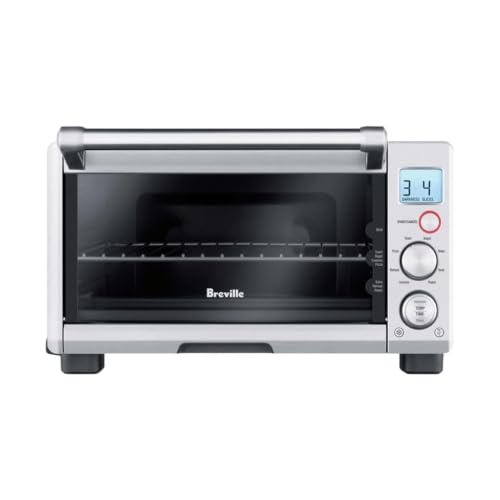
The Middle-Ground Pick: Breville BOV650XL Compact Smart Oven

This small countertop oven and toaster offers 8 cooking functions, so you move well beyond toast without giving up much counter space. It works nicely when you want more control than a basic toaster oven gives you.

Click the link now to see the Breville BOV650XL Compact Smart Oven on Amazon

We earn a commission if you make a purchase, at no additional cost to you.
11/06/2026 12:52 pm GMT

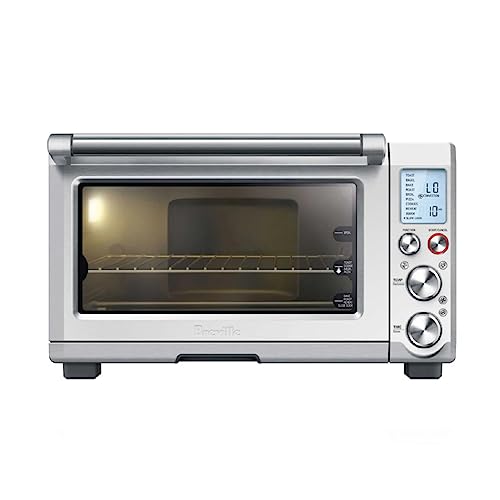
The Full Countertop Oven Pick: Breville Smart Oven Pro BOV845BSS

When you want a countertop oven that can stand in for the big oven on many nights, this model brings 10 cooking functions and a convection setting that reduces cook time by up to 30%.

Click the link now to see the Breville Smart Oven Pro BOV845BSS on Amazon

We earn a commission if you make a purchase, at no additional cost to you.
11/06/2026 12:51 pm GMT

Cooking Functions Comparison

Toaster Oven Functions

Most basic toaster ovens include:

    • Toast
    • Bake
    • Broil
    • Reheat

Countertop Oven Functions

Many countertop ovens include:

    • Toast
    • Bake
    • Broil
    • Roast
    • Air fry
    • Pizza
    • Dehydrate
    • Slow cook
    • Proof
    • Warm
    • Reheat

For some users, those extra functions justify the higher price.

For others, they become features that are rarely used.

Which Is Better for Baking?

If baking is important to you, countertop ovens generally have the advantage.

A larger countertop convection oven often provides:

    • Better temperature stability
    • More interior height
    • Better airflow
    • Larger baking capacity
    • Better support for bread baking

Many toaster ovens can bake successfully.

The difference is that countertop ovens are often designed with baking as a major priority rather than a secondary feature.

Which Is Better for Reheating Leftovers?

Both can perform well.

However, larger countertop ovens frequently offer:

    • Better heat distribution
    • Convection cooking
    • More room for larger containers
    • More even reheating

If leftovers are a regular part of your routine, either option can work, but premium countertop ovens tend to produce better results.

Which Is Better for Families?

For families, countertop ovens usually make more sense.

The larger cooking chamber allows you to prepare:

    • Larger casseroles
    • Family-sized meals
    • Multiple portions at once
    • Larger pizzas
    • Roasts and whole chickens

A smaller toaster oven may require multiple cooking batches, which can become frustrating over time.

Which Is More Energy Efficient?

This answer surprises many people.

The most energy-efficient option is often the one that best matches the amount of food you’re cooking.

For smaller portions:

    • Toaster ovens often use less energy.

For larger portions:

    • Countertop ovens can be more efficient because they cook more food in a single cycle.

Both generally use less energy than a traditional full-size oven for everyday cooking tasks.

Who Should Buy a Toaster Oven?

A toaster oven may be the better choice if:

    • You mostly make toast
    • You reheat leftovers occasionally
    • You cook for one or two people
    • Counter space is limited
    • You want a lower-priced appliance

Who Should Buy a Countertop Oven?

A countertop oven may be the better choice if:

    • You cook frequently
    • You bake regularly
    • You prepare family meals
    • You want air frying capability
    • You want to reduce reliance on a full-size oven
    • You value versatility

Related Guides

Frequently Asked Questions

What is the difference between a countertop oven and toaster oven?

The biggest differences are usually capacity, cooking functions, and overall versatility. Countertop ovens are generally larger and designed for a wider variety of cooking tasks.

Is a countertop oven better than a toaster oven?

Not necessarily. It depends on your cooking habits. A countertop oven offers more versatility, while a toaster oven may be sufficient for simpler needs.

Can a toaster oven replace a regular oven?

For some individuals and couples, yes. However, most traditional toaster ovens have limited capacity compared with a conventional oven.

Can a countertop oven replace a regular oven?

Many larger countertop ovens can handle most everyday baking, roasting, reheating, and air frying tasks.

Is a countertop convection oven worth it?

If you bake, roast, or cook frequently, convection cooking can improve heat circulation and cooking consistency.

Which is better for baking bread?

Countertop ovens generally perform better because they typically offer more interior space, better temperature stability, and advanced features such as proof settings.

Conclusion

The countertop oven vs toaster oven debate isn’t really about which appliance is better.

It’s about choosing the appliance that matches the way you cook.

If your needs are simple and you mainly toast bread, reheat leftovers, and prepare small meals, a toaster oven may be all you need.

If you want greater capacity, more cooking functions, and the ability to handle everything from bread baking to family dinners, a countertop oven is usually the stronger choice.

The label matters far less than the appliance’s actual capabilities.

Focus on capacity, cooking functions, and how you plan to use it, and you’ll end up with an oven that serves your kitchen well for years to come.

You don’t have to decide today, and you don’t have to remember any of this. Pin the images from this post to my Pinterest, @sianahskitchenguide, so they’re waiting when you’re ready, and follow me there too. If you’d rather browse everything I’ve picked in one place, my Amazon storefront, Sianah’s Lifestyle Finds, is open anytime. It has the recommendations from both my Lifestyle Blog and this blog.

I’m glad you were here.

Sianah ❤️

Leave a Reply

Your email address will not be published. Required fields are marked *

Close

Feature

Toaster Oven

Countertop Oven

Primary Purpose

Toasting and simple cooking

Multi-purpose cooking

Capacity

Smaller

Larger

Cooking Functions

Basic

Extensive

Air Fry Capability

Sometimes

Often

Bread Baking

Limited

Better suited

Family Meals

Often limited

Better option

Price Range

Lower

Usually higher

Conventional Oven Replacement

Rarely

Often