Finding the best pizza oven for outdoor kitchen use is really two decisions layered on top of each other.
Which oven, and how it actually fits into a permanent structure rather than a patio corner you can rearrange later.
We finished an entire outdoor kitchen build before even looking at ovens, only to discover the countertop cutout we had planned was too shallow for the unit we wanted.
The oven ended up sitting beside the island instead of inside it, a completely avoidable, expensive lesson.
If you’re still deciding between styles generally, The Best Pizza Oven for Home Use covers fuel and size basics first, and The Best Pizza Oven for Entertaining is worth reading if hosting capacity matters as much as the permanent setup itself.
Do You Need a Built-In Pizza Oven for an Outdoor Kitchen?
Table of Contents
ToggleNo, not strictly. A genuinely permanent outdoor kitchen benefits from an oven built to match that permanence, in both size and finish, but a freestanding unit works perfectly well positioned within the space rather than embedded into it.
Fontana Forni Marinara Luxury Outdoor Pizza Oven
The Marinara is built as a genuine centerpiece for a permanent outdoor cooking space, wood-fired, 100% made in Italy, and capable of cooking three 12-inch pizzas or four 10-inch pizzas at once.
Its included cart and cover mean it arrives ready to anchor a serious kitchen build rather than needing separate accessories sourced afterward.
Click here to buy the Fontana Forni Marinara Luxury Outdoor Pizza Oven on Amazon.
HALO Versa 16 Pizza Oven
The HALO Versa 16 works well as a portable option set into a dedicated outdoor kitchen counter, using a patented dual burner system with a rotating stone to produce pizza in about 5 minutes.
Its size and consistent output suit a semi-permanent setup without requiring a full built-in installation.
What Countertop Material Can Handle a Pizza Oven?
This is worth taking seriously before you finalize any countertop material, since a wood-fired or gas pizza oven sitting directly on a surface can expose that material to sustained heat well above what most countertops are rated for.
Natural stone, granite specifically, and poured concrete both handle this kind of heat exposure well.
Standard laminate or lower-grade solid surface materials are not a safe pairing for a pizza oven sitting directly on top, and should be avoided in that specific zone even if used elsewhere in the kitchen.
Gas or Wood for an Outdoor Kitchen Pizza Oven?
Both fuel types can reach similar peak temperatures, so this comes down to convenience versus flavor rather than raw performance.
Gas heats faster, requires no fuel management, and runs cleaner, genuinely practical advantages for a kitchen you’ll use often.
Wood delivers a more traditional, smoky flavor but demands more attention and a place to store fuel nearby.
A hybrid oven that runs on either splits the difference, letting you default to gas on a busy weeknight and switch to wood when flavor is the priority.
Gozney Arc XL Propane Outdoor Pizza Oven
The Arc XL cooks a 16 inch pizza in as little as 60 seconds on gas, with a digital display and precision lateral-flame control that suit a built-in setup where consistent, repeatable results matter.
Its removable stone floor also simplifies cleanup, a genuine advantage for an oven that’s part of a kitchen you’re maintaining regularly.
Click here to buy the Gozney Arc XL Propane Outdoor Pizza Oven on Amazon.
How Much Clearance Does a Pizza Oven Need in an Outdoor Kitchen?
Manufacturer guidance for gas pizza ovens generally specifies a minimum clearance of at least 10 feet from combustible material during operation, a figure worth confirming against your specific oven’s manual before finalizing any built-in layout.
This matters more in a permanent structure than a movable patio setup, since you can’t simply reposition a built-in unit later if the clearance turns out to be tight.
BIG HORN Gas Pizza Oven
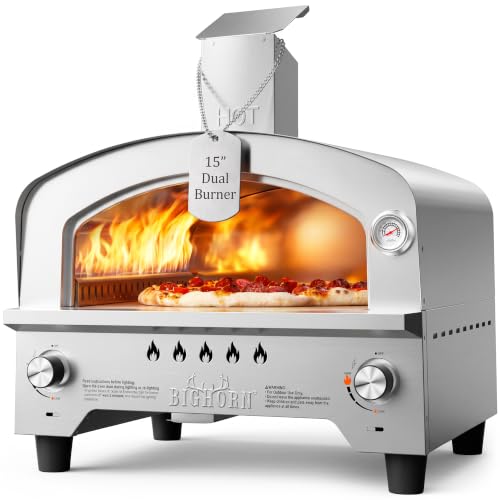
If you want a dependable, no-frills option for a straightforward outdoor kitchen build, the BIG HORN pairs a 15 inch pizza stone with a stainless steel build made to stay in one place.
It’s a solid choice for a permanent setup that doesn’t need the premium price tag of an Italian import to perform well.
Should You Buy the Pizza Oven Before or After Building the Outdoor Kitchen?
Before, without exception. Choosing the oven first lets you design the countertop cutout, clearance, and ventilation around its exact dimensions, rather than trying to retrofit a kitchen that was never planned with a specific unit in mind. This is a single most common, most expensive error in this whole process.
Frequently Asked Questions
Do You Need a Built-In Pizza Oven for an Outdoor Kitchen?
No. A freestanding oven positioned within the space works well, though a built-in unit offers a more seamless, permanent look if that’s the priority.
Can You Put a Portable Pizza Oven in an Outdoor Kitchen?
Yes, as long as it sits on a heat-rated surface with proper clearance. It’s a more affordable, flexible option than a fully built-in unit.
What Countertop Material Can Handle a Pizza Oven?
Natural stone like granite, or poured concrete, both handle sustained high heat well. Standard laminate or lower-grade solid surface materials should be avoided in that specific zone.
Gas or Wood for an Outdoor Kitchen Pizza Oven?
Both reach similar peak temperatures. Gas offers convenience and cleaner operation, wood offers traditional flavor, and hybrid models let you choose either depending on the day.
How Much Clearance Does a Pizza Oven Need in an Outdoor Kitchen?
A commonly cited minimum is 10 feet from combustible material, though this should always be confirmed against your specific oven’s manufacturer guidance.
Should You Buy the Pizza Oven Before or After Building the Outdoor Kitchen?
Before. Designing the countertop cutout and clearance around the oven’s exact dimensions avoids costly retrofitting later.
Conclusion
The best pizza oven for an outdoor kitchen depends on how permanent you want the setup to feel and how much flexibility you’re willing to trade for that.
Whichever direction you choose, confirm your countertop material, clearance, and oven dimensions before a single cut is made, not after.