What temperature should a pizza oven be for the pizza you’re actually trying to make? This is the single most misunderstood part of pizza oven ownership.
It’s why so many first-timers end up with a pale, bready crust despite owning an oven that supposedly reaches 950°F.
We hit this wall during our first few cooks. The dome thermometer said 900°F. The crust came out soft and sad every time. Turns out we were checking the wrong number entirely.
Different pizza styles need genuinely different temperatures. And the number on your oven’s dial isn’t necessarily the number that matters most.
This guide covers what to aim for, style by style, and what to do when your oven isn’t hitting the mark.
If you’re still deciding on fuel type, Gas vs. Wood vs. Electric Pizza Ovens: Which Fuel Gives You the Best Pizza? covers how that choice affects heat consistency, which ties directly into everything below.
How Hot Does a Pizza Oven Need to Be?
Table of Contents
ToggleIt depends entirely on the style. It’s not just about air temperature. It’s about floor temperature specifically.
The stone is what actually crisps the bottom crust. It heats up more slowly than the air around it. An oven can read 900°F on its dome thermometer while the stone underneath sits at 600°F.
That’s exactly why a pizza launched too early comes out soggy on the bottom, even from an oven that’s technically hot enough by the dial.
An infrared thermometer pointed directly at the stone gives you a far more honest read than the built-in gauge ever will.
Ooni Karu 2 Multi-Fuel Outdoor Pizza Oven
If tracking temperature accurately matters to you, the Karu 2 includes an integrated thermometer built directly into the oven.
It runs on wood or gas with the optional gas burner attachment, and reaches temperatures suited to genuine Neapolitan-style cooking.
Click here to buy the Ooni Karu 2 Multi-Fuel Outdoor Pizza Oven on Amazon.
What Temperature Should a Pizza Oven Be for Neapolitan Pizza?
Neapolitan sits at the end. Generally, 850°F to 950°F.
That’s the temperature that produces the classic leopard-spotted, slightly charred crust in just 60 to 90 seconds.
The water in the dough flashes to steam fast enough to puff the crust’s edge before the gluten structure fully sets. Drop below that window, and you lose the puff entirely, no matter how good the dough is.
This is also exactly why a standard home oven can’t produce true Neapolitan pizza. Most home ovens cap out around 500°F to 550°F.
Hundreds of degrees short. Which is the entire reason dedicated outdoor pizza ovens exist in the first place.
Gozney Roccbox Outdoor Pizza Oven
If Neapolitan-style pizza is specifically what you’re after, the Roccbox reaches 950°F and can cook a 12-inch pizza in as little as 60 seconds.
Its ceramic insulation helps it hold heat consistently through multiple back-to-back cooks, which matters when you’re feeding a crowd Neapolitan-style.
Click here to buy the Gozney Roccbox Outdoor Pizza Oven on Amazon.
What Temperature Should a Pizza Oven Be for New York Pizza?
New York style runs considerably cooler. Generally 600°F to 700°F, with a longer bake of 6 to 10 minutes rather than under two.
That lower, longer approach produces the style’s signature crispy-yet-foldable crust. It also lets the larger amount of cheese typical of New York-style pizza melt evenly, without the crust burning first.
Good news if you’re working with a versatile oven. Most gas and multi-fuel ovens capable of hitting Neapolitan temperatures can simply run cooler for New York style. You’re not locked into one type of pizza based on your oven choice.
HALO Versa 16 Pizza Oven
If you want an oven flexible enough to handle both high-heat Neapolitan and lower, longer New York-style bakes, the HALO Versa 16 uses a dual burner system with a rotating stone for consistent results across styles.
Its 16-inch surface also gives you room to work with New York-style pizza’s typically larger diameter.
Why Is My Pizza Oven Not Getting Hot Enough?
A few specific culprits are almost always the cause. Wind is a bigger factor than people expect. It pulls heat away from the cooking chamber and can prevent the stone from ever reaching target temperature, especially with wood or pellet fuel.
One pizza-industry authority who has spent over a decade testing home ovens specifically recommends targeting a stone temperature above 750°F, and notes that windy conditions are consistently the biggest reason home cooks fall short of that number, even when the manufacturer’s stated preheat time has already passed.
Moving your oven to a sheltered spot, or simply waiting for calmer conditions, often solves the problem entirely.
Door position matters too. Leaving the door open, or not fully seated, during preheating lets heat escape continuously. Most manufacturers recommend keeping it closed except when actively checking the stone.
For gas ovens specifically, check that your tank has adequate fuel and that burners are free of grease buildup, since accumulated grease can restrict gas flow and reduce flame output over time.
Cozze 13” Gas Pizza Oven
If you want a gas oven with a built-in thermometer to catch heating issues early, the Cozze pairs a triple burner setup with a rotating stone and integrated temperature gauge.
It preheats in about 15 minutes, giving you a quick baseline for whether your oven is heating normally.
How Long Does a Pizza Oven Take to Heat Up?
This depends heavily on fuel type. Gas ovens are fastest, typically reaching target temperature in 15 to 30 minutes, plus another 5 to 10 minutes for the floor to catch up to the air.
Wood-fired ovens take considerably longer, generally 45 minutes to an hour and a half for the floor to reach full, even heat.
Skipping this preheat time shows up in your results, and the data on this is more dramatic than most people expect.
The stone preheated for only 15 minutes measured just 291°F and produced a pale, underbrowned crust. The one preheated for a full hour measured 509°F and came out well browned and crisp. Same oven. Same dough. The only difference was patience.
That lesson applies directly to pizza ovens too. A rushed preheat means an undercooked bottom, no matter how hot the air inside reads.
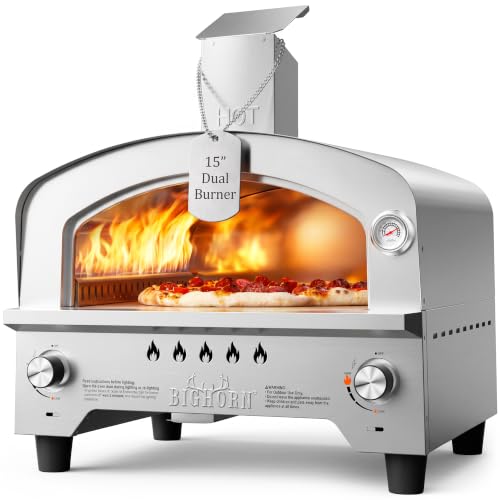
BIG HORN Gas Pizza Oven
If a manageable preheat time matters to your routine, the BIG HORN pairs a 15-inch pizza stone with a stainless steel build designed for consistent gas heating.
Its straightforward design makes it easy to gauge exactly how long your specific setup needs before that first pizza goes in.
For more on how your fuel choice specifically affects both preheat time and final flavor, Best Wood for Pizza Oven covers what to burn and what to avoid.
And if you’re still weighing gas against wood before any of this temperature talk even applies to you, Choosing the Right Pizza Oven is the right place to start first.
Frequently Asked Questions
What Temperature Should a Pizza Oven Be?
It depends on the style. Neapolitan needs 850°F to 950°F, New York style needs 600°F to 700°F, and both floor and air temperature matter, not just the dial reading.
How Hot Does a Pizza Oven Need to Be?
It varies by pizza style, but the more important factor is confirming the stone floor itself has reached temperature, not just the air inside the chamber, since the floor is what actually crisps the crust.
What Temperature Should a Pizza Oven Be for Neapolitan Pizza?
850°F to 950°F, which produces the classic leopard-spotted crust in 60 to 90 seconds. Standard home ovens can’t reach this range, which is why dedicated pizza ovens exist.
What Temperature Should a Pizza Oven Be for New York Pizza?
600°F to 700°F, with a longer 6 to 10-minute bake that produces the style’s signature crispy-yet-foldable crust and allows larger amounts of cheese to melt evenly.
Why Is My Pizza Oven Not Getting Hot Enough?
Common causes include wind pulling heat away from the chamber, the door being left open during preheating, low fuel, or grease buildup restricting gas flow in gas ovens.
How Long Does a Pizza Oven Take to Heat Up?
Gas ovens typically take 15 to 30 minutes plus another 5 to 10 minutes for the floor to catch up. Wood-fired ovens generally need 45 minutes to an hour and a half for full, even heat.
Conclusion
Getting pizza oven temperature right comes down to matching the number to the style you’re actually making, and trusting your stone floor’s temperature over your oven’s air reading.
Give your oven the full preheat time it needs. Invest in an infrared thermometer if you’re serious about consistency. The difference in your crust will be obvious within the first pizza.