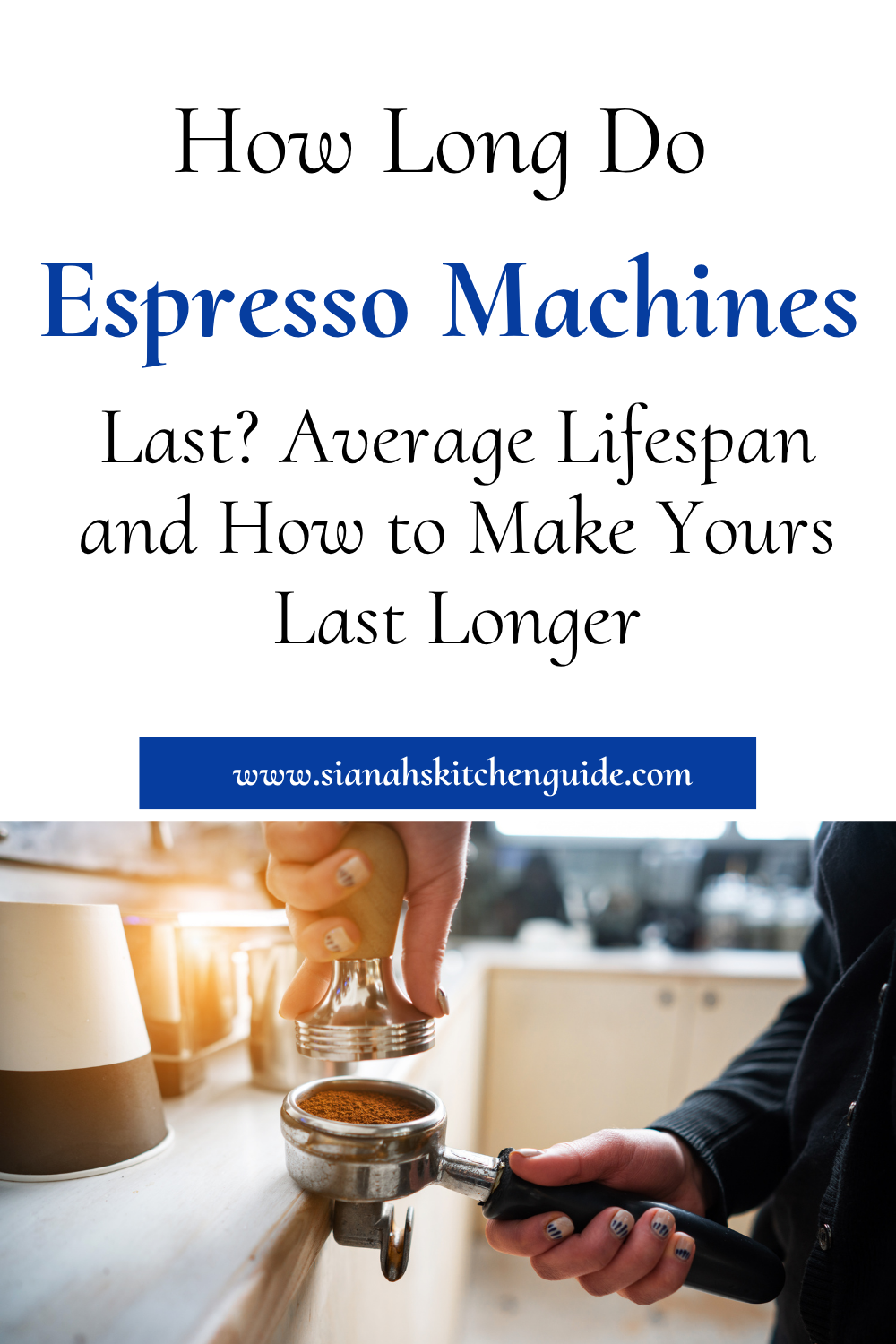
If you’ve been wondering how long do espresso machines last, the answer depends on the quality of the machine, how often you use it, and how well you maintain it. With proper care, many home espresso machines can provide excellent coffee for years.
Buying an espresso machine isn’t like picking up a bag of coffee beans.
It’s an investment.
And when you’re investing that kind of money, you naturally want to know whether it’ll still be making great coffee five or even ten years from now.
The good news is that many espresso machines are built to last.
The difference is that some owners treat them like disposable appliances, while others follow a simple maintenance routine that keeps their machines performing beautifully for years.
If you’re wondering what kind of lifespan you can realistically expect, here’s what you should know.
What Affects the Lifespan of an Espresso Machine?
Table of Contents
ToggleNot all espresso machines are built the same, and their lifespan can vary significantly depending on several factors.
The biggest influences include:
- Build quality and materials.
- How often the machine is used.
- Water quality.
- Regular cleaning and descaling.
- Whether worn parts are replaced when needed.
A machine used once a day with proper maintenance will often outlast one that’s heavily used and rarely cleaned.
Factor | Impact on Lifespan | Why It Matters |
Build quality | High | Better components last longer |
Maintenance | High | Prevents premature wear |
Water quality | High | Reduces mineral buildup |
Average Lifespan by Machine Type
The type of espresso machine you buy also plays a role in how long it will last.
Machine Type | Average Lifespan | Notes |
Manual | 10–15+ years | Fewer electronic components |
Semi-automatic | 8–15 years | Durable with regular maintenance |
Automatic | 7–12 years | More electronics require upkeep |
Super automatic | 5–10 years | Convenience comes with added complexity |
These are general expectations rather than guarantees. Regular care and quality construction often matter more than the machine type itself.
Signs Your Espresso Machine Is Wearing Out
Sometimes your machine will let you know it needs attention long before it stops working completely.
Watch for signs such as:
- Inconsistent brewing temperatures.
- Weak steam pressure.
- Frequent leaks.
- Unusual noises.
- Repeated error messages.
- Repairs becoming more frequent.
Some of these problems can be fixed with routine maintenance or replacement parts, while others may indicate it’s time to consider a new machine.

How Much Capacity Do You Really Need?
One of the biggest mistakes shoppers make is buying an espresso machine that’s either too small or far larger than they really need.
Think about how many drinks you’ll make on a typical day.
If you’re the only coffee drinker in your home, a compact machine with a smaller water reservoir may be more than enough.
But if several people reach for espresso every morning, you’ll appreciate a larger water tank and bean hopper that don’t need constant refilling.
Here’s a simple guide.
Daily Coffee Routine | Recommended Machine Size | Why |
1–2 drinks per day | Compact | Saves space without sacrificing quality |
3–6 drinks per day | Standard | Good balance of capacity and countertop space |
6+ drinks per day | Large | Handles multiple drinks with fewer refills |
Choosing a machine that matches your routine will make your mornings much more enjoyable.
Other Space-Saving Features to Consider
The overall footprint isn’t the only thing that affects how well an espresso machine fits your kitchen.
Some thoughtful design features can make a big difference in day-to-day use.
Look for features such as:
- Front-access water reservoirs that don’t require lifting the tank from the back.
- Slim profiles for narrow countertops.
- Integrated burr grinders to eliminate the need for a separate grinder.
- Foldable or adjustable cup trays for different mug sizes.
- Cord storage to reduce countertop clutter.
These small details can make even a larger machine feel more practical in a modest kitchen.
Frequently Asked Questions
What size espresso machine is best for a small kitchen?
Compact espresso machines are usually the best choice for small kitchens because they require less counter space while still producing excellent espresso. Before buying, measure both your available counter space and the clearance beneath upper cabinets.
Does a larger espresso machine make better coffee?
Not necessarily.
Larger machines often include bigger water tanks, dual boilers, or additional features, but the quality of your espresso depends more on the machine’s design, temperature stability, and your brewing technique than on its physical size.
Do I need a large water reservoir?
If you prepare several drinks every day or have multiple coffee drinkers in your household, a larger reservoir reduces the need for frequent refills. For occasional use, a smaller tank is usually sufficient.
Can an espresso machine fit under kitchen cabinets?
Many can, but always check the height of the machine and leave enough room to open the bean hopper, refill the water reservoir, and perform routine maintenance.
Should I choose a machine with a built-in grinder?
A built-in grinder saves counter space and keeps everything in one appliance, making it an excellent option for kitchens with limited room.
Conclusion
Choosing what size espresso machine you need isn’t just about finding one that fits your countertop. It’s about finding one that fits your lifestyle.
A compact machine can be perfect for a single coffee drinker in a small apartment, while a larger model may be a better investment for a busy household that prepares multiple lattes and cappuccinos every day.
Before you buy, measure your available space, think about how often you’ll use the machine, and consider the features that matter most to you.
Taking a few extra minutes to plan now can save you from frustration later and help you enjoy your espresso machine for years to come.