Are expensive food processors worth it, or is that extra couple hundred dollars just buying you a nicer logo?
Honestly, it depends on how you cook, and how long you actually want the thing to last.
I bought my first one purely on price, ninety-nine dollars, and the only reason I even used it was to grate coconut for a recipe I never made again after that week.
It was affordable and fine, until the day the blade started sounding wrong.
If you’re still deciding on capacity before you even get to price, What Size Food Processor Do I Need? is worth reading first, and if reliability is part of what’s pushing you toward a pricier model, Why Is My Food Processor Not Working? covers the failure points that tend to separate cheap machines from durable ones.
What Actually Separates a Premium Machine
Table of Contents
ToggleThe honest answer to what makes a premium food processor better usually comes down to motor design, not marketing.
Budget models rely on a belt or gear-driven motor, which needs more wattage to deliver the same real torque a direct-drive motor produces at lower wattage.
Direct-drive motors connect the blade shaft straight to the motor with no belt to strip, which is exactly why higher-end brands can back their motors with warranties that stretch decades instead of one year.
Warranty length is genuinely one of the most honest signals here.
Cuisinart backs its Custom line with a three-year limited warranty on the full unit, considerably longer than the one-year coverage typical of most budget brands, and their premium lines extend motor coverage even further.
That’s not marketing fluff. It’s a manufacturer telling you how confident they are that the motor won’t fail.
Breville BFP610 Sous Chef 9 Cup Food Processor
This is the one that made me understand what people mean by “buy it for life.”
Its die-cast metal base and heavier construction feel like a different category of appliance entirely compared to the plastic bodies most budget models use.
Its micro-serrated blade system handles chopping, slicing, and shredding with a precision that budget machines just can’t match, and the adjustable slicing disc alone is worth the jump for anyone who cooks often.
Click here to buy the Breville BFP610 Sous Chef 9 Cup Food Processor on Amazon.
Is a 14-Cup Food Processor Worth It?
For anyone regularly batch cooking or feeding a family, yes. Whenever people ask, is a 14 cup food processor worth it comes down to whether you actually process large volumes often enough to need it.
A full head of cabbage or four pounds of shredded chicken fits without stopping to empty and refill, which is exactly the kind of thing that makes a premium price feel justified rather than wasteful.
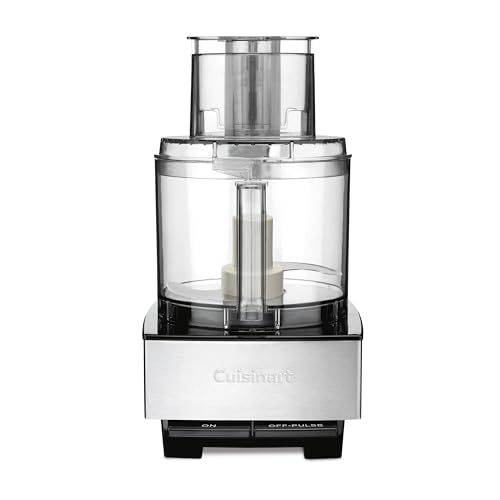
Cuisinart Food Processor, 14-Cup
This has been the default recommendation in this category for years, and using it makes the reason obvious.
The extra-large feed tube swallows whole vegetables without pre-cutting, and the 720-watt motor doesn’t strain under a full load the way smaller machines do.
It carries a full five-year motor warranty alongside the standard unit coverage, a real vote of confidence from a brand that’s been making these for decades.
Click here to buy the Cuisinart Food Processor, 14-Cup on Amazon.
Is a Professional Food Processor Worth It at Home?
This is where things become genuinely subjective. Whether a professional food processor is worth it for home use depends less on your cooking skills and more on how often you’ll actually use it.
If you’re processing pounds of ingredients every week, batch cooking regularly, or entertaining often, a commercial-grade or professional-style machine can justify its higher price through better durability, power, and consistency.
But if you mainly use your food processor for occasional, lighter tasks, that extra power may spend more time sitting unused than earning its place on your countertop.
How Long Should a Good Food Processor Last?
A well-built, well-maintained food processor should realistically last well over a decade. So, how long should a food processor last?
It largely comes down to the motor design, build quality, and how well you care for it. Simple habits like hand-washing the blade, avoiding an overloaded bowl, and letting the motor cool between demanding tasks can make a huge difference.
Cheaper models, particularly those with belt-driven motors, tend to wear out faster when they’re used regularly under heavy strain.
There’s also a real safety angle worth knowing here, not just longevity.
In 2016, the CPSC oversaw the largest kitchen appliance recall in its history, roughly 8 million Cuisinart food processors, after riveted blades from models sold between 1996 and 2015 were found to crack over time and shed small metal fragments into food.
It’s a reminder that older blade designs, regardless of price point, can fail unpredictably, which is exactly why checking your model number against recall lists is worth doing if you’ve had a processor sitting around for years.
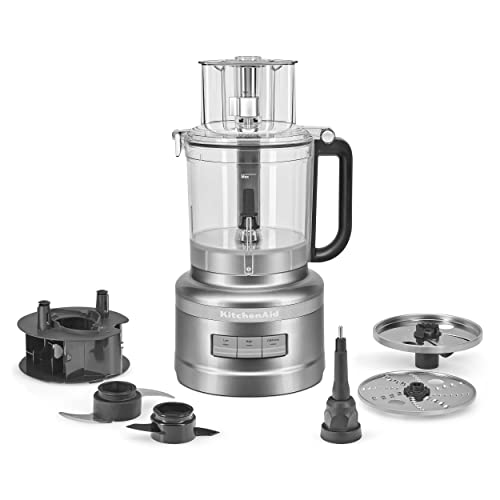
KitchenAid 13-Cup Food Processor
If you want serious capacity without going fully commercial-grade, this one strikes a genuinely useful middle ground.
The adjustable slicing disc and 3-in-1 feed tube make it feel like a premium machine without the top-tier price tag.
Its all-in-one storage caddy also keeps every disc and blade organized, which matters more than people expect once you’re actually using all of them.
Click here to buy the KitchenAid 13-Cup Food Processor on Amazon.
Frequently Asked Questions
Are expensive food processors worth it?
For regular, heavy use, yes, they last longer and handle bigger batches without straining. For occasional light cooking, a budget model often covers everything you actually need.
What makes a premium food processor better?
Mainly motor design. Direct-drive motors deliver stronger, more efficient torque and typically come with far longer warranties than the belt-driven motors in budget models.
Is a 14-cup food processor worth it?
Yes, a larger food processor can be worth it if you regularly prepare large batches of food or cook for a bigger household. However, if you’re mainly preparing smaller portions for one or two people, you probably won’t need the extra capacity.
Is a professional food processor worth it at home?
It depends on frequency of use more than skill level. Heavy, regular use justifies the investment. Occasional cooking usually doesn’t need that much machine.
How long should a good food processor last?
A well-maintained, well-built model can realistically last well over a decade, especially with a direct-drive motor and proper care.
Conclusion
Whether an expensive food processor is worth it really comes down to how often you’ll actually use it and how long you want it to last.
Buy for your real cooking habits, not the biggest motor on the shelf, and the price tag starts making a lot more sense either way.