Is a food processor with a powerful motor worth it, or is that extra wattage just marketing? Well, it depends entirely on what’s going in the bowl.
I bought into the wattage race myself once, convinced bigger numbers meant a better machine across the board.
Then I made almond butter in a lower-wattage processor and watched it need a break every minute just to keep from overheating. That’s when the number on the box finally started making sense.
If you’re still working out how much power your typical cooking actually demands, How Powerful Does a Food Processor Need to Be? breaks it down task by task, and Are Expensive Food Processors Worth It? covers the broader price question this one feeds into.
The Real High Wattage Food Processor Benefits
Table of Contents
ToggleThe high wattage food processor benefits aren’t just about speed, though that’s part of it.
A stronger motor maintains a steady blade speed under pressure, so it powers through hard carrots or thick blocks of cheese instead of bogging down and producing uneven, mushy results.
Cuisinart’s own product guide recommends a minimum 550-watt motor for hard ingredients like potatoes or dense dough, stepping up to 950 watts for genuinely versatile, party-batch cooking.
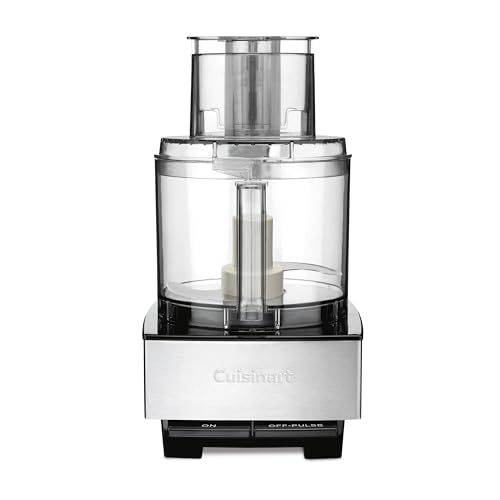
Cuisinart Food Processor, 14-Cup
With a 720-watt motor, this one holds its speed through dense whole wheat dough and thick vegetable batches without ever bogging down. That’s exactly the kind of consistency you’re paying the extra wattage for.
I have thrown genuinely tough jobs at it, and it hasn’t stalled once.
Click here to buy the Cuisinart Food Processor, 14-Cup on Amazon.
Is More Wattage Always Better for a Food Processor?
Honestly, no. More wattage isn’t automatically better, and whether you need it depends on how you use your food processor.
If you mainly chop onions and herbs occasionally, a 1,000-watt machine is likely overkill.
You’ll be paying for a more powerful appliance that’s heavier, more expensive, and takes up more cabinet space than your cooking habits justify.
Breville BFP610 Sous Chef 9 Cup Food Processor
This strikes a genuinely smart middle ground, powerful enough for serious everyday cooking without the bulk and price of a full commercial-grade motor.
For most home cooks, this is exactly the sweet spot between underpowered and overkill.
Click here to buy the Breville BFP610 Sous Chef 9 Cup Food Processor on Amazon.
Food Processor Motor and Noise
Here’s the tradeoff nobody mentions upfront. Food processor motor and noise are genuinely connected, higher wattage motors tend to run louder, since more electrical power moving through the motor naturally generates more sound.
Some premium induction motors buck this trend and run surprisingly quiet despite serious power, but that’s the exception, not the rule.
Food Processor Duty Cycle
This is the detail almost nobody explains clearly, and it’s genuinely the most useful thing to understand before buying your food processor based on wattage alone.
Food processor duty cycle refers to how long a motor can run continuously before it needs a rest.
Low-wattage motors often need a break every 30 to 60 seconds during a demanding task, since the friction and heat build up fast.
A high-wattage, heavy-duty motor handles that same sustained grinding. Nut butter is the classic example, without needing to stop and cool down.
This is exactly what I ran into making almond butter. My old machine needed a pause every minute. A properly powered one just keeps going until the job’s actually done.
If nut butter is part of your regular rotation, Can a Food Processor Make Nut Butter? covers that duty cycle problem in more depth.
Ninja PrecisionPro Food Processor & Dough Mixer, 9-Cup
Rated at 1000 peak watts, this one ran through a full batch of dough kneading without a single forced pause, exactly the kind of sustained performance duty cycle limitations would otherwise interrupt.
Click here to buy the Ninja PrecisionPro Food Processor & Dough Mixer on Amazon.
Frequently Asked Questions
Is a food processor with a powerful motor worth it?
For anyone regularly processing dense ingredients, dough, nuts, hard vegetables, yes. For light, occasional chopping, the extra power often goes unused.
What are the real benefits of a high wattage food processor?
Consistent blade speed under pressure, faster processing, and the ability to handle tough or dense ingredients without stalling or producing uneven results.
Is more wattage always better for a food processor?
No. It depends on your actual cooking habits. Light users are better served by a smaller, more affordable motor rather than paying for unused power.
Does a more powerful food processor motor mean more noise?
Generally, yes. Higher wattage typically means more sound, though some premium motors manage to run quieter despite serious power output.
What is a food processor’s duty cycle?
How long the motor can run continuously before needing a rest. Low-wattage motors often need breaks during demanding tasks like nut butter, while high-wattage motors can run continuously.
Conclusion
A powerful motor is worth paying for when your cooking actually demands it. If you make dough, nut butters, and hard vegetables, you need a strong motor.
If your kitchen tasks stay light and occasional, that extra wattage is mostly just sitting there unused.