I once had a blender that sounded like it was about to take off every time we used it. One day I asked myself, why is my blender so loud?
What I didn’t know at the time was that high-speed motors and blades moving through ice or frozen fruit genuinely generate that much noise.
Understanding why your blender is so loud comes down to physics more than anything wrong with the machine itself.
We used to run our old blender only in the late morning, worried about waking the whole house any earlier.
It wasn’t until we actually measured the noise with a phone app that we realized just how loud “normal” blending had become in our kitchen.
If ice crushing specifically is what triggers the worst of it, Why Is My Blender Struggling With Frozen Fruit and Ice? covers the mechanics of that struggle in more depth, and What Should I Look for in a Blender? is worth reading if noise is going to be a real factor in your next purchase.
Does More Power Automatically Mean More Noise?
Table of Contents
ToggleThe relationship between power and volume isn’t as strict as most people assume. Are powerful blenders always loud is a fair question, and the honest answer is generally yes, but not always.
The CDC’s occupational safety guidance recommends limiting exposure above 85 decibels, and most high-performance blenders running at full speed with ice sit comfortably above that threshold, some well into the 90s.
Sound-dampening housing, insulated enclosures, and better vibration isolation can bring that number down meaningfully even on a genuinely powerful motor, which is why two blenders with similar wattage can sound completely different in the same kitchen.
Vitamix Ascent X4 Gourmet SmartPrep Kitchen System, White
Its self-cleaning program and variable speed control give real power without needing to run at a screaming maximum speed for every single task, which noticeably cuts down on how often we’re hitting the loudest end of its range.
Click here to buy the Vitamix Ascent X4 Gourmet SmartPrep Kitchen System on Amazon.
What the Quietest Blenders Do Differently
When someone asks, what is the quietest blender available, they should understand that it really comes down to engineering choices most product listings never explain.
This is an approach that traps and dampens sound rather than just running a quieter, weaker motor.
That distinction matters, since a genuinely quiet blender isn’t necessarily a weak one. It’s one built with noise reduction as an actual design goal rather than an afterthought.
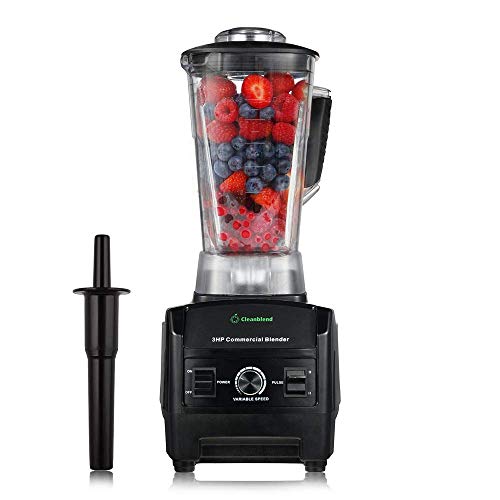
Cleanblend Commercial Blender, 1800W, 3HP, 64oz
Its stainless steel bearings and solid base genuinely reduce the rattling and resonance that make cheaper blenders sound worse than their actual motor output would suggest.
Click here to buy the Cleanblend Commercial Blender on Amazon.
Practical Ways to Make Any Blender Quieter
Can you make a blender quieter without buying a new one? Yes, you can, to a meaningful degree.
A rubber mat or folded towel under the base absorbs vibration before it transfers into the countertop.
The countertop material matters more than people expect. Hard surfaces like granite or marble reflect sound rather than absorbing it.
Keeping the blender away from walls and cabinets reduces echo, and simply starting at a lower speed before ramping up avoids the sharpest, most jarring noise spike that comes from jumping straight to maximum power.
Ninja Professional Blender 2.0, 1200W, 72oz Pitcher
We’ve noticed a real difference just from placing this one on a folded towel instead of directly on our granite counter, a small change that made a genuinely noticeable dent in how loud it sounded in the room.
Click here to buy the Ninja Professional Blender 2.0 on Amazon.
When Vibration Is the Real Culprit
Why does my blender vibrate so much is worth asking separately from raw motor noise, since vibration and sound aren’t quite the same problem.
An unsecured base, a lid or jar that isn’t properly locked in, or an uneven countertop all cause a blender to rattle and shake on top of the motor’s normal sound.
That rattling amplifies the overall noise considerably, which is exactly why a blender can sound far worse on one counter than it does on another, even running the identical recipe.
Frequently Asked Questions
Why is my blender so loud?
High-speed motors and blades cutting through hard ingredients like ice generate a lot of noise. It’s normal, though sound-dampening design can reduce it considerably.
Are powerful blenders always loud?
Generally yes, since more motor power tends to produce more noise, but sound-dampening housing and better vibration isolation can meaningfully reduce volume even on a genuinely strong motor.
What is the quietest blender?
Models built with dedicated sound enclosures and air management systems specifically engineered for noise reduction, rather than blenders that are simply weaker.
Can you make a blender quieter?
Yes. A rubber mat or towel underneath, avoiding hard countertop surfaces, keeping the blender away from walls, and starting at a lower speed all genuinely help.
Why does my blender vibrate so much?
That’s usually because of an unsecured base, a loosely fitted lid or jar, or an uneven countertop surface, all of which amplify noise beyond what the motor alone produces.
Conclusion
Blender noise is mostly physics, a fast motor and hard ingredients doing exactly what they’re built to do.
A towel under the base, a properly secured jar, and realistic expectations about what “quiet” actually means for a powerful machine go a long way toward making the noise easier to live with.