If you’re looking for the best range hood for gas stove cooking, don’t start by choosing the prettiest stainless-steel hood and hoping it can keep up.
I know.
The hood looks like the easy part.
You already picked the stove. You know the finish you want. Maybe you’ve spent an embarrassing amount of time deciding whether your kitchen should look sleek and modern or warm and cozy.
Then comes the hood.
And suddenly you’re looking at numbers like 400 CFM, 600 CFM, 900 CFM, and 1,200 CFM, wondering whether CFM is some kind of secret kitchen language everyone learned except you.
It isn’t.
And once you understand what actually matters for gas cooking, choosing a hood gets much easier.
Why Gas Stoves Need a Good Range Hood
Table of Contents
ToggleGas cooking is wonderful when you actually like cooking.
You can see the flame.
You can adjust the heat quickly.
You can get a pan screaming hot when you’re trying to sear steak instead of waiting around wondering whether dinner is ever going to happen.
But that open flame also produces heat and combustion byproducts in addition to the smoke, grease, steam, and odors that come from cooking itself.
That’s why the range hood for the gas stove isn’t just there to make the kitchen look finished.
It has a real job.
It needs to capture cooking fumes before they spread around your kitchen, collect on your cabinets, or drift into the rest of the house.
And if you’re someone who regularly fries, sears, stir-fries or cooks several dishes at once, the hood needs to keep up with you.
Because the last thing you need is a beautiful kitchen that smells like last night’s fried fish until Thursday.
So What Makes a Good Gas Stove Range Hood?
A good gas stove range hood needs more than an impressive CFM number.
You want to look at the whole package.
That means:
- Appropriate airflow
- Good capture area
- Correct hood width
- Enough depth
- Effective grease filtration
- Proper ducting
- Reasonable noise levels
- A vented installation when practical
- A design that matches how you actually cook
That’s the important part.
How you cook matters.
Someone who boils pasta twice a week doesn’t need the same ventilation setup as someone who cooks sizzling stir-fry every evening.
And the person who thinks “medium heat” means turning the burner down from volcanic to merely terrifying has different needs again.
Should a Gas Stove Hood Vent Outside?
If you have the option, a ducted hood that exhausts outdoors is generally the setup I would favor for gas cooking.
Why?
Because the air isn’t simply being filtered and sent back into the kitchen.
It’s being carried outside.
That’s useful with gas because you’re dealing with combustion byproducts as well as ordinary cooking smoke and grease.
Recirculating hoods can still have a place in kitchens where outdoor ducting isn’t practical, but they don’t provide the same type of exhaust as a properly ducted hood.
So when you’re looking for the best vent hood for a gas range, don’t look at the motor alone.
Look at how the hood will actually be installed.
A 1,000-CFM hood that can’t move air effectively through your ductwork is not the kitchen superhero its box promised you.
How Much CFM Do You Need for a Gas Stove?
This is where shopping can get unnecessarily confusing.
You see one hood with 400 CFM.
Another has 600.
Another has 900.
Then someone mentions 1,200, and suddenly you’re wondering if you need a small helicopter attached to your kitchen wall.
You don’t.
A commonly used starting point for gas cooking is about 100 CFM for every 10,000 BTUs of total burner output.
So, for example:
40,000 BTUs → about 400 CFM
60,000 BTUs → about 600 CFM
80,000 BTUs → about 800 CFM
But treat that as a starting point, not a universal commandment.
Your hood design, cooking style, ductwork, installation, and local requirements can all affect what makes sense.
That’s why range hood CFM for a gas stove shouldn’t be reduced to finding the biggest number on the page.
A well-designed hood with appropriate airflow can be much more useful than simply buying the most powerful blower you can find.
What If I Have a Powerful Gas Range?
Now we’re talking.
A standard 30-inch gas range and a professional-style 48-inch range are not exactly living the same kitchen life.
A larger range can have significantly more total burner output.
You may also be using multiple burners simultaneously.
Maybe you’re boiling something on the back.
Searing something on the front.
Stir-frying in a wok.
And somehow there’s another pot bubbling away because apparently one dinner requires the equipment of a small restaurant.
This is where you need to pay much closer attention to the hood’s CFM, size, depth, and ductwork.
For a powerful gas range, don’t choose the hood first and figure out the ventilation later.
Plan them together.
How Wide Should a Gas Range Hood Be?
The basic rule is simple.
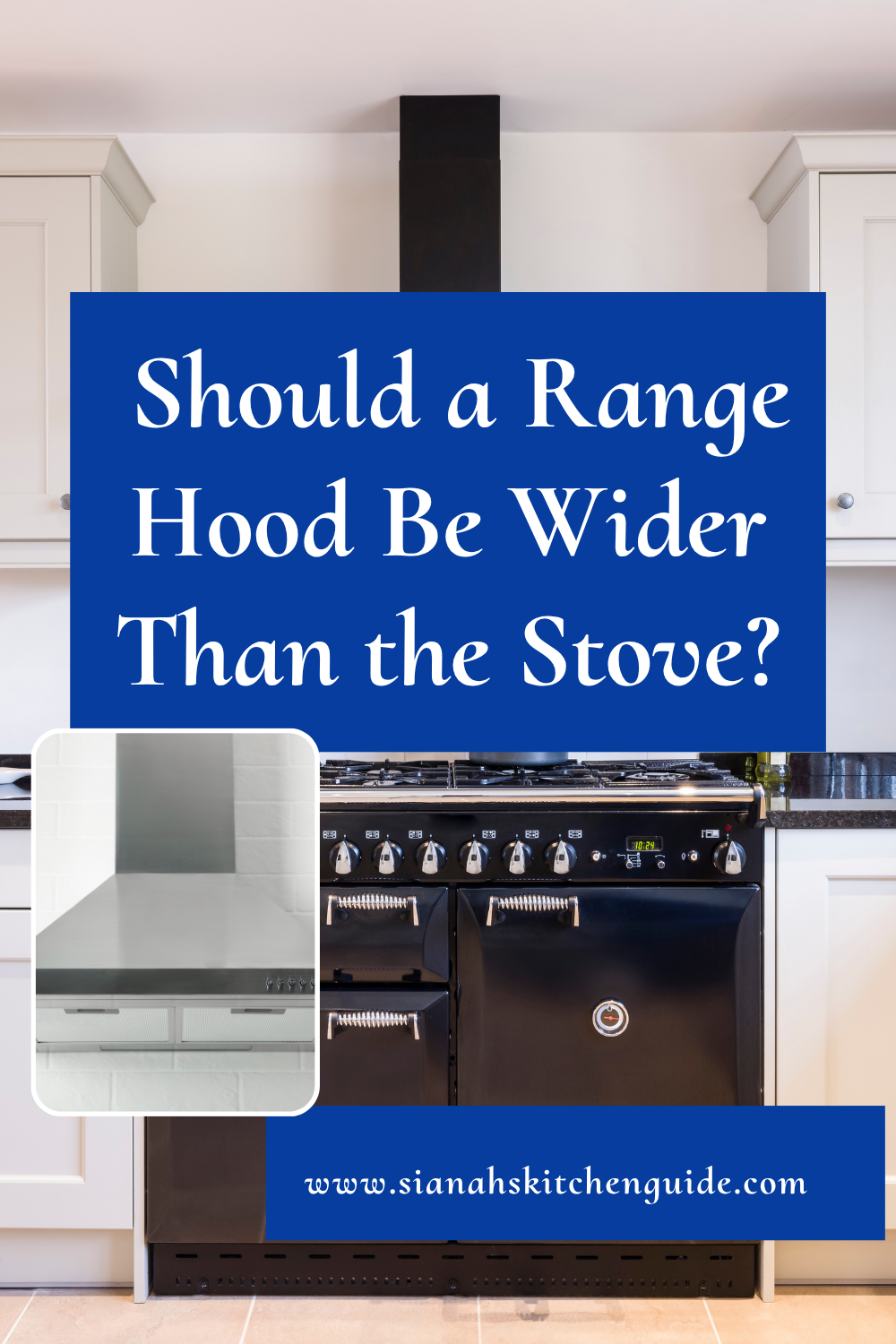
Your hood should generally be at least as wide as your cooking surface.
So:
30-inch range → at least 30-inch hood
36-inch range → at least a 36-inch hood
48-inch range → hood designed to properly cover that larger cooking surface
If your kitchen has the space, going wider can give you additional capture area.
That can be useful if you cook heavily.
But don’t get so obsessed with width that you forget depth.
A hood can be beautifully wide and still fail to capture cooking fumes effectively if it doesn’t provide enough coverage over the front of the burners.
That’s why the best hood isn’t simply the widest hood.
It’s the one that properly covers the cooking area and matches the ventilation needs of your stove.
Why Hood Depth Matters for Gas Cooking
This is one of those things people discover after buying the hood.
They measure the width.
They check the CFM.
They fall in love with the finish.
Then they install it and realize the hood doesn’t extend very far over the front burners.
Oops.
The front burners are often where a lot of cooking happens.
If you regularly use large frying pans, griddles or woks, having enough depth can help the hood capture the rising cooking plume before it rolls toward your cabinets.
So when you’re comparing a range hood for a gas stove, don’t look only at the number printed next to “36 inches.”
Look at the actual dimensions.
Width tells you how much coverage you have from side to side.
Depth tells you how much coverage you have from front to back.
You want both to make sense.
Baffle Filters or Mesh Filters?
Now let’s talk about the part nobody gets excited about until it’s covered in grease.
The filter.
For heavier cooking, stainless-steel baffle filters are worth considering.
They are designed to collect grease and can generally be removed for cleaning.
Mesh filters are also widely used and can work well for many residential cooking situations.
But if you’re regularly frying, searing and stir-frying, you’re going to produce more grease than someone who spends most evenings making toast.
That means filter maintenance matters.
A dirty filter can restrict airflow.
And once you’ve seen what years of cooking grease can do to a kitchen hood, suddenly cleaning the filter doesn’t seem like such a boring chore.
It’s more like preventative maintenance for the appliance you’re relying on to clean your air.
Does a Powerful Hood Have to Be Loud?
Not necessarily.
But there is a trade-off worth understanding.
Higher airflow can mean more noise, particularly when you’re running the hood at its highest setting.
That’s why I wouldn’t buy a hood based entirely on CFM.
Look at the noise rating too.
Manufacturers may use sones or decibels to describe noise.
You don’t need to become an acoustics engineer.
Just remember:
CFM tells you about airflow.
Noise ratings tell you what your ears are going to experience.
And if you’re cooking every night, that matters.
Because a hood that’s so loud you refuse to turn it on isn’t doing anybody any favors.
What About a Recirculating Hood?
A recirculating hood pulls air through filters and sends the filtered air back into the room.
That can be useful when your kitchen simply doesn’t have an easy route to the outside.
But for gas cooking, I would give ducted outdoor ventilation serious priority whenever it is feasible and permitted.
A recirculating system doesn’t send the exhaust outdoors.
Instead, it relies on filtration to remove some contaminants and odors before returning air to the kitchen.
That’s a very different job from exhausting the air outside.
If you’re building or renovating your kitchen, figure out your venting situation before you fall in love with a particular hood.
Otherwise, you may end up buying a gorgeous appliance and then discovering that your ceiling has other plans.
Does a Gas Stove Need a Stronger Hood Than Induction?
Generally, gas cooking deserves particularly careful attention to ventilation because you’re dealing with combustion as well as normal cooking emissions.
That doesn’t mean every gas stove needs an enormous 1,200-CFM hood.
It means you should match the hood to the appliance and your cooking habits.
A 30-inch gas cooktop used for light cooking isn’t the same as a 48-inch high-BTU professional range used for wok cooking.
That’s why gas vs induction range hood comparisons need to look beyond one number.
Your cooking setup matters.
What About Makeup Air?
Here’s another thing that can sneak up on you.
Very powerful exhaust systems can remove a significant amount of air from a home.
Depending on the airflow level, home construction, and local requirements, makeup-air provisions may be required.
This is worth discussing with a qualified HVAC professional or installer if you’re considering a high-CFM hood.
And yes, this is another reason not to casually buy the biggest hood you can find because the number looked impressive.
Your kitchen is a system.
Not a CFM competition.
What Size Hood Do You Need for a 30-Inch Gas Stove?
A 30-inch hood is the straightforward choice for a 30-inch gas stove.
If your kitchen allows it, a 36-inch hood can provide additional coverage.
For someone who cooks lightly, either may make sense depending on the kitchen design.
For someone who fries and cooks at high heat frequently, I would pay closer attention to the entire hood design rather than simply choosing the cheapest 30-inch model.
This is where a wider, deeper hood can become attractive.
What Size Hood Do You Need for a 36-Inch Gas Range?
A 36-inch hood is the minimum starting point because it matches the cooking surface.
If your layout allows, a 42-inch hood can provide additional capture area.
And if you’re dealing with a high-BTU professional-style range, I would look at the hood as part of the complete ventilation system.
The blower, filters, depth, ductwork, and installation all need to make sense together.
What About a 48-Inch Gas Range?
This is where I would stop thinking like someone shopping for a basic kitchen appliance.
A 48-inch range is a serious cooking appliance.
You need a hood designed to match its size and output.
And you need to think about ductwork before the hood arrives at your house.
A powerful hood can’t magically overcome a badly designed duct run.
So if you’re spending serious money on a 48-inch gas range, get the ventilation plan sorted at the same time.
Your future self will thank you.
Probably while making steak.
Best Range Hoods for Gas Stoves
Now that we know what actually matters, let’s look at some options.
I’m not going to pretend there is one perfect hood for every gas stove.
There isn’t.
The best choice depends on your range size, cooking habits, available space and ventilation setup.
Hauslane UC-PS18
This is a strong option for someone who wants a more powerful under-cabinet hood without jumping straight into a commercial-style setup.
The model is known for multiple fan speeds, stainless-steel construction, and a design that works nicely for everyday home kitchens.
FOTILE JQG7507
The FOTILE JQG7507 takes a different approach from the traditional chimney-style hood.
Its angled design is intended to bring the capture area closer to the cooking surface.
That makes it great for cooks who care about capturing smoke and grease close to where they’re actually being produced.
Best for: Frequent frying, searing, and high-heat cooking.
Best for Larger Gas Ranges: ZLINE Range Hoods
ZLINE offers a wide selection of wall-mounted, under-cabinet, and island range hoods, including larger models designed for bigger cooking surfaces.
That’s useful if you’re shopping for a 36-inch or larger gas range and want your hood to match the size of the appliance.
Best for: Larger kitchens and homeowners who want several size and style options.
How to Choose Between These Hoods
If you’re staring at all these options thinking, “Okay, but which one would I actually buy?” Let’s make it easier.
If you have a standard 30-inch gas stove
Start with a good 30-inch hood.
Hauslane, FOTILE, and Broan-NuTone all have options worth investigating.
Focus on adequate CFM, good capture, filtration and a ducted installation if possible.
If you cook heavily
Look beyond the pretty exterior.
You want strong capture, enough airflow, good grease filtration, and ductwork that can support the hood.
If you have a 36-inch gas range
Consider a 36-inch hood at minimum.
If your kitchen has the space, you can also look at a 42-inch hood for additional coverage.
If you have a professional-style gas range
Don’t make this a casual Amazon purchase at midnight because the hood looked nice.
Get your BTU output.
Check the hood’s CFM.
Check the duct size.
Check the installation requirements.
And make sure your home can support the ventilation system.
If noise drives you crazy
Look beyond the maximum CFM.
Check the hood’s noise rating and look for multiple fan speeds.
You don’t need to run the hood at maximum power every time you boil water.
What I Wouldn’t Do
I wouldn’t buy a hood just because it has the biggest CFM number.
I wouldn’t choose a hood that’s narrower than my gas range just because it fits the cabinets.
I wouldn’t ignore the ductwork.
I wouldn’t buy a recirculating hood for a powerful gas range without first understanding its limitations.
And I definitely wouldn’t wait until after the kitchen renovation to figure out where the exhaust duct is supposed to go.
That’s how you end up standing in a beautiful new kitchen with a contractor saying, “Well…that’s going to be a problem.”
Nobody wants that sentence.
Frequently Asked Questions
What is the best range hood for gas stove cooking?
The best hood depends on your stove size, total BTU output, cooking habits, and installation. For most gas kitchens, prioritize adequate airflow, good capture, effective grease filtration, and outdoor venting when practical.
What should I look for in a range hood for gas stove cooking?
Look at CFM, hood width, hood depth, filter design, noise, duct size and whether the hood can be vented outdoors. Your cooking style should also influence the choice.
How much CFM do I need for a gas stove?
A commonly used starting point is about 100 CFM for every 10,000 BTUs of burner output. However, the appropriate airflow depends on the entire ventilation system and should be checked against manufacturer specifications and local requirements.
Is 400 CFM enough for a gas stove?
It can be appropriate for some smaller or lower-output gas ranges. The right number depends on the stove’s total BTU output, hood design, and cooking style.
Is 600 CFM enough for a gas range?
600 CFM can be a sensible starting point for a gas range around 60,000 total BTUs, but the actual ventilation requirements depend on the specific appliance and installation.
Is 1,000 CFM too much for a gas stove?
Not necessarily. Higher-CFM hoods can make sense for powerful ranges and heavy cooking, but higher airflow also brings ductwork, noise and potential makeup-air considerations.
Should a gas stove hood vent outside?
When practical, outdoor venting is generally preferable because it exhausts heat, cooking fumes and combustion byproducts rather than returning filtered air to the kitchen.
Can you use a recirculating hood with a gas stove?
You can encounter recirculating configurations, but they don’t provide the same outdoor exhaust as a ducted hood. For gas cooking, outdoor ventilation is worth prioritizing when feasible.
Should a range hood be wider than a gas stove?
It doesn’t have to be, but the hood should generally be at least as wide as the cooking surface. Going wider can provide additional capture area when the kitchen allows it.
Are baffle filters good for gas cooking?
Baffle filters are a popular choice for heavier cooking because they are designed to collect grease and can generally be removed for cleaning.
Are gas range hoods loud?
They can be, especially at higher airflow settings. Look at the hood’s noise rating and fan-speed options before buying if kitchen noise is a major concern.
Does a powerful gas range hood require makeup air?
Depending on the airflow level, home construction, and local requirements, a high-CFM exhaust system may require makeup-air provisions. Check local requirements and discuss the installation with a qualified professional.
Conclusion
Choosing the best range hood for gas stove cooking isn’t really about finding the hood with the biggest motor.
It’s about finding the hood that can keep up with the way you cook.
If you have a small 30-inch gas range and mostly make simple dinners, you probably don’t need the ventilation system of a restaurant.
If you’re regularly frying, searing, stir-frying and cooking on several burners at once, you need something more serious.
And if you’ve invested in a large professional-style gas range, the hood needs to be part of that investment.
Look at the CFM.
Look at the width.
Look at the depth.
Look at the filters.
Look at the ductwork.
Look at the noise.
Then look at how you actually cook.
Because the best hood isn’t the one that looks impressive on the product page.
It’s the one you turn on while dinner is happening and realize you aren’t standing in a cloud of smoke five minutes later.
That’s the kind of kitchen upgrade you will love.
And honestly, that’s the whole point.