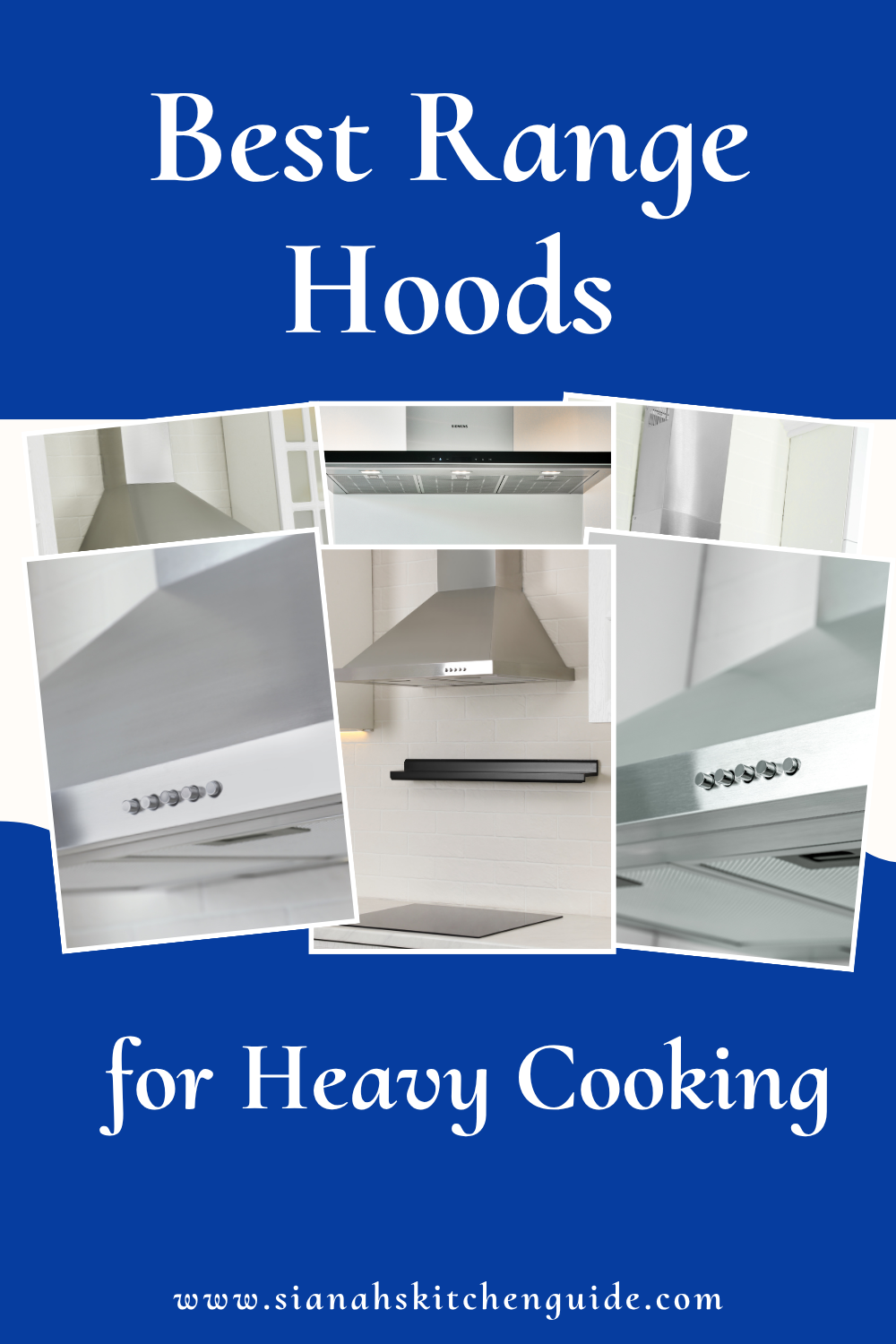
The best range hood for heavy cooking is not necessarily the hood with the biggest CFM number printed on the box.
And if you cook the kind of meals that make the kitchen look like it has been through a small weather event, that distinction matters.
Because heavy cooking is different.
You aren’t just boiling pasta and warming soup.
You’re frying chicken, fish, searing steak, stir-frying vegetables, cooking bacon while something else is bubbling on the next burner.
Maybe you’re making curry.
Maybe you’re cooking fish.
Maybe you’re doing all of this at the same time because you love great home-cooked meals.
And then you look up.
There’s smoke above the stove.
Grease is floating around.
The cabinets are getting that slightly suspicious film.
And the living room smells exactly like whatever you are cooking.
That’s when you realize your little range hood isn’t really cutting it.
What Makes Heavy Cooking Different?
Table of Contents
ToggleHeavy cooking creates more for your range hood to deal with.
More heat.
More grease.
More steam.
More smoke.
Stronger cooking odors.
And when you’re cooking at high temperatures, those things can rise quickly and spread before a weak range hood has a chance to capture them.
That’s why heavy cooking isn’t simply about finding a range hood with a giant fan.
The range hood needs to capture the cooking plume, then move that air outside efficiently.
A recent 2026 ventilation guide points out that residential range hoods can have dramatically different capture efficiency depending on their design, airflow, and burner position. In other words, a powerful motor doesn’t automatically make a range hood good at capturing smoke.
That little detail is worth remembering before you get carried away by a 1,200-CFM product listing.
How Much CFM Do You Need for Heavy Cooking?
There isn’t one CFM number that works for every kitchen.
Your range size matters.
Your fuel type matters.
Your burner output matters.
Your cooking style matters.
Your ductwork matters.
And, yes, how aggressively you cook matters too.
For a professional-style gas range, ventilation requirements are often based on the appliance’s BTU output.
For example, a 60,000-BTU range can point you toward roughly 600 CFM as a starting benchmark.
But heavy cooking can push your needs higher, particularly when you’re regularly using high heat, wok burners, griddles or grills.
Yale Appliance’s ventilation guidance, for example, recommends substantially more airflow for grills, griddles and woks, with requirements increasing as the cooking surface gets larger.
The important thing is not to see a huge number and think:
“More is always better.”
It isn’t.
The hood needs to be matched to the cooking appliance and the ventilation system.
Why a Huge CFM Number Doesn’t Guarantee Great Performance
Let’s say you find a beautiful hood advertising 1,500 CFM.
That sounds impressive, and almost intimidating.
You picture smoke disappearing so quickly that your frying pan starts to wonder where it went.
But then you install that hood with inadequate ductwork.
The hood is too shallow.
Or it’s mounted too high.
Or the front burners sit outside the hood’s effective capture area.
Now you’ve got a very powerful fan enthusiastically moving air while some of your smoke escapes into the kitchen.
That’s why capture matters.
Think of it like trying to catch rain with a cup.
You can have the world’s fastest arm.
If the cup isn’t under the rain, you’re still getting wet.
Hood Depth Matters More Than You Think
This is extremely important if you cook on the front burners.
The front burners are closer to you.
They’re also farther forward from the wall.
And that means smoke and grease can escape past a hood that doesn’t provide enough depth.
For heavy cooking, I would pay close attention to the actual capture area rather than looking only at the width.
A hood can be 36 inches wide and still have a design that doesn’t give your front burners enough coverage.
That’s one reason deeper canopy-style hoods are so popular with serious cooks.
They’re built around the idea of capturing the cooking plume rather than simply looking pretty above the stove.
Do You Need a Ducted Hood for Heavy Cooking?
If you have the option, a properly installed ducted hood is generally the direction I would favor for heavy cooking.
Why?
Because you’re trying to get the cooking air out of the house.
A recirculating hood filters some of the air and sends it back into the kitchen.
That’s useful when exterior venting isn’t possible.
But if you’re frying chicken or doing high-heat wok cooking regularly, having the ability to exhaust cooking air outdoors is a major advantage.
Heavy cooking creates a lot of grease and heat.
You don’t want to simply send that warm, greasy air on a scenic tour through your filter and back into the kitchen.
What Kind of Range Hood Is Best for Heavy Cooking?
For serious cooking, I would generally look at:
- Wall-mounted canopy hoods
- Large island hoods
- Professional-style hoods
- High-performance inserts
- Deep under-cabinet hoods
- Specialty hoods designed for wok or high-heat cooking
The best choice depends heavily on where your range sits.
A wall-mounted range gives you more opportunity to contain the cooking plume against the wall.
An island range is more exposed, so capture becomes even more important.
And if you’re cooking on a large professional-style range, the hood should be designed around the size and output of that appliance.
What About a High-CFM Range Hood?
A high CFM range hood can make sense for heavy cooking.
But I wouldn’t automatically choose the highest number available.
Instead, ask:
How much airflow does my cooking setup actually need?
Then look at how that airflow is delivered.
A 1,000-CFM hood with excellent capture and appropriate ductwork can be much more useful than a 1,500-CFM hood installed in a way that limits its performance.
This is one of those kitchen purchases where bigger numbers are very tempting.
But bigger isn’t always smarter.
Is 600 CFM Enough for Heavy Cooking?
Sometimes.
For a smaller range and certain cooking styles, 600 CFM may provide plenty of ventilation.
But if you’re working with a high-BTU professional gas range, cooking heavily every day, using a wok or regularly grilling and searing, you may need more.
The right answer depends on the appliance and installation.
That’s why I wouldn’t use “heavy cooking” as an excuse to automatically buy 1,000 CFM.
I would use it as a reason to look carefully at the whole setup I have or want to buy.
What About 800 CFM?
An 800-CFM range hood can be a very useful middle ground for serious homeowners.
It gives you more headroom than many basic residential range hoods without automatically pushing you into the end of residential ventilation.
This can make sense for:
- Frequent frying
- High-heat sautéing
- Larger gas ranges
- Frequent searing
- Strong-smelling foods
- Some wok cooking
Again, the ductwork has to support the system.
You can’t simply throw 800 CFM at a tiny duct and expect it to perform like magic.
When Does 1,000 CFM Make Sense?
A 1,000-CFM hood starts making sense for homeowners.
Think large gas ranges.
High-BTU burners.
Frequent frying.
Wok cooking.
High-heat searing.
Griddles.
And kitchens where cooking smoke and odors are a recurring problem.
But once you get into this level of airflow, installation becomes even more important.
You may need larger ductwork.
You may need makeup air depending on your home’s requirements and local code.
And you need to make sure the entire ventilation system is designed for the airflow.
This is not the time for the classic:
“Let’s just make the hole bigger and hope for the best.”
What Is the Best Range Hood for Wok Cooking?
Wok cooking deserves special attention.
A wok can produce an intense cooking plume because you’re often working with very high heat.
Oil hits the pan.
Food goes in.
Everything happens very quickly.
And if you’ve ever stir-fried on high heat, you know the smoke can appear out of nowhere.
If you are buying a range hood for wok cooking, look for:
- Strong airflow
- Excellent capture
- Good front coverage
- Adequate hood depth
- Proper ductwork
- Durable grease filtration
- A hood that can handle sustained high heat
Some specialty angled hoods are specifically designed to bring the capture area closer to the cooking surface.
That’s worth considering if wok cooking is a major part of your routine.
What Is the Best Range Hood for High-Heat Cooking?
A range hood for high-heat cooking should be chosen around both the cooking appliance and the way you use it.
If you have a modest electric cooktop and occasionally sear a steak, you may not need restaurant-level ventilation.
If you’re regularly cooking over high-BTU gas burners, frying, searing and wok cooking, you’re dealing with a completely different workload.
In that situation, I would prioritize:
Capture first.
Adequate airflow second.
Ductwork third.
And then look at noise, filtration, controls, and design.
Because there’s no point having a monster motor if the hood isn’t positioned to catch what you’re cooking.
What Filters Are Best for Heavy Cooking?
Heavy cooking means heavy grease.
So your filters matter.
Baffle filters are particularly popular in higher-performance range hoods because they are designed to capture grease and can generally be removed for cleaning.
That’s exactly what you want when you’re frying frequently.
You don’t want a filter that becomes a greasy science experiment after a few weeks.
And you definitely don’t want to ignore it.
A dirty filter can reduce airflow and make maintenance much more unpleasant.
How Often Should Heavy Cooks Clean Their Hood Filters?
More often than someone who barely uses the stove.
If you’re frying several times a week, your filters are collecting grease regularly.
That means they deserve regular cleaning.
Think of it this way.
If the hood is working hard for you, you need to work a little for the hood.
It’s a fair arrangement.
Clean filters help keep the ventilation system functioning properly and prevent accumulated grease from becoming an even bigger maintenance problem later.
Can a Range Hood Be Too Powerful?
Yes.
This is something I really want to emphasize.
A very high-CFM hood isn’t automatically the smartest choice.
Excessive exhaust can create negative pressure in a home, particularly when the house is relatively airtight.
It can also increase the need for makeup air in jurisdictions where requirements apply.
And if the ductwork isn’t designed for the airflow, you aren’t getting the performance you paid for anyway.
So don’t shop for the biggest number.
Shop for the right ventilation system.
Heavy Cooking and Noise
There is another problem.
The more power you use, the more likely you are to hear the hood.
And if you’ve read our previous guide on quiet range hoods, you already know how annoying that can become in an open kitchen.
The good news is that you don’t necessarily need maximum power every time you cook.
You might use low or medium speed for everyday cooking.
Then turn the hood up when you’re frying, searing, or wok cooking.
That is one reason multiple fan speeds are so useful.
You get power when you need it without living with maximum fan noise all day.
Best Range Hoods for Heavy Cooking
Now for the part where we look at range hoods.
I’m not going to pretend one hood is perfect for every heavy cook.
Your range, kitchen layout, and ductwork matter too much for that.
Instead, these are the types of models I would put on the shortlist.
Futuro Futuro Kelvin Black 30” Range Hood, 940 CFM
This one holds its own for heavy cooking; 940 CFM is solid power, and it stays quiet even while working hard thanks to the built-in blower. It’s a good option if you want something that can keep up with regular heavy cooking but still looks sleek doing it.
Click here to buy the Futuro Futuro Kelvin Black 30” Range Hood on Amazon
CT Copper Tailor Copper Vent Hood, 54” Island Mount
Don’t let the handmade copper look fool you. This one’s got real muscle behind it with a 1260 CFM fan, which puts it among the strongest options here for heavy cooking. If you want something that can handle serious kitchen work and still look like a custom piece of art, this is one of your top picks.
Click here to buy the CT Copper Tailor Copper Vent Hood on Amazon
Vikio 30” Under Cabinet Range Hood, 900 CFM Dual Motor
This one’s a strong pick for heavy cooking since it’s got dual motors pushing 900 CFM, which is enough to handle frying, wok cooking, and anything that puts off a lot of smoke fast. It still runs on a DC motor, so even under that kind of power it’s not deafening.
Gesture and touch controls mean you’re not fumbling with greasy hands mid-cook, and the dishwasher-safe baffle filters make cleanup manageable after a heavy cooking session.
Click here to buy the Vikio 900 CFM Dual Motor Range Hood on Amazon
Vikio 30” Wall Mount Range Hood, 580 CFM
This one sits in the middle; it’s got decent power at 580 CFM with 3 speeds, so it can handle moderately heavy cooking, but it’s not going to be your top pick if you’re doing intense frying or wok work every night.
It’s a good option if your cooking is heavy sometimes but not constantly. Ducted or ductless convertible too, so it’s flexible depending on your setup.
Click here to buy the Vikio 580 CFM Wall Mount Range Hood on Amazon
IKTCH 30” Insert Range Hood, 900 CFM
This one’s built to handle heavy cooking well. It’s got 900 CFM across 4 speeds, so there’s real range to work with depending on how intense things get on the stove.
Gesture and touch controls keep it easy to adjust without touching anything with messy hands, and since it’s an insert style, it stays clean-looking even while doing serious work behind the scenes.
Click here to buy the IKTCH 900 CFM Insert Range Hood on Amazon
FOTILE EMS9026 36” Wall-Mount Range Hood, 1000 CFM
This one’s genuinely built for heavy cooking. 1000 CFM is serious power, and the auto turbo mode kicks in on its own when it senses intense cooking, so you don’t have to manually crank it up mid-stir-fry. The capture shield tech helps pull smoke and grease more directly too, which matters a lot when you’re cooking hot and heavy.
Delay shutoff keeps clearing the air even after you’re done.
FOTILE EMG9008S-i 36” Wall-Mount Range Hood, 1200 CFM
This is one of the strongest options here for heavy cooking; 1200 CFM with 4 speed settings gives you a lot of room to work with.
Motion activation means it responds to your cooking without you reaching over, which is huge when your hands are full or messy during a heavy cooking session. Mobile control is a nice extra too if you ever need to adjust it without walking over.
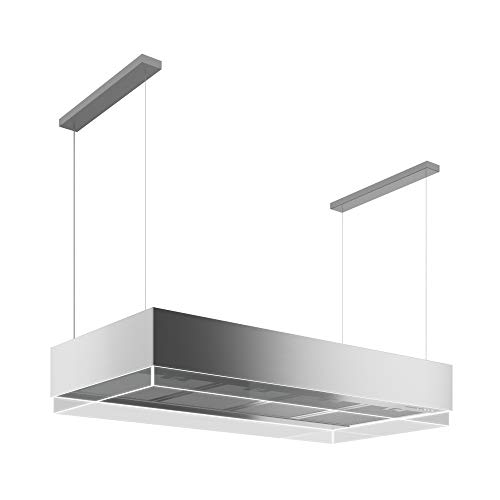
Futuro Futuro 48” Island Mount Range Hood
This one’s less about raw specs for heavy cooking and more about scale. At 48 inches wide, it’s made to cover a big range setup, which matters if you’re cooking on multiple burners at once.
It’s ductless only, though, so that’s a real consideration if you’re doing constant heavy cooking, since ducted setups generally handle that better long-term.
Click here to buy the Futuro Futuro 48” Island Range Hood on Amazon
Hauslane UC-PS18 30” Under Cabinet Range Hood
If you’re someone who cooks big, heavy meals often, this one is built to keep up. It’s got 6 speed settings, so you can really fine-tune it depending on whether you’re just simmering sauce or deep frying something that’s putting off a ton of smoke.
It’s ducted, which matters for heavy cooking since ductless just can’t keep up the same way when things get intense in the kitchen.
The auto shut-off is a nice safety net too, especially on nights when you’re juggling five things and forget the hood’s even running.
It’s got 3-way venting, so it’s flexible depending on your kitchen’s setup, plus a touch panel, LED lighting, and a dishwasher-safe filter so cleanup isn’t its own chore on top of cooking. This is the kind of hood that’s meant to actually work hard, not just look nice.
CT Copper Tailor Copper Vent Hood, 60” Wall Mount
This has the same 1260 CFM power as the island version, so it’s just as capable for heavy cooking, just built for a wall mount setup instead.
It’s a great pick if you’re doing heavy, frequent cooking and still want that handcrafted copper look over your range.
Click here to buy the CT Copper Tailor Copper Vent Hood on Amazon
How to Choose the Right One
If you’re still staring at six browser tabs and wondering which hood belongs above your stove, start with your cooking habits.
You fry frequently
Prioritize strong capture and grease filtration.
You use a wok
Look closely at hood depth, capture area and high-heat performance.
You have a high-BTU gas range
Pay attention to the range’s total output and the ventilation requirements for that appliance.
You have a 36-inch or larger range
Make sure the hood provides enough width and depth to cover the cooking surface properly.
Your stove is on an island
Pay extra attention to capture because there isn’t a wall helping contain the cooking plume.
You have an open-concept kitchen
Balance airflow with noise.
You need a hood powerful enough to work without turning your living room into a wind tunnel.
You cook heavily every day
This is where spending more on a well-designed ventilation system can make sense.
You’re actually going to use it.
What I Wouldn’t Do
I wouldn’t buy a hood simply because it advertises 1,500 CFM.
I wouldn’t install a huge motor on inadequate ductwork.
I wouldn’t choose a shallow hood for a serious front-burner cooking setup.
I wouldn’t ignore grease filtration.
I wouldn’t assume a larger fan automatically means better capture.
And I wouldn’t forget about makeup air when a high-powered ventilation system makes it relevant to your home’s design or local requirements.
The hood is only one part of the system.
Frequently Asked Questions
What is the best range hood for heavy cooking?
The best choice is a ducted hood with enough airflow for your appliance and cooking style, strong capture coverage, adequate depth, and effective grease filtration.
How much CFM do I need for heavy cooking?
It depends on your range, burner output, cooking style and installation. Heavy wok cooking, frequent frying and high-BTU gas cooking can justify substantially more airflow than light everyday cooking.
Is 600 CFM enough for heavy cooking?
It can be for some smaller setups, but it may not be enough for a large high-BTU range or extremely high-heat cooking. Don’t choose CFM without considering the appliance and hood design.
Is 800 CFM good for heavy cooking?
An 800-CFM hood can be a strong option for many serious home cooks, particularly when paired with appropriate ductwork and good capture coverage.
Do I need 1,000 CFM for wok cooking?
Not automatically, but wok cooking is one situation where higher airflow can be useful. Capture area, hood depth, and ductwork matter just as much as the CFM rating.
Is a higher CFM range hood always better?
No. A hood that’s too powerful for the home or poorly matched to the ductwork can create problems. The goal is appropriate airflow, not the biggest number on the product page.
Are baffle filters better for heavy cooking?
They can be a good choice because they are designed for grease capture and are commonly used in higher-performance ventilation systems. They also need regular cleaning.
Should heavy cooks use a ducted range hood?
When exterior venting is feasible, a properly installed ducted system is generally preferable for heavy cooking because it exhausts cooking air outdoors instead of returning filtered air to the kitchen.
Do heavy cooks need makeup air?
High-powered exhaust systems can require makeup-air provisions depending on the home, system, and local requirements. This should be addressed during installation rather than after the hood is already running.
Conclusion
Heavy cooking changes the rules.
If you’re someone who cooks a little pasta, reheats leftovers and occasionally makes pancakes, you probably don’t need a ventilation system that could clear a restaurant kitchen.
But if you’re frying chicken on Tuesday, wok cooking on Wednesday, searing steak on Friday and wondering why your kitchen smells like dinner until Monday, you need a hood that can keep up.
And that’s why the best range hood for heavy cooking is the one that can capture the smoke before it escapes.
Move enough air for your cooking setup.
Hand grease.
Work with your ductwork.
Cover the cooking surface properly.
And keep doing its job when you turn the heat up.
Because heavy cooking should leave you with a delicious dinner.
Not a greasy ceiling.
Not smoky curtains.
And definitely not a living room that smells like fried chicken for the next three days.
Choose the ventilation system first.
Then choose the hood.
Your future kitchen will thank you.