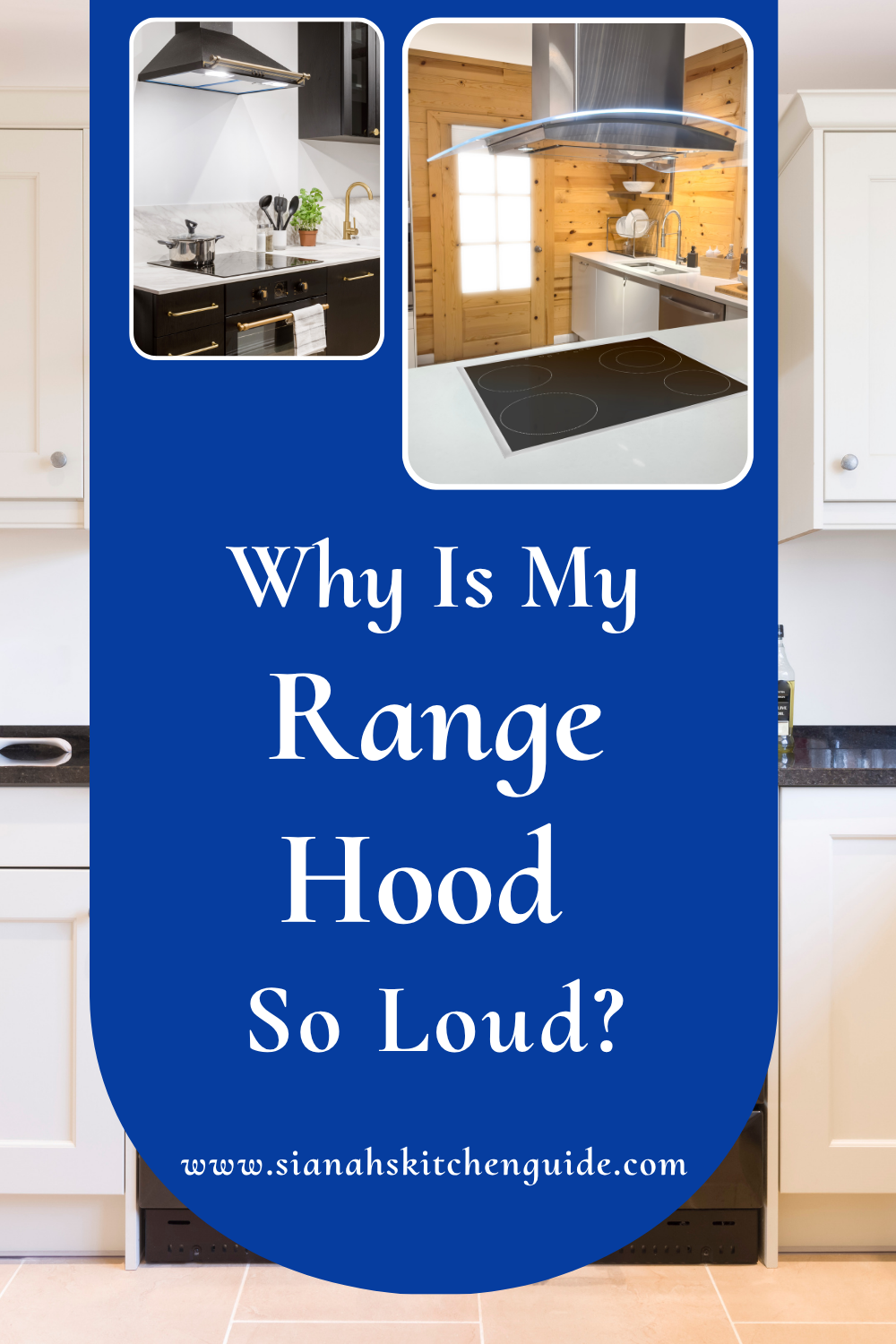
If you have spent your time online searching for the best quiet range hood, then you understand the frustration of having a range hood that sounds like it is preparing for takeoff.
Picture this.
Dinner is cooking.
You’re standing at the island talking to your husband.
The kids are in the living room.
Someone is watching television.
Someone else is telling you a story that apparently cannot wait until dinner is ready.
You turn on the range hood.
WHOOOOOOOOOOOOSH.
Suddenly, everyone is shouting.
You turn it down.
Now you’re watching smoke crawl across the kitchen like it pays rent.
So you turn it back up.
More noise.
At this point, you’re wondering whether dinner is really worth all this drama.
This is exactly why finding a quiet range hood for open concept kitchen spaces is different from simply buying the most powerful hood you can find.
You need ventilation.
You just don’t want your ventilation system becoming the loudest member of the family.
And thankfully, you don’t have to choose between a quiet kitchen and a hood that works.
Why Noise Matters More in an Open-Concept Kitchen
Table of Contents
ToggleA range hood can be reasonably tolerable in a closed kitchen.
Close the kitchen door, and you’re done.
The fan can make whatever noise it wants while you cook.
Nobody in the living room has to hear it.
Open-concept kitchens are another story.
The kitchen is now sharing the same air and sound space with your dining room and living room.
You’re cooking while somebody is watching television.
You’re preparing dinner while someone is on a phone call.
You’re frying chicken while the family is trying to have a conversation.
That means every bit of hood noise becomes part of the room.
And that’s why a good hood for an open kitchen isn’t simply powerful.
It needs to be livable.
The best ventilation system is one you’re comfortable leaving on.
Because a hood that is technically powerful but so loud that everyone begs you to switch it off isn’t doing you much good.
What Makes a Range Hood Quiet?
You might assume the motor is the only thing responsible for the noise.
It isn’t.
Several things can affect how loud your hood sounds, including:
- Motor design
- Fan speed
- CFM
- Duct size
- Duct length
- Number of duct bends
- Blower location
- Hood design
- Installation
So two range hoods with similar CFM ratings can sound completely different.
That’s why I wouldn’t look at one number and declare a winner.
A quiet kitchen comes from the entire ventilation system working well together.
What Are Range Hood Sones?
If you’ve been shopping for a hood, you’ve probably seen the word “sones” and wondered whether you accidentally wandered into an engineering textbook.
You didn’t.
It’s actually pretty simple.
Range hood sones are used to describe how loud a hood sounds.
The lower the number, generally, the quieter the hood.
That’s the basic idea.
But there is one little detail you need to watch.
The noise rating can vary depending on the fan speed.
A hood might be very quiet on its lowest setting and considerably louder when running at maximum power.
So if a product listing proudly announces that it operates at 1 sone, don’t immediately imagine complete silence while the fan is blasting at full speed.
Check which speed that rating applies to. You don’t miss that tiny detail.
What Is a Good Sone Rating for a Range Hood?
When you’re looking for the quietest range hood, you don’t necessarily need to find the hood with the smallest number imaginable.
What matters more is how quiet the hood is at the speed you will use.
A hood around 1 sone is very quiet.
Around 2 sones can still be comfortable for everyday cooking.
Around 3 sones is loud enough but can still be perfectly reasonable.
Once you move higher, you’re going to hear the fan more clearly.
But that isn’t necessarily a problem.
Think about how you cook.
If you normally simmer, sauté, and boil, you may spend most of your time on the lowest or middle setting.
If you’re searing steak or frying food, you’re probably willing to tolerate more noise for a few minutes because you need the extra airflow.
The goal isn’t silence at all costs.
The goal is quiet when you want quiet and power when you need power.
Does Higher CFM Make a Range Hood Louder?
It can.
But I wouldn’t use the rule:
“More CFM automatically means a loud hood.”
That’s too simplistic.
The motor, fan design, ductwork, and installation all influence noise.
And this is important because you don’t want to make the opposite mistake.
You shouldn’t buy a weak hood simply because it is quiet.
That’s like buying a car because the engine is whisper-quiet and then discovering it can’t make it up your driveway.
Your range hood still needs enough airflow for your cooking.
The smarter approach is to determine how much ventilation you need first.
Then compare the quietest models that can provide it.
Can a Powerful Range Hood Also Be Quiet?
Yes.
That’s the sweet spot we’re looking for.
Modern range hoods can use better motor designs, multiple fan speeds, and different blower configurations to balance airflow and noise.
Some premium systems can also move the blower away from the kitchen.
That means you aren’t necessarily stuck choosing between:
Tiny airflow and quiet.
or
Huge airflow and airplane noise.
There is a middle ground.
And for an open-concept kitchen, that middle ground is exactly where I would shop.
Why Fan Speeds Matter
This is one feature I would pay attention to when comparing products.
Imagine you’re boiling water.
You don’t need the same ventilation power you would use while searing a steak.
If your hood only gives you two choices, whispering and hurricane, that’s not particularly helpful.
Multiple fan speeds let you adjust the hood to the meal.
Low for lighter cooking.
Medium for everyday cooking.
High when you’ve decided to make something spectacularly smoky.
That flexibility can make a hood feel much quieter in your everyday life because you’re not constantly running it at maximum power.
Your Ductwork Can Affect the Noise Too
Here’s something people often discover after the hood is already installed.
The hood isn’t the only thing making noise.
The air has to travel somewhere.
If your ductwork is poorly sized, excessively long, or filled with unnecessary bends, the airflow can become more turbulent.
And turbulent airflow can create additional noise.
So you can buy a beautiful hood with a fantastic noise rating and still end up thinking:
“Why does this thing sound like that?”
Sometimes the problem isn’t the hood.
It’s the duct system.
That’s why proper installation matters so much.
Can Better Ductwork Make a Range Hood Quieter?
It can help.
Properly planned ductwork gives the air a smoother path out of your kitchen.
That means fewer unnecessary restrictions and less turbulence.
This is extremely important when you’re investing in a high-performance hood.
You don’t want to spend serious money on the motor and then make it fight its way through a badly designed duct route.
If you’re renovating, this is something to discuss before the cabinets and walls are finished.
It is much easier to plan good ventilation before everything is already installed.
What About an External Blower?
Now we’re getting into one of the more interesting options for people who really care about noise.
Some range hood systems allow the blower to be installed away from the kitchen.
Depending on the system, the blower can be placed in an attic or outside the home.
The idea is wonderfully simple.
Move the noisy mechanical component away from where you’re sitting.
You still have airflow.
You just aren’t keeping the loudest part of the system directly above your head.
This can be attractive for large open kitchens and expensive kitchen renovations.
It can also be worth considering if the kitchen is connected directly to the living room.
Because when the sofa is six feet away from the stove, you suddenly become very interested in the noise.
Are Quiet Range Hoods Worth Paying More For?
For an open-concept kitchen, I think this is a much more reasonable upgrade to consider than it might seem.
Think about how often you cook.
If you cook once a month, you may not care much.
If you cook every day, the hood is going to become part of your daily environment.
And that’s where a quieter model starts to make sense.
You aren’t just paying for a quieter appliance.
You may be paying for:
- Better motor design
- Better airflow control
- More fan speeds
- Better filtration
- Better construction
- More efficient capture
- Remote blower options
- Better controls
- A more comfortable kitchen
The real question isn’t:
“Is this hood expensive?”
It’s:
“Am I going to use it every day?”
If the answer is yes, remember that your comfort matters.
What Should You Look for in a Quiet Range Hood?
Before you fall in love with the prettiest hood on the internet, check the practical details.
1. Check the CFM
Make sure the hood provides enough airflow for your cooking style.
Quiet doesn’t help if the hood can’t keep up with your stove.
2. Check the sones
Don’t just look for the word “quiet.”
Look for an actual noise rating.
And check the fan speed attached to that rating.
3. Look at the fan speeds
Multiple speeds give you more control over noise.
4. Check the duct requirements
Make sure the hood works with your planned duct size and route.
5. Look at the hood width
A quiet hood still needs enough coverage over the cooking surface.
6. Consider the hood depth
Front burners can sit farther forward than you expect.
Make sure the hood provides useful capture over the cooking area.
7. Check the filter
A good filter helps capture grease before it travels through your kitchen.
8. Consider the blower location
If noise is a major concern, look at models that offer inline or remote blower configurations.
What Type of Hood Works Best in an Open Kitchen?
There isn’t one answer for every kitchen.
It depends on where your cooktop is located.
Wall-Mounted Range
A wall-mounted hood can be an excellent choice when your stove sits against a wall.
The hood can be positioned directly above the cooking surface and connected to an exterior duct route when the layout allows.
Island Range
An island hood needs a little more thought.
Because the cooking surface is surrounded by open space, smoke and odors can escape more easily.
And because the hood sits in the middle of your living area, noise becomes much more noticeable.
For an island kitchen, I would pay particular attention to capture performance, CFM, sones, and blower location.
Under-Cabinet Hood
An under-cabinet hood can be a practical choice if your cooktop sits beneath cabinetry.
It can also be visually quieter because it doesn’t dominate the kitchen the way a large decorative chimney hood can.
Ceiling-Mounted Hood
This is the minimalist option.
A ceiling-mounted ventilation system can preserve a cleaner sightline over an island.
It can also be an interesting choice for a high-end open kitchen where the homeowner doesn’t want a large hood hanging over the cooking surface.
But these systems need careful planning.
You don’t want to discover the installation requirements after you’ve already finished the ceiling.
Best Quiet Range Hoods to Consider
Now let’s talk about what you will buy.
I wouldn’t choose a hood simply because a manufacturer calls it “quiet.”
I would look at the combination of airflow, noise, size, design, and installation requirements.
Broan-NuTone 30-Inch Stainless Steel Under Cabinet Range Hood
This one is a great pick for open concept kitchens because it’s quiet. It runs at 1.5 sones, which is about as low as range hoods get, but it still pulls 350 CFM so it’s actually doing the job, not just spinning for show.
It mounts under your cabinet with a low-profile design, so it doesn’t hang down and become the focal point of your kitchen. Stainless steel finish, easy to wipe down, and it matches pretty much any kitchen style you’ve got going on.


Vikio 30-Inch Under-Cabinet Range Hood, 900 CFM Dual Motor
This one is a step up if you do a lot of heavy cooking, like frying or wok stuff, because it’s got dual motors pushing 900 CFM.
That’s a lot of power. But it still uses a DC motor, which runs quieter than the older style motors, so it’s not going to be blasting noise into your living room every time you turn it on.
The gesture and touch controls are a nice touch too, especially when your hands are messy and you don’t want to be pressing greasy buttons. It’s got dishwasher-safe baffle filters, so cleanup is easy, and the LED lighting is energy efficient, so it’s not costing you anything extra to keep your cooktop lit up.
It has a stainless steel finish again, so it’ll match well if you’re building out a cluster with other stainless pieces.
Click here to buy the Vikio 900 CFM Dual Motor Range Hood on Amazon


Vikio 30-Inch Wall Mount Range Hood, 580 CFM
This one is a solid middle ground if you want something quieter but still don’t want to sacrifice your range hood’s power.
It runs at 580 CFM with a 3-speed fan, so you can dial it down when you’re just simmering something and crank it up when you’re searing or frying. It has touch controls that make it easy to switch speeds without fumbling for buttons.
What I like is that it’s convertible between ducted and ductless, so it can work whether or not you’ve got existing ductwork in your kitchen.
That’s a big deal for open concept kitchens since not every layout makes ducting easy. With its Stainless steel finish and LED lights built in, it’s an Amazon’s Choice pick too, so it’s not just me saying it’s good.
Click here to buy the Vikio 580 CFM Wall Mount Range Hood on Amazon

IKTCH 30-Inch Insert Range Hood, 900 CFM
This one’s a good option if you want the range hood to disappear into your cabinetry instead of standing out.
It’s a built-in insert style, so it tucks up under your cabinet and just looks clean, with no bulky housing hanging down into your sightline, which matters a lot in an open concept space.
Power-wise, it’s got 900 CFM with 4 speeds, so you’ve got plenty of range from low simmer days to full-on frying nights.
The gesture and touch controls make it easy to adjust without touching greasy buttons, and it’s ducted or ductless, so it works no matter what your kitchen setup looks like.
Over 1,100 people have rated it 4.5 stars, so it’s clearly holding up for a lot of households.
Click here to buy the IKTCH 900 CFM Insert Range Hood on Amazon

Cosmo Vista 30-Inch Wall Mount Range Hood, 380 CFM
This one’s for you if you just want something reliable and low-key without a ton of bells and whistles. It’s 380 CFM with 3 fan speeds, so it’s not the most powerful on this list, but for everyday cooking, it gets the job done without being loud about it, literally and figuratively.
The soft-touch controls make it easy to use, and the baffle filters are dishwasher-safe and permanent, so you’re not replacing filters down the road. It’s also got a backdraft damper, which basically keeps outside air from sneaking back in through the vent when the fan is off.
Nearly 2,000 people have rated it 4.4 stars, so it’s a well-tested option if you want something dependable over flashy.
Click here to buy the Cosmo Vista 380 CFM Range Hood on Amazon

How to Choose Between Them
Still staring at your screen wondering which one belongs in your kitchen?
Let’s make it easier.
Choose a quieter under-cabinet model if:
Your range sits under cabinets.
You want something practical.
You don’t want the hood to become a major design feature.
Choose an angled hood if:
You cook frequently.
You like a modern look.
You want the capture area closer to the cooking surface.
Choose a larger wall-mounted hood if:
You have a larger range.
You cook heavily.
You want a more professional kitchen appearance.
Choose an island hood if:
Your cooktop sits on an island.
You don’t mind having a visible hood.
You want strong overhead capture.
Consider a ceiling-mounted system if:
You want a very clean sightline.
Your kitchen is designed around an island.
You have the budget for a more specialized installation.
What I Wouldn’t Do
I wouldn’t buy the hood with the lowest sone rating without checking its airflow.
I wouldn’t buy the highest-CFM hood simply because the number looks impressive.
I wouldn’t ignore ductwork.
I wouldn’t assume every hood advertised as “quiet” is quiet at maximum speed.
And I definitely wouldn’t install a hood without checking its actual dimensions first.
Because discovering that your beautiful new hood doesn’t fit the space is the sort of kitchen surprise nobody wants.
Frequently Asked Questions
What is the best quiet range hood for an open-concept kitchen?
The best choice depends on your cooktop size, cooking habits, required CFM, and kitchen layout. Look for a hood that provides sufficient airflow while maintaining a low noise rating at the fan speeds you use most often.
What is the quietest range hood?
The quietest range hood isn’t necessarily the one with the smallest advertised sone number. Compare the noise rating alongside CFM and check which fan speed the rating applies to.
What is a good sone rating for a range hood?
Around 1 to 3 sones can be a useful target for quieter everyday operation, although the ideal level depends on your expectations and cooking needs.
Are 1-sone range hoods really quiet?
They can be very quiet at the speed where the 1-sone rating applies. Always check the manufacturer’s specifications to see whether that rating refers to the lowest fan speed.
Does higher CFM always mean a louder hood?
No. Higher airflow can contribute to more noise, but motor design, fan construction, ductwork, and installation also influence how loud the hood becomes.
Can a powerful range hood be quiet?
Yes. A well-designed hood can provide substantial airflow while keeping everyday operation relatively quiet, particularly when it has multiple fan speeds or a remote blower.
Does ductwork affect range hood noise?
Yes. Restrictive ductwork, excessive bends, and turbulence can affect both airflow and noise.
Are external blowers quieter?
They can be because the blower motor is located away from the main kitchen area. This can be especially useful in open-concept and high-end kitchens.
Are quiet range hoods worth the money?
For people who cook frequently in an open-concept kitchen, a quieter hood can be worth paying more for because you’re more likely to actually use it consistently.
Is 600 CFM too loud?
Not necessarily. A 600-CFM hood may be relatively quiet on lower settings while providing additional power when needed. Look at the hood’s actual sone ratings rather than judging it by CFM alone.
Is a ducted hood better for an open-concept kitchen?
A properly installed ducted hood can be highly effective because it removes cooking air from the home rather than simply filtering and returning it. The duct design and installation still matter.
Should I buy a hood based only on sones?
No. Noise is important, but you also need enough airflow, appropriate coverage, good filtration, and compatible ductwork.
Conclusion
The whole point of finding the best quiet range hood isn’t to make your kitchen completely silent.
You’re cooking.
There’s going to be some noise.
The goal is to make sure the hood isn’t competing with everyone else in the room.
Because an open-concept kitchen is supposed to feel connected.
You should be able to cook while your husband tells you about his day.
You should be able to hear the kids.
You should be able to watch television while waiting for the pasta water to boil.
And when you turn the hood on, you shouldn’t have to communicate through hand signals.
Look for enough CFM to handle the way you cook.
Check the range hood sones carefully.
Pay attention to the fan speed attached to the noise rating.
Don’t ignore the ductwork.
And if you’re renovating a high-end kitchen, consider whether a remote or ceiling-mounted system makes sense for your space.
Most importantly, don’t chase silence at the expense of performance.
A hood that is wonderfully quiet but can’t capture your cooking isn’t great.
A hood that can clear the kitchen but makes everyone yell isn’t much fun either.
The sweet spot is somewhere in the middle.
There should be enough power to handle dinner. Enough quiet to let everyone enjoy the conversation.
That’s the kind of ventilation an open kitchen deserves.