Range hood vs. over-the-range microwave is one of those kitchen decisions that seems easy until you’re standing in a showroom looking at two completely different appliances and thinking, “Okay… but which one do I put over my stove?”
One gives you ventilation.
The other gives you ventilation and a microwave.
Sounds like an easy win for the microwave, right?
Well, not so fast.
Because your kitchen has a way of exposing every little compromise the moment you start cooking dinner.
You fry something.
Steam starts climbing.
A little smoke appears.
Then the smell of whatever you cooked yesterday suddenly returns from the curtains like it pays rent.
And that’s when you start wondering whether combining a microwave and a vent was such a brilliant idea after all.
So let’s settle this properly.
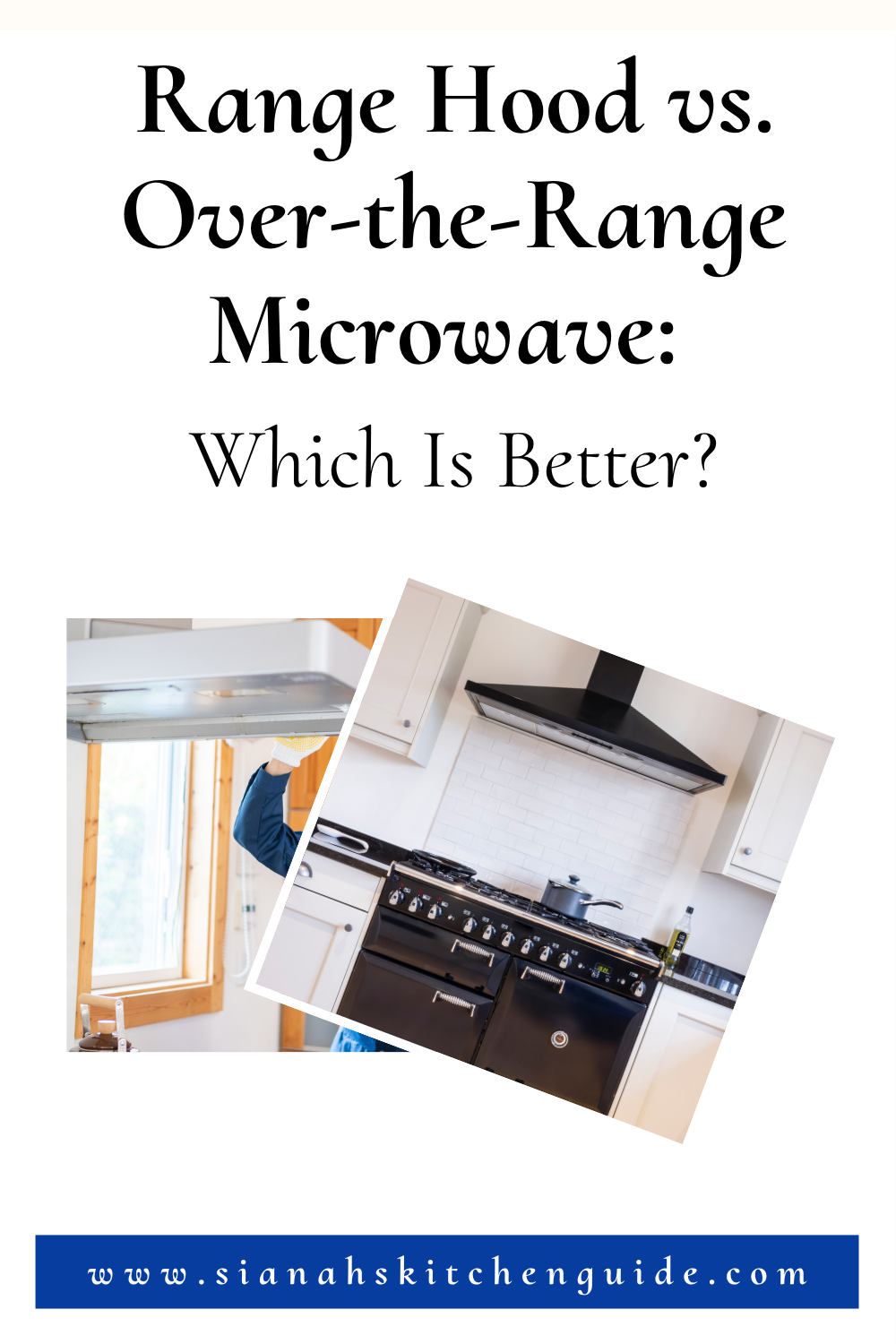
Range Hood vs. Over-the-Range Microwave: Which Is Better?
Table of Contents
ToggleIf your main priority is ventilation, I would choose a dedicated range hood.
If your main priority is saving counter space, an over-the-range microwave can be the smarter choice.
That’s really the heart of the decision.
A dedicated hood is built around one job: moving cooking fumes away from your kitchen.
An over-the-range microwave has another major job to do first. It has to heat your food.
That doesn’t mean an over-the-range microwave is a bad choice.
Far from it.
It can be incredibly convenient.
You get a microwave, cooktop light, and ventilation system in one appliance.
For a smaller kitchen, that’s a pretty sweet arrangement.
Whirlpool describes both dedicated range hoods and microwave hood combinations as viable kitchen ventilation options, while noting that dedicated range hoods can offer greater airflow depending on the model.
The question is what happens when you cook the kind of meals that make your kitchen work for its money.
Is an Over-the-Range Microwave Good Enough for Ventilation?
So, is an over-the-range microwave good enough for your kitchen?
For light to moderate cooking, it can be.
If your typical evening looks like boiling pasta, sautéing vegetables, warming soup, and making the occasional grilled cheese, you may be perfectly happy with one.
You don’t need a professional-style hood hanging over your stove just because you own a frying pan.
But your cooking habits can change the answer.
If you’re frying chicken every weekend, searing steaks, cooking bacon, or regularly using high heat, ventilation becomes a much bigger deal.
That’s when the limitations of a microwave hood combination become easier to notice.
The microwave has to accommodate its cooking cavity.
The ventilation opening has to share that space.
A dedicated hood gets to devote the entire appliance to capturing cooking fumes.
That’s the difference.
What Does Over-the-Range Microwave Ventilation Really Do?
The over-the-range microwave ventilation system pulls air, steam, smoke, and cooking odors toward the appliance.
Depending on the model and installation, that air may be exhausted outside or filtered and recirculated back into the kitchen.
That distinction matters.
An over-the-range microwave that vents outdoors is a very different setup from one that simply filters the air and sends it back into your kitchen.
And don’t assume every microwave with a fan is rated the same way.
Many over-the-range microwaves are not tested and rated for CFM in the same way as externally vented hoods, especially when they’re configured for recirculation.
So when comparing models, look at the exact ventilation configuration.
Not just the word “vent.”
Can an Over-the-Range Microwave Replace a Range Hood?
Yes, an over-the-range microwave can replace a range hood.
But whether it should depends on your kitchen.
This is where people get themselves into trouble.
They see the two appliances sitting in the same location and assume they’re interchangeable.
They’re not quite.
An over-the-range microwave can provide ventilation.
A dedicated range hood is designed specifically around ventilation.
That’s like saying a sofa bed can replace a bed.
Technically?
Yes.
Will you sleep the same way every night?
That’s another conversation.
When Does an over-the-range Microwave Make Sense?
An over-the-range microwave makes a lot of sense when:
- Your kitchen is short on counter space
- You want the microwave off the countertop
- You cook mostly light or moderate meals
- You want one appliance to handle multiple jobs
- You don’t want a large decorative hood dominating the kitchen
For many kitchens, that’s enough.
You get a clean-looking setup without having to find another home for your microwave.
When Does a Dedicated Hood Make More Sense?
A dedicated hood starts winning when cooking itself is the priority.
Think about what happens in your kitchen when you cook your favorite meal.
If you’re gently simmering soup, almost anything reasonable may feel fine.
If you’re frying plantains, searing steak, stir-frying vegetables, or you love to fry chicken and fish like me in a wok and cook three other things at the same time…
Now we’re talking.
You want ventilation that can keep up with the way you cook.
That’s where a dedicated hood becomes much more attractive.
Should You Put a Microwave Over the Stove?
So, should you put a microwave over the stove?
If you’re trying to save counter space, yes, it can be a smart choice.
If you cook heavily and want the strongest possible ventilation, I would seriously consider putting a dedicated hood there instead.
Your microwave doesn’t have to live above the stove.
It can go into a cabinet, pantry area, microwave shelf, or built-in location designed for it.
That gives your hood the entire space above the cooking surface.
And honestly, if you love cooking, that can be a worthwhile trade.
Think About Your Actual Kitchen
Forget the showroom for a second.
Picture your kitchen on a normal Tuesday.
You’re cooking dinner.
There are onions in one pan.
Something is frying in another.
A pot is steaming.
Your phone is sitting somewhere it absolutely should not be.
Someone asks when dinner will be ready.
That is your real kitchen.
Not the perfectly styled kitchen in the appliance brochure.
If that scene happens regularly, ventilation deserves a bigger seat at the table.
If your kitchen is mostly reheating, simmering, and light cooking, an over-the-range microwave may be all you need.
Dedicated Range Hood or Microwave? Look at Your Cooking Style
This is probably the easiest way to make the decision.
If You Mostly Cook Low and Medium Heat
An over-the-range microwave can be a very practical option.
You get your microwave and ventilation without sacrificing precious counter space.
If You Fry Frequently
I would lean toward a dedicated hood.
Frying creates grease and cooking fumes that you want captured efficiently.
If You Sear Meat Often
A dedicated hood gets even more appealing.
High-heat searing can create smoke quickly, especially when a pan is properly heated.
And yes, that little puff of smoke always seems to happen precisely when someone walks into the kitchen.
If You Cook With a Wok
I would strongly consider a dedicated hood.
Wok cooking can involve very high heat and fast-moving cooking fumes.
The right hood can give you more coverage and airflow for that style of cooking.
If You Have a Gas Range
Pay closer attention to ventilation requirements.
GE, for example, says its current over-the-range microwaves and vent hoods can be installed over gas ranges or cooktops with combined surface burner ratings around 65,000 BTUs or less, while higher-output professional ranges require checking the specific installation instructions.
So don’t guess.
Look at the exact range.
Look at the exact microwave.
Then check the installation requirements.
Does an Over-the-Range Microwave Have Enough CFM?
This is where the product specifications matter.
Current over-the-range microwaves can have surprisingly different airflow ratings.
For example, Whirlpool lists over-the-range models with motor classes around 300 and 400 CFM, while some of its low-profile microwave hood combinations reach 360 or 450 CFM.
So there isn’t one universal over-the-range microwave number.
Now, that’s good news.
It means you can shop according to your needs.
But don’t compare the CFM number by itself.
Look at whether the appliance is designed for outside exhaust.
Check the duct requirements.
Look at the installation height.
And check whether your cooking surface is compatible with the appliance.
A 400-CFM over-the-range microwave can sound impressive on the box.
But if your kitchen setup forces it into a configuration that doesn’t suit your cooking needs, that number won’t magically save the day.
Outside Venting vs. Recirculating
Here’s one of the biggest things to check before buying a hood range.
Does the appliance vent outside?
Or does it recirculate?
With outside venting, cooking air is carried through ductwork and exhausted outdoors.
With recirculation, air passes through filters and returns to the kitchen.
There are some over-the-range microwave models that can be configured for either exhaust or recirculation, depending on the installation.
If your kitchen already has suitable ductwork to the exterior, that’s worth considering.
If you don’t have exterior ducting, recirculation may be the practical option.
Just understand what you’re getting.
A recirculating appliance is filtering and returning air.
It isn’t opening a tiny portal in the wall and sending every cooking smell into the great outdoors.
What About the Space Above the Stove?
This is another reason people choose an over-the-range microwave.
It uses vertical space.
Your countertop stays clear.
And if your kitchen has limited cabinet space, that can be a lifesaver.
But you also need to think about height.
A microwave mounted above the stove has to leave appropriate clearance for the cooktop and meet the manufacturer’s installation requirements.
Some brands specify a 66-inch minimum height from the floor to the top of the microwave for over-the-range products.
So before buying one, check the specifications and measure.
And then measure again.
Because the phrase “It should fit” has caused many people a regrettable appliance purchase.
What About a Dedicated Hood?
A dedicated hood gives you more freedom.
You can choose:
- Under-cabinet
- Wall-mounted
- Island
- Insert
- Chimney-style
- Decorative wood hood
And because the appliance is designed around ventilation, you aren’t trying to squeeze a microwave into the same box.
That gives you more options for hood width, depth, blower strength and overall design.
It can also completely change the look of your kitchen.
A beautiful hood can become the centerpiece of the cooking area.
Meanwhile, your microwave can live somewhere else and mind its business.
Honestly, there is something satisfying about that arrangement.
Products Worth Considering
Once you’ve decided which direction fits your kitchen, you can start looking at specific appliances.
Hauslane UC-PS18 Range Hood
The Hauslane UC-PS18 is worth considering if you decide that the space above your stove should belong entirely to ventilation.
It’s an under-cabinet design with multiple fan speeds, stainless-steel construction, and a more substantial setup than a basic builder-grade hood.


FOTILE JQG7507 Range Hood
If you cook frequently and want stronger ventilation, the FOTILE JQG7507 is another model worth comparing.
It’s rated at 1,100 CFM and includes multiple speed levels, LED lighting, and motion control.
This is much more suited to a household where the stove sees serious action.


GE JVM6175SKSS Over-the-Range Microwave
If saving counter space is the priority, the GE JVM6175SKSS is one OTR model worth looking at.
GE lists it with a 300-CFM vent and a 1.7-cubic-foot microwave capacity.
It’s a more straightforward choice for an everyday kitchen where you want the microwave and ventilation together.

Frequently Asked Questions
Is an over-the-range microwave good enough for ventilation?
For light and moderate cooking, it can be. If you regularly fry, sear, wok cook, or produce a lot of smoke, a dedicated range hood is generally the better fit.
Can a microwave replace a range hood?
Yes. An over-the-range microwave has a built-in ventilation system and can serve as the ventilation appliance above the stove. Whether it is the best choice depends on your cooking habits, airflow needs, and installation.
Should you put a microwave over the stove?
You can, especially if saving counter space matters. If strong ventilation is more important, using that space for a dedicated hood may be the better choice.
Is a range hood better than an over-the-range microwave?
For dedicated ventilation, a range hood usually gives you more freedom in hood size, airflow, design, and installation. An over-the-range microwave wins when you want to combine microwave cooking and ventilation in one appliance.
Do all over-the-range microwaves vent outside?
No. Some can be installed for outside exhaust, while others use recirculating ventilation. Check the exact model and installation requirements.
Is recirculating over-the-range microwave ventilation good?
It can be useful when outside ducting isn’t available. It filters cooking air and returns it to the kitchen, but it doesn’t remove the air from the home the way exterior exhaust does.
Are over-the-range microwaves good for frying?
They can handle occasional frying, but frequent frying creates more grease and fumes. A dedicated hood is worth considering if frying is a regular part of your cooking.
Are over-the-range microwaves good for gas stoves?
They can be, provided the specific range and microwave meet the manufacturer’s installation requirements. Higher-output gas ranges may require a different ventilation setup.
Does a dedicated range hood use more space?
The hood itself may occupy similar overhead space, but you’ll need to find another location for your microwave. That’s the main tradeoff.
Can I install an over-the-range microwave where my range hood is now?
Possibly, but you need to check the cabinet opening, electrical requirements, mounting height, duct configuration, and the microwave’s installation instructions before assuming it will fit.
Conclusion
So, range hood vs. over-the-range microwave comes down to one very simple question:
What do you need your kitchen to do?
If you need to save counter space and your cooking is fairly light, an over-the-range microwave can be a wonderfully practical solution.
You get the microwave.
You get the cooktop light.
You get ventilation.
And your countertop gets to breathe again.
But if cooking is a big part of your life, especially if you fry, sear, wok cook, or regularly turn the burners up high, I would give that space to a dedicated range hood.
Let the microwave live somewhere else.
Because when dinner gets chaotic, you want your ventilation system focused on one job.
Keeping the kitchen from smelling like whatever you cooked three days ago.
And honestly, that is one appliance job worth taking seriously.