If you’ve ever wondered how high should a range hood be, you’re probably standing in front of your stove with a tape rule in one hand and a beautiful new hood waiting to go on the wall, wondering whether 24 inches is right, 30 inches is right, or whether you should just put it wherever your head stops hitting it.
And honestly, this is one of those kitchen measurements that seems simple until you start seeing different numbers everywhere.
Twenty inches.
Twenty-four.
Thirty.
Thirty-six.
Suddenly, your range hood has become a mathematics problem.
Thankfully, it doesn’t have to be.
The sweet spot is usually much easier to understand once you know what you’re measuring and why the height matters in the first place.
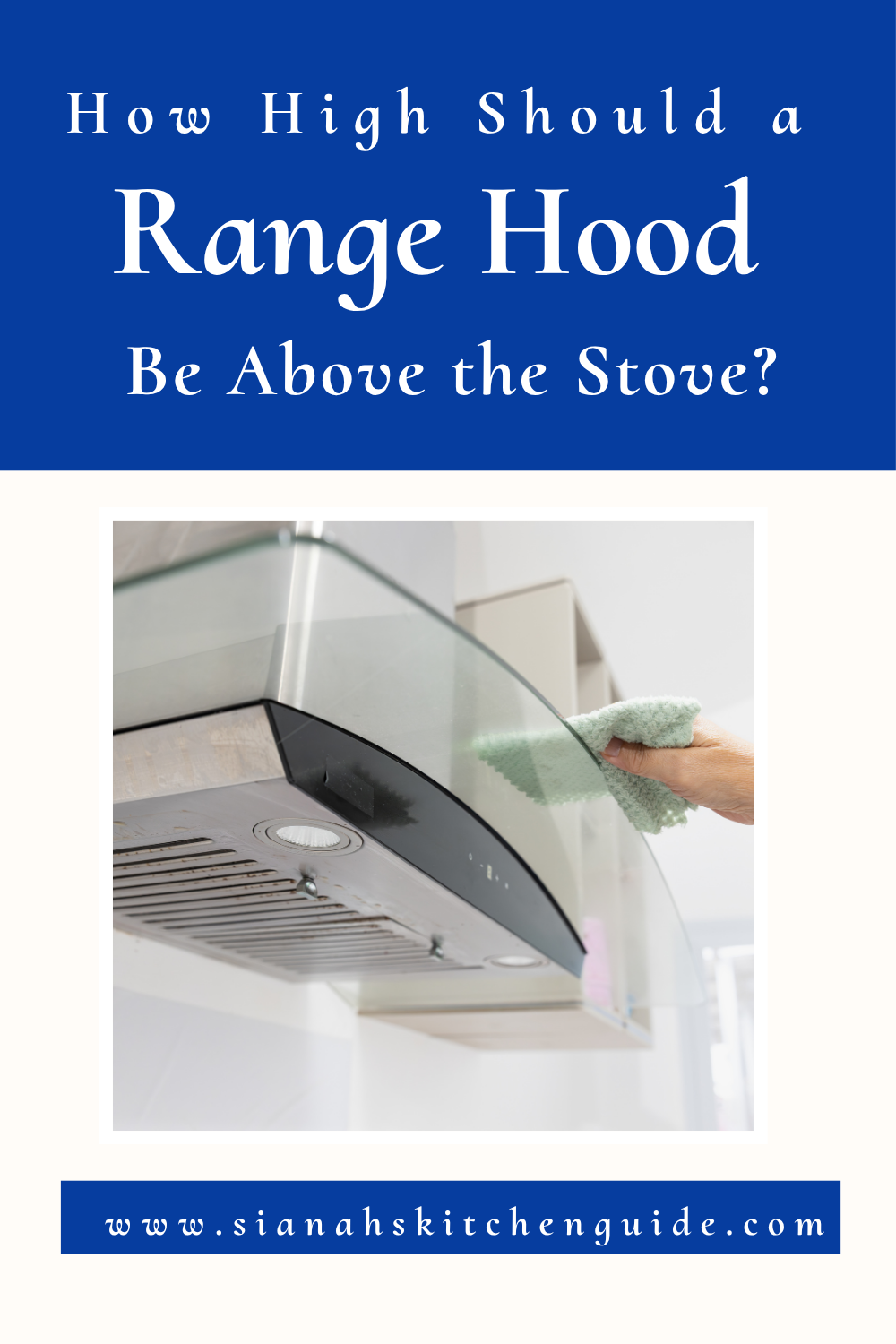
So, How High Should a Range Hood Be?
Table of Contents
ToggleFor many residential range hoods, you’re generally looking at somewhere around 24 to 30 inches above the cooking surface.
Broan-NuTone recommends a distance of 24 to 30 inches between the cooktop and the bottom of the hood for many of its range hoods, while noting that individual models can have different requirements.
Whirlpool gives a similar general range, with electric cooktops commonly falling around 20 to 24 inches and gas cooktops around 24 to 30 inches.
So if you’re looking for one simple number to keep in your head, think:
Your hood usually belongs somewhere in that 24-to-30-inch neighborhood.
But don’t grab your drill just yet.
Your specific hood’s installation instructions always get the final say.
What Are You Actually Measuring?
When you’re figuring out the range hood height above the stove, you’re measuring from the cooking surface to the bottom of the range hood.
Not from the floor.
Not from the countertop.
Not from the top of the cabinets.
And definitely not from the ceiling because your ceiling has absolutely no business deciding how close your hood should be to your frying pan.
You’re measuring the distance between the surface where you’re cooking and the bottom of the hood.
That’s the number that matters.
Why Does Range Hood Height Matter So Much?
Because smoke doesn’t wait around for an invitation.
The moment you put a hot pan on the stove, steam, grease, and cooking particles start rising.
Your range hood is supposed to capture that air before it spreads throughout the kitchen.
The closer the hood is, within its required clearance, the easier it can be to capture those cooking pollutants.
Move it too far away, and that smoke has more time to wander.
And smoke is incredibly talented at wandering.
It will happily travel sideways, drift toward your cabinets, and make its way into the living room while your range hood sits several inches higher than it should.
Proper mounting height is important for both safety and ventilation performance. Installing a hood too high can reduce its ability to capture pollutants effectively.
What Is the Right Range Hood Height Above the Cooktop for an Electric Stove?
Electric cooktops can have slightly different recommended clearances from gas cooking surfaces.
Whirlpool gives a typical range of 20 to 24 inches above an electric cooktop, while some hood manufacturers specify a larger minimum for particular models.
That’s why you may see different numbers online.
It doesn’t necessarily mean someone got it wrong.
Different range hoods have different installation requirements.
For example, one Broan NuTone model recommends a minimum of 20 inches above an electric range and 24 inches above a gas range, with 30 inches as the maximum recommended height for optimal performance.
Before deciding where to put your hood, check the manual for the exact model.
What About a Gas Stove?
Gas cooking usually requires a little more clearance.
A common recommendation is around 24 to 30 inches above a gas cooktop, although the exact minimum depends on the hood and appliance.
This is why you shouldn’t simply install your hood at the same height you’ve seen in somebody else’s kitchen.
Their stove may be different.
Their hood may be different.
Their installation requirements may be different.
Your kitchen gets its own rules.
What About Induction Cooktops?
Induction cooktops don’t have an open flame, but that doesn’t mean you can suddenly hang the range hood wherever you feel like it.
The hood still needs to be installed according to its manufacturer’s instructions.
And you’re still cooking food.
Which means steam, grease and smoke can still make their way into the kitchen.
So when you’re deciding on the range hood mounting height for an induction cooktop, check both the hood instructions and the cooktop manufacturer’s requirements.
Don’t assume that “no flame” means “anything goes.”
Can a Range Hood Be Too High?
Absolutely.
And this is probably the mistake people make because it seems logical to think that more distance means more safety.
But remember what the hood is trying to do.
It’s trying to capture cooking air.
If you mount it too high, the smoke has a bigger area to escape before it reaches the hood.
It’s like trying to catch a ball while standing ten feet farther away.
Technically, you’re still trying to catch it.
Your chances just aren’t looking fantastic.
Whirlpool says range hoods are generally installed no more than 36 inches above the cooktop because greater heights may decrease ventilation effectiveness.
Broan also recommends keeping many of its hoods within 30 inches for optimal capture, although individual models can have different requirements.
If you are asking, can a range hood be too high? Know that your answer is a resounding yes.
Higher isn’t automatically better.
What Happens If the Hood Is Too High?
You may notice that smoke seems to escape around the sides of the hood.
Cooking smells may spread farther into the kitchen.
Steam may reach your cabinets before the hood captures it.
And you may find yourself turning the fan up higher just to compensate.
That’s not ideal.
A range hood should be positioned so it can do the job it was purchased to do.
You didn’t spend money on a ventilation system so the smoke could walk right past it.
Can a Range Hood Be Too Low?
Also, yes!
And this is where we go from “the hood isn’t catching enough smoke” to “please don’t hit your head every time you make spaghetti.”
A hood that’s mounted too low can interfere with cooking and may fail to meet the manufacturer’s required clearance.
This is particularly important over gas cooking surfaces.
The exact minimum varies by model, so don’t use a random number from another kitchen as your installation rule.
So if you’re wondering how high to mount a range hood, start with the manufacturer’s minimum clearance and recommended maximum.
Then work within that range.
Why You Don’t Want to Guess the Minimum
This is where I want to save you from one very common kitchen mistake.
Someone will say:
“My sister’s hood is 24 inches above her stove, so I’ll do 24.”
Great.
Except her hood isn’t your hood.
Her cooktop isn’t necessarily your cooktop.
And her manufacturer’s instructions aren’t the instructions for your appliance.
Range hood installation requirements can vary by model, style, fuel type, and ventilation setup.
So use general ranges as a starting point.
Use your product manual as the actual rule.
Does the Type of Range Hood Change the Height?
It can.
An under-cabinet hood isn’t designed exactly like a large wall-mounted chimney hood.
Also, an island hood isn’t necessarily installed the same way as an under-cabinet model.
And a professional-style hood may have different requirements again.
That’s why shopping for the hood and planning the installation should happen together.
Don’t buy a hood because it looks perfect and then figure out where it fits afterward.
That’s how kitchen renovations acquire plot twists.
What About an Island Range Hood?
Island hoods deserve a little extra thought because they aren’t sitting against a wall.
They’re exposed from multiple sides.
That makes good capture especially important.
Your range hood height above the cooktop still needs to follow the hood’s installation requirements.
But the hood’s width, depth, CFM, and overall design matter too.
And because island cooking surfaces are often part of open kitchen layouts, you also want to think about where cooking smoke and odors will travel if the hood doesn’t capture them quickly.
Does Ceiling Height Change the Installation?
It can.
This becomes really important with chimney-style hoods.
If you have a standard 8-foot ceiling, your installation may be straightforward.
If you have 9- or 10-foot ceilings, the decorative chimney may need an extension or a different configuration.
Chimney extensions are available for some island hood installations with ceilings up to 10 feet, and recommends contacting technical support for higher ceilings.
The important thing is that a high ceiling doesn’t mean you should simply move the hood higher above the stove.
The cooking surface-to-hood distance still matters.
The chimney fills the space above the hood.
That’s what it’s there for.
Should a Range Hood Be Wider Than the Stove?
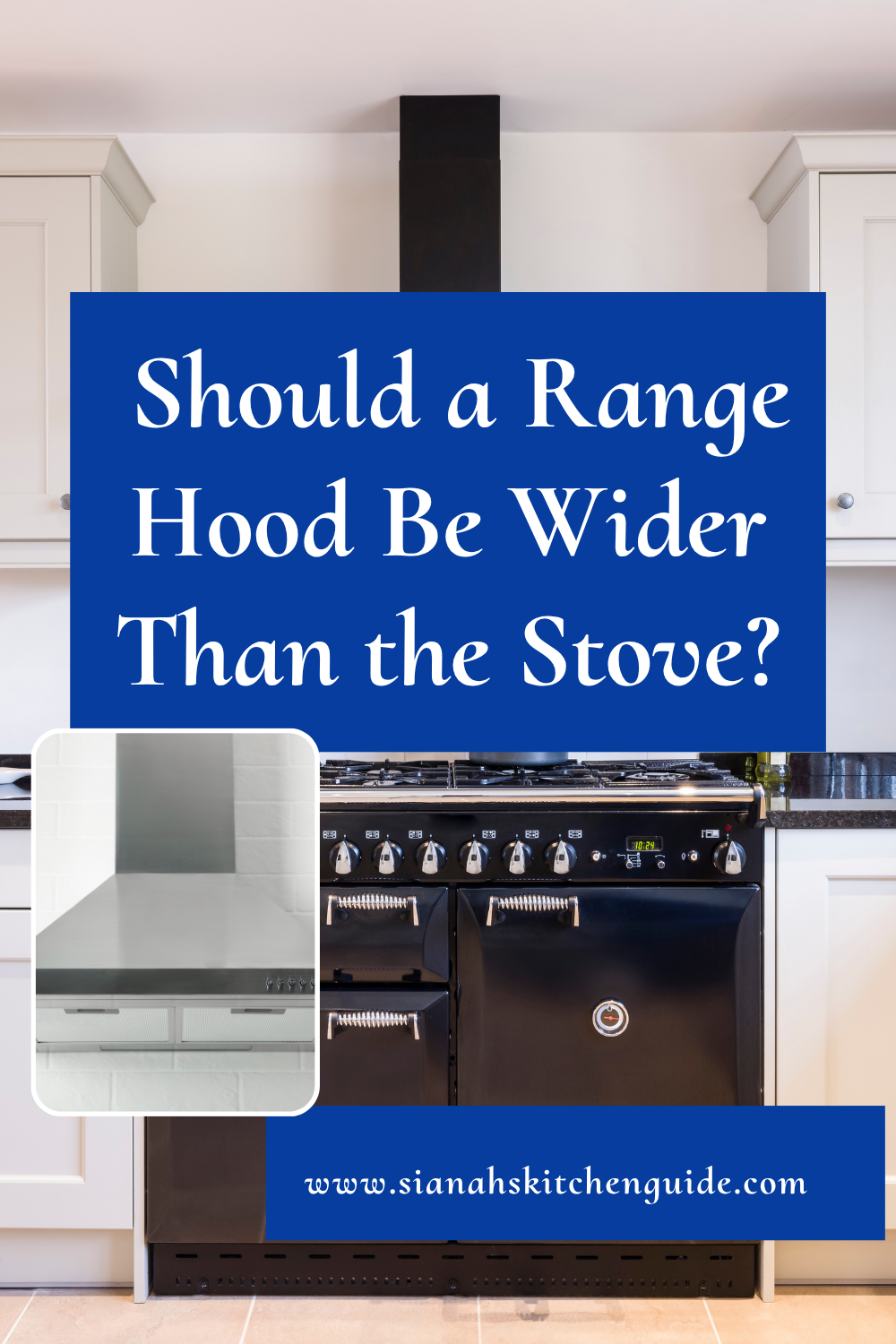
Ideally, your hood should at least match the width of the cooking surface.
And in some situations, going wider can improve capture.
Whirlpool recommends a hood at least as wide as the cooktop and says a hood around six inches wider overall can provide additional coverage.
So if you have a 30-inch stove, a 30-inch hood can work.
A wider hood may give you more coverage.
Width and height work together.
You don’t want a tiny hood hanging too far above a large cooking surface and expect it to catch everything.
How Far Should a Range Hood Stick Out Over the Stove?
Depth matters too.
A hood needs enough depth to capture air coming from the cooking surface, including the front burners.
Whirlpool notes that most range hoods are around 18 to 22 inches deep, with the hood ideally extending enough to cover the cooking surface.
This is important if you have a deep range or a cooking setup that puts the front burners farther forward.
A hood can be the perfect width and height and still have poor coverage if it’s too shallow.
So when you’re choosing a hood, don’t just ask:
“How high?”
Ask:
“How much of my cooking surface does this thing actually cover?”
What If You Have a Small Kitchen?
A small kitchen can make hood placement tricky because there may not be much room above the stove.
You may have cabinets.
A microwave.
A low ceiling.
Or approximately seventeen things that someone decided needed to occupy the same six feet of wall.
You must measure the cooking surface.
Measure the available space above it.
Then compare those measurements with the hood manufacturer’s installation requirements.
If the hood can’t fit within the required clearance, it’s better to choose a different hood than force the wrong one into the space.
What If You Have an Open-Concept Kitchen?
Open-concept kitchens make range hood placement even more important.
In a closed kitchen, cooking smells have one room to conquer.
In an open-concept kitchen, they have the entire house.
That means a properly positioned hood can make a huge difference in keeping smoke, steam, and cooking odors from drifting into the dining and living areas.
If you’re choosing the best range hood for an open-concept kitchen, look beyond appearance.
Pay attention to:
- Hood width
- Hood depth
- CFM
- Noise
- Ducting
- Mounting height
- Whether it vents outdoors
A beautiful hood that doesn’t capture your cooking air very well is basically expensive kitchen jewelry.
It will be pretty but useless to you.
How to Install a Range Hood at the Right Height
Before anyone reaches for the drill, get the manufacturer’s installation guide.
Then:
Measure from the cooking surface to the bottom of the hood.
Confirm the minimum clearance.
Confirm the recommended maximum height.
Check whether your stove is gas, electric or induction.
Make sure the hood fits the width and depth of the cooking surface.
Check your ceiling height if you’re using a chimney-style hood.
And finally, check local building requirements where applicable.
This is one of those jobs where five minutes of measuring can save you hours of fixing.
Products Worth Considering
Once you understand the height you’re working with, you can start looking at hoods that fit your kitchen instead of falling in love with one that doesn’t.
Hauslane UC-PS18
The Hauslane UC-PS18 is an under-cabinet hood worth considering if you prefer a more built-in look.
Its under-cabinet design can work particularly well when you’re trying to keep the kitchen visually clean while still getting dedicated ventilation.


FOTILE JQG7507
The FOTILE JQG7507 is another option for cooks who want a powerful ventilation setup.
It’s especially worth comparing if you do a lot of frying, searing or high-heat cooking.
Just remember that higher power makes installation planning more important, not less.


Frequently Asked Questions
How high should a range hood be?
For many residential models, a common range is about 24 to 30 inches between the cooking surface and the bottom of the hood. However, the exact range hood mounting height depends on the hood model, cooking appliance, and manufacturer instructions.
How do you measure range hood height?
Measure vertically from the cooking surface to the bottom of the range hood. Do not measure from the countertop or floor.
Can a range hood be too high?
Yes. A hood installed too high can have a harder time capturing smoke, grease, and steam before they spread through the kitchen.
Can a range hood be too low?
Yes. A hood installed too low can interfere with cooking and may violate the required clearance for the appliance or hood.
Is 24 inches too low for a range hood?
Not necessarily. Some hood manufacturers specify 24 inches as the minimum clearance, while others require more depending on the model and whether you’re using gas or electric cooking.
Is 30 inches too high for a range hood?
Not necessarily. Thirty inches is within the recommended range for many residential hoods, particularly over gas cooking surfaces. Always check your specific hood’s instructions.
What is the range hood height above stove for a gas range?
Many manufacturers recommend approximately 24 to 30 inches, but some specific models require a 30-inch minimum. Always follow the hood manufacturer’s installation instructions.
What is the range hood height above cooktop for an electric range?
Many electric cooktops fall around 20 to 24 inches, but individual hood manufacturers may specify a different minimum. Check your hood’s installation guide.
Does induction change the required range hood height?
Induction doesn’t have an open flame, but you should still follow the hood manufacturer’s specified clearance and the cooktop manufacturer’s installation requirements.
Should a range hood be wider than the stove?
It can be beneficial for capture, particularly when cooking creates a lot of smoke or grease. At minimum, the hood should generally match the width of the cooking surface.
How far should a range hood stick out over the stove?
The hood should provide adequate coverage of the cooking surface, including the front burners. Exact depth requirements depend on the hood and cooking appliance.
Does ceiling height affect range hood installation?
It can affect the chimney or flue configuration, especially with high ceilings, but it doesn’t mean the hood should simply be mounted farther away from the cooking surface.
Conclusion
So, how high should a range hood be?
For many homes, you’re looking at roughly 24 to 30 inches above the cooking surface, but that isn’t a permission slip to measure once and start drilling.
Your specific hood comes first.
Your cooking appliance matters too.
Gas, electric, and induction setups can have different requirements, and different hood models can have different minimum and maximum recommendations.
The goal is to get the hood close enough to capture smoke and cooking pollutants without creating clearance or safety problems.
So before you hang that beautiful hood, grab the manual.
Measure from the cooking surface.
Check the minimum.
Check the recommended maximum.
And make sure the hood actually covers the cooking area properly.
Because the perfect range hood isn’t the one that looks amazing on the wall.
It’s the one that’s sitting at the right height when your bacon starts smoking and doesn’t make you sprint for the nearest window.